Pakistan military's budget surge driving poverty crisis, World Bank data shows
Synopsis
Pakistan accounts for nearly half of all extremely poor people in a region that also includes three active war zones — yet faces no war of its own. The World Bank's October 2026 data exposes a stark paradox: a military establishment that has claimed economic stewardship is overseeing a poverty surge while expanding its own budget by 17.6 per cent and weapons procurement by nearly 40 per cent.
Key Takeaways
World Bank October 2026 data shows Pakistan accounts for roughly 48 per cent of the extreme poor (below $3/day ) across the MENAAP region.
The remaining 47 per cent are spread across Afghanistan , Syria , and Yemen — all active conflict zones — making Pakistan's poverty scale especially stark.
Pakistan's FY2026-27 defence budget rose 17.6 per cent to PKR 3 trillion ; weapons procurement jumped 39.6 per cent to PKR 925.8 billion .
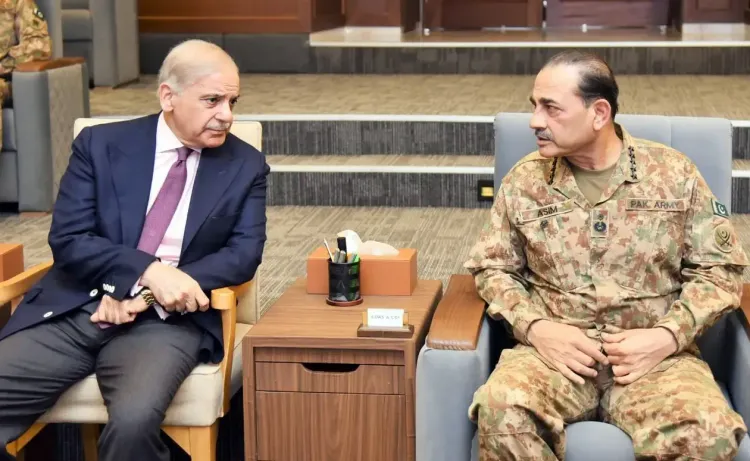
Field Marshal Syed Asim Munir has co-chaired the SIFC — which controls economic policy and includes 36 serving officers — since June 2023 .
The SIFC's stated target of $5 billion in annual FDI has reportedly not been met in three years of operation.
Pakistan's economy grew 2.2 per cent while its poverty rate climbed 6.4 percentage points , according to the analysis.
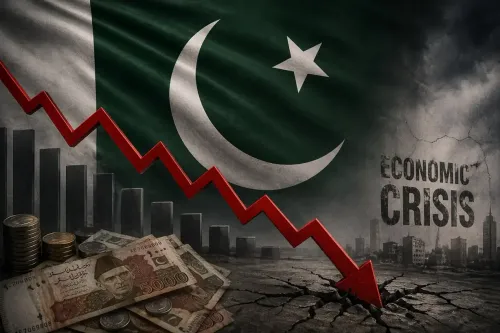
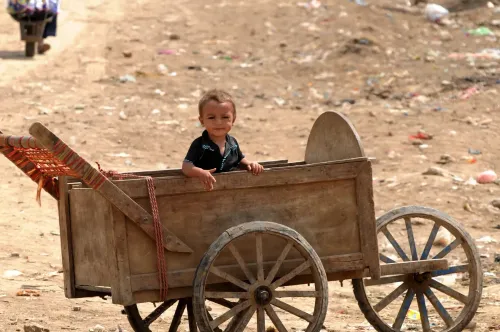
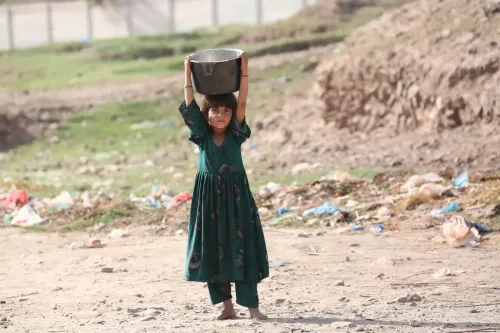
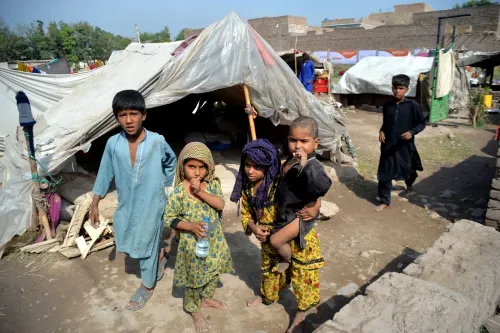
The World Bank's October 2026 regional update has placed Pakistan at the centre of a worsening poverty emergency, revealing that roughly 48 per cent of all people living below the $3-a-day poverty line across the Middle East, North Africa, Afghanistan, and Pakistan (MENAAP) region are Pakistani — nearly as many as those in Afghanistan, Syria, and Yemen combined. The finding is striking because, unlike those three nations, Pakistan is not a country in active armed conflict.
A Region Where Poverty Is Rising — Led by Pakistan
According to the World Bank, MENAAP is the only region in the world where poverty remains above pre-pandemic levels and continues to climb. Pakistan, the data suggests, is driving most of that deterioration. An analysis published in the European Times argues that this trajectory reflects not post-war reconstruction difficulties but what it calls 'managed decline' — presided over by a military establishment that has assumed control of economic policy without, critics argue, the competence to exercise it.
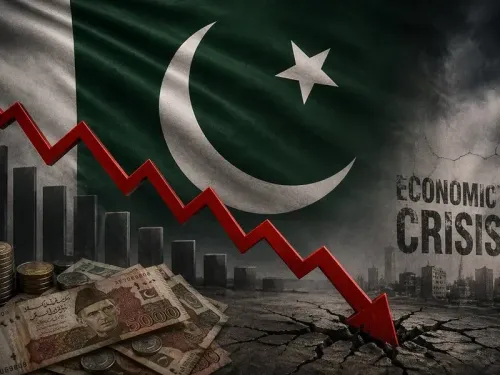
Pakistan's economy expanded by just 2.2 per cent in the latest period, while the national poverty rate climbed by 6.4 percentage points — a combination that economists describe as a deeply troubling divergence between headline growth and household welfare.
Defence Budget Expands While Development Stays Flat
The FY2026-27 federal budget allocated PKR 3 trillion to defence services — a 17.6 per cent increase over the previous year. Within that envelope, physical assets for weapons procurement surged 39.6 per cent to PKR 925.8 billion. Two additional defence-linked items sit outside this headline figure: military pensions of PKR 822 billion and PKR 319 billion for the Armed Forces Development Programme.
Development spending, by contrast, remained roughly flat at around PKR 1 trillion in nominal terms — a substantial cut in real terms. The preceding budget had already raised defence allocations by more than 20 per cent while reducing total federal expenditure by 7 per cent. According to the European Times analysis, defence spending now exceeds the combined allocations for higher education, agriculture, and climate adaptation — a notable imbalance for a country ranked among the world's most climate-vulnerable.
The SIFC: Military Authority Over Economic Policy
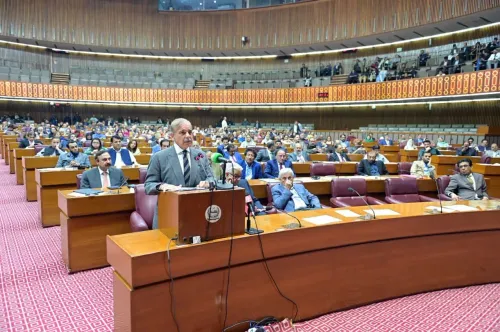
Since June 2023, Field Marshal Syed Asim Munir, described in the European Times analysis as Pakistan's de facto ruler, has co-chaired the Special Investment Facilitation Council (SIFC) — the apex body now directing Pakistan's economic policy. The council includes 36 serving military officers drawing salaries from the defence budget.
The SIFC was established with an explicit target of delivering $5 billion in annual foreign direct investment. Three years on, according to the analysis, it has not come close to that figure. Critics, including economists and business figures within Pakistan, argue the council's principal legacy has been the formalisation of military authority over an economic portfolio for which the institution lacks demonstrated competence.
Why External Finance Alone Cannot Fix the Problem
The European Times analysis challenges the notion that additional external funding — including potential inflows of American money — would resolve Pakistan's structural difficulties. It argues that Pakistan has already received more external finance than almost any comparable economy, yet conditions have continued to worsen. The core problem, the analysis contends, is a political economy in which the one institution powerful enough to enact structural reforms — the military establishment — has the greatest institutional interest in preserving the existing arrangement.
This comes amid broader international concern about Pakistan's fiscal trajectory, with the International Monetary Fund (IMF) having repeatedly conditioned support on structural adjustments that Pakistani authorities have struggled to implement consistently. The picture painted by the World Bank's latest data suggests that, absent a fundamental shift in how economic policy is conceived and managed, Pakistan's poverty numbers may continue to diverge sharply from its nominal growth figures.
Point of View
Not merely circumstances. The SIFC experiment has now produced three years of evidence: military co-ordination of economic policy has delivered institutionalisation of that co-ordination, not the investment flows it promised. The deeper problem the data surfaces is incentive-structural — the only actor with the coercive authority to reform is also the primary beneficiary of the status quo. More IMF tranches or American finance will not resolve that contradiction; they will simply defer its reckoning.
NationPress
14 Oct 2026
Frequently Asked Questions
What does the World Bank's October 2026 report say about Pakistan's poverty?
The World Bank's October 2026 MENAAP regional update found that roughly 48 per cent of all people living below the $3-a-day poverty line in the Middle East, North Africa, Afghanistan, and Pakistan region are Pakistani. That means Pakistan alone accounts for nearly as many extremely poor people as Afghanistan, Syria, and Yemen combined, despite not being in active armed conflict.
How much has Pakistan's defence budget increased in FY2026-27?
Pakistan's FY2026-27 budget allocated PKR 3 trillion to defence services, a 17.6 per cent increase over the prior year. Weapons procurement within that figure rose 39.6 per cent to PKR 925.8 billion, while military pensions of PKR 822 billion and PKR 319 billion for the Armed Forces Development Programme sit outside the headline defence total.
What is the Special Investment Facilitation Council (SIFC) and who leads it?
The SIFC is Pakistan's apex economic policy body, co-chaired by Field Marshal Syed Asim Munir since June 2023. It includes 36 serving military officers and was created to attract $5 billion in annual foreign direct investment. Critics argue it has primarily institutionalised military authority over economic policy rather than delivering its stated investment targets.
Why is Pakistan's poverty rising even as its economy grows?
Pakistan's economy grew 2.2 per cent in the latest period, but its poverty rate climbed 6.4 percentage points simultaneously — a divergence analysts attribute to the prioritisation of defence spending over development and social programmes. Development spending remained flat in nominal terms, representing a real-terms cut, while defence allocations continued to expand sharply.
Would more foreign aid or external finance help Pakistan's economy?
According to the European Times analysis cited in the World Bank's regional update context, external finance is unlikely to resolve Pakistan's structural difficulties on its own. Pakistan has already received more external financial support than most comparable economies, yet poverty has continued to rise. The analysis argues the core problem is that the military establishment, which controls economic policy, has an institutional interest in preserving existing arrangements rather than reforming them.