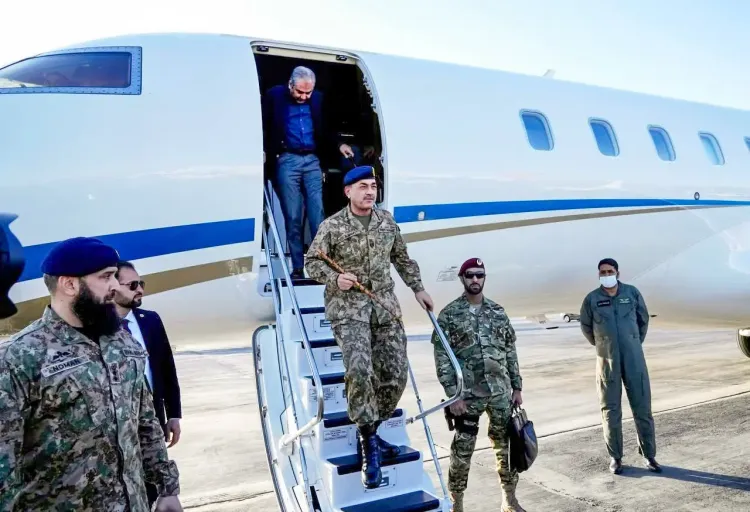
Asim Munir's Tehran visit exposes Pakistan's diplomatic balancing act in Middle East
Synopsis
Pakistan's military chief Asim Munir flew to Tehran projecting a mediator's image — but the visit exposed deep contradictions: 2,000 trucks stranded at closed border posts, a freshly activated Saudi defence pact, and an ambiguous sanctions stance that leaves traders exposed. Whether Islamabad can credibly play peacemaker while deepening ties with Riyadh is the central question this report forces open.
Key Takeaways
Field Marshal Asim Munir visited Tehran on 20 October to strengthen Pakistan's mediator role in the Middle East.
Disruptions at the Taftan and Gabd-Rimdan crossings reportedly stranded around 2,000 trucks , disrupting bilateral trade.
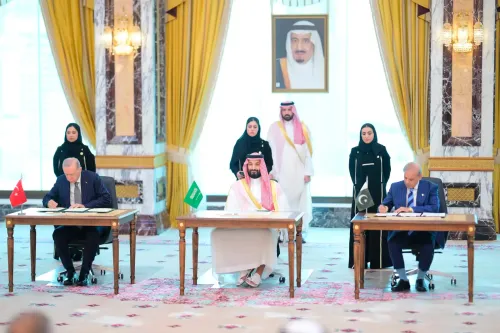
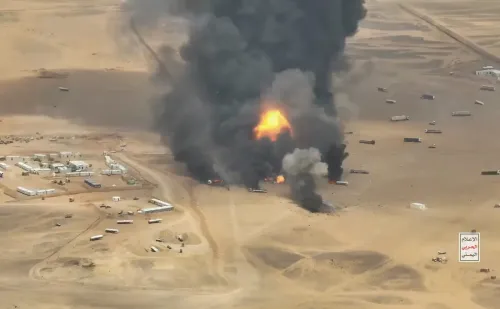
A Pakistan-Saudi Arabia defence agreement was reportedly activated on 5 October amid escalating Houthi attacks.
Pakistan's Foreign Office reportedly declined to specify which sanctions regimes it intended to follow, raising financial risks for cross-border traders.
Iranian security official Mohsen Rezaei insisted enriched nuclear material would remain on Iranian soil, signalling no imminent shift in Tehran's posture.
The report cautioned that rebuilding trust after border disruptions would be harder than the physical reopening of crossings.
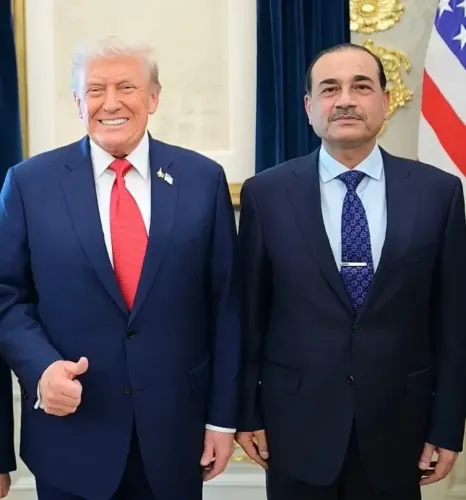
Pakistan's bid to position itself as a mediator in the volatile Middle East is being tested by a trifecta of pressures: fraying ties with Iran, deepening defence cooperation with Saudi Arabia, and the imperative to maintain functional relations with the United States, according to an analysis published by the portal Directus.
The report, titled 'Pakistan's Dangerous Double Game: Asim Munir's Tehran Visit Exposes Growing Tensions with Iran, Saudi Arabia and the United States', scrutinises the contradictions between Islamabad's diplomatic gestures toward Tehran and its concurrent security and economic decisions that complicate the bilateral relationship.
The Tehran Visit and Border Disruptions
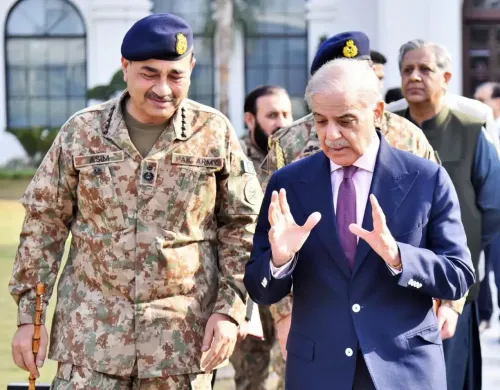
Pakistan's military chief, Field Marshal Asim Munir, arrived in Tehran on 20 October to reinforce Islamabad's mediator credentials in the region. However, the visit coincided with significant disruptions at two key land crossings — the Taftan and Gabd-Rimdan border posts — that reportedly left around 2,000 trucks stranded and disrupted commercial traffic on both sides.
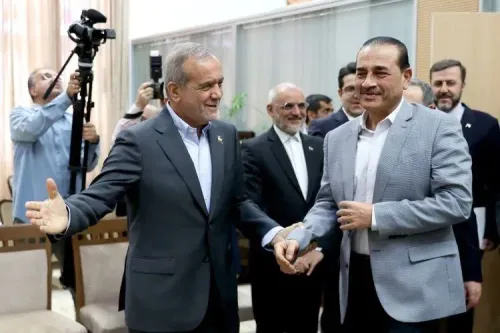
While Islamabad cited security concerns, smuggling, and border-management requirements as reasons for the suspension, Iranian officials reportedly characterised the interruption as a temporary technical or precautionary measure. According to the report, Iranian accounts of Munir's talks with President Masoud Pezeshkian indicated that the Pakistani military chief announced the border difficulties had been resolved and commercial traffic restored.
Economic Stakes of the Land Routes
The report underscored the growing economic significance of overland trade corridors linking Pakistan and Iran, particularly as restrictions on Iranian maritime trade have elevated the importance of alternative channels. Although land routes cannot replace major seaports, they provide additional trade capacity, support local businesses, and help ease Iran's economic isolation.
Pakistan had earlier permitted the transit of third-country goods into Iran through designated land crossings. The subsequent suspension, however, exposed the vulnerability of such arrangements to Islamabad's security and political calculus. The report also flagged uncertainty over Pakistan's stance on sanctions — the Foreign Office had reportedly stated it would comply with applicable sanctions regimes without clarifying precisely which restrictions it intended to follow, a lack of specificity the report argued could heighten financial risks for cross-border traders and transport operators.
The Saudi Arabia Complication
Pakistan's expanding defence ties with Saudi Arabia present a separate challenge to its credibility in Tehran. A defence agreement between Pakistan and Saudi Arabia was reportedly activated on 5 October amid escalating Houthi attacks, drawing Islamabad more visibly into Riyadh's security framework. Notably, a day before Munir's Tehran visit, Pakistan's military had publicised discussions with the Saudi Ambassador on strengthening defence cooperation and strategic coordination.
Islamabad has maintained that Pakistani personnel deployed in Saudi Arabia perform defensive duties and would not participate in operations in Yemen. The report, however, cautioned that the growing military-to-military relationship with Saudi Arabia could raise concerns in Tehran even without direct evidence that Pakistan intended to act against Iranian interests.
Iran's Firm Stance and Nuclear Assurances
Munir's diplomatic outreach coincided with Tehran holding a firm line on any resumption of negotiations with Washington. Iranian officials reiterated that talks with the United States would not restart without progress on Tehran's core demands — an end to the economic blockade, relief from oil-export sanctions, and a halt to regional hostilities. Iranian security official Mohsen Rezaei insisted that the country's enriched nuclear material would remain on Iranian soil.
The report also cautioned against any assumption that Washington had directed Pakistan to close the border crossings, noting the available evidence did not establish such a link.
Balochistan Factor and the Path Ahead
Security instability in Pakistan's Balochistan province adds a further dimension to the Pakistan-Iran relationship. The region has endured a persistent nationalist insurgency, while Iranian forces have also confronted armed groups near the shared border. The report recalled the reciprocal strikes carried out by Pakistan and Iran in January 2024 as a sharp illustration of how quickly border tensions can escalate into open confrontation.
For civilians and businesses — particularly truck drivers and traders reliant on the movement of goods — border restrictions translate into stranded vehicles, deteriorating perishable cargo, higher transport costs, and lost revenues. The report concluded that Pakistan's credibility as a diplomatic intermediary would ultimately rest not on its capacity to facilitate back-channel communication, but on whether its actions on trade, border security, and regional defence align with its diplomatic assurances. The reopening of the Taftan and Gabd-Rimdan crossings was described as a necessary first step, with rebuilding trust likely to prove considerably harder.
Point of View
Saudi security cooperation, and US goodwill is not inherently impossible — but it demands a level of policy consistency and transparency that Islamabad has repeatedly failed to demonstrate. The border closure episode is instructive: trade disruption was allowed to undercut a diplomatic visit, signalling that security imperatives can override economic and diplomatic commitments at short notice. The Saudi defence pact activation, timed days before a Tehran trip, suggests coordination gaps between civilian and military foreign policy. Until Islamabad resolves whether its regional identity is that of a neutral mediator or a strategic asset within the Saudi-led security architecture, its credibility in Tehran — and in other capitals watching the same contradictions — will remain structurally limited.
NationPress
1 Nov 2026
Frequently Asked Questions
Why did Field Marshal Asim Munir visit Tehran?
Munir visited Tehran on 20 October to strengthen Pakistan's position as a mediator in the Middle East amid growing regional tensions. The visit aimed to reassure Iranian officials of Islamabad's commitment to bilateral ties, though it was overshadowed by simultaneous disruptions at shared border crossings.
What caused the closure of Pakistan-Iran border crossings?
Pakistan cited security concerns, smuggling, and border-management requirements for suspending operations at the Taftan and Gabd-Rimdan crossings, leaving around 2,000 trucks stranded. Iranian officials reportedly described the interruption as a temporary technical or precautionary measure.
How does Pakistan's defence deal with Saudi Arabia affect its ties with Iran?
A Pakistan-Saudi Arabia defence agreement was reportedly activated on 5 October amid escalating Houthi attacks, pulling Islamabad more visibly into Riyadh's security framework. While Pakistan maintains its personnel in Saudi Arabia perform only defensive duties, the report noted this growing cooperation could raise concerns in Tehran even without direct evidence of anti-Iranian intent.
What is Pakistan's position on sanctions against Iran?
Pakistan's Foreign Office reportedly stated it would comply with applicable sanctions regimes, but without specifying which restrictions it intended to follow. The Directus report argued this ambiguity heightens financial risks for traders and transport companies operating across the Pakistan-Iran border.
What is the significance of the Balochistan factor in Pakistan-Iran relations?
Balochistan hosts a persistent nationalist insurgency and armed groups that have also drawn Iranian military action near the shared border. The report cited the reciprocal strikes between Pakistan and Iran in January 2024 as evidence of how quickly border security tensions can escalate into direct confrontation between the two neighbours.