Iran warns Saudi-Pakistan-Turkey defence pact risks Yemen escalation
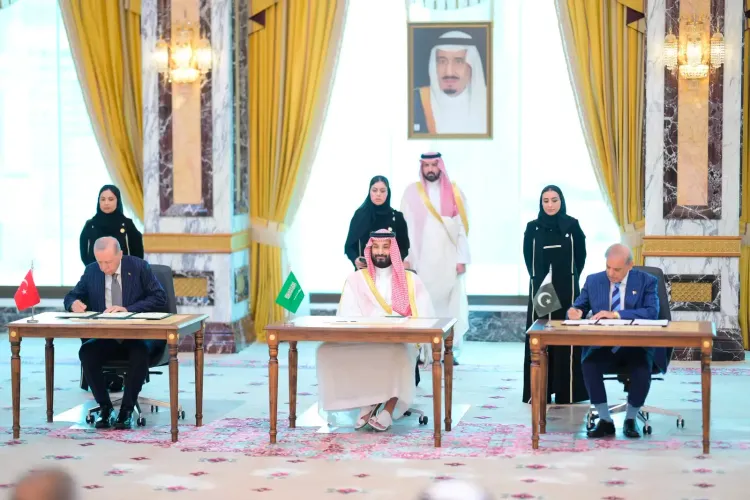
Synopsis
Iran's warning about the newly operational Saudi-Pakistan-Turkey defence pact cuts deeper than rhetoric — Tehran has directly challenged Islamabad's diplomatic credibility as a mediator between Iran and the US, signalling that Pakistan's alignment with Riyadh carries a measurable geopolitical cost far beyond the Yemen theatre.
Key Takeaways
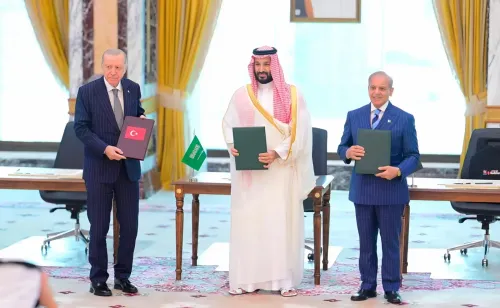
The Saudi Arabia-Pakistan-Turkey trilateral defence pact became operational on 5 October 2026 , following intensified Houthi strikes on Saudi infrastructure.
Iranian Foreign Ministry spokesman Esmail Baghaei warned that any intervention in Yemen could have 'undesirable consequences for the region.' Iranian lawmakers, including Ahmad Bakhshayesh , dismissed the pact as a 'paper and political pact' with no real security value for Saudi Arabia .
Lawmaker Ebrahim Rezaei told Saudi Arabia on X that the agreement 'will not bring them security.' Pakistan's neutrality as a mediator between Tehran and Washington is now openly questioned by Iranian lawmakers, including Ahmad Naderi .
Iranian state media characterised the pact as joining 'the Saudi war against the Yemeni people.'
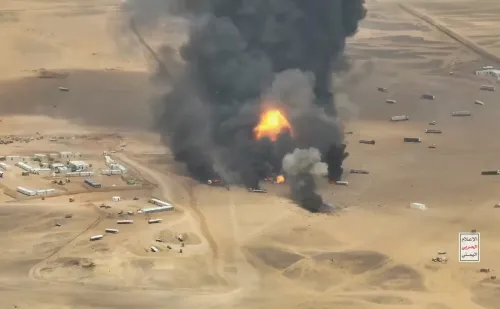
Iran has sharply escalated its criticism of the Saudi Arabia-Pakistan-Turkey trilateral defence pact after it entered its operational phase on 5 October 2026, warning that any military intervention in Yemen could trigger 'undesirable consequences' for the wider region. The warning comes as Houthi missile and drone attacks on Saudi infrastructure intensified, prompting Riyadh's new partners to announce support measures.
Pact Goes Operational Amid Houthi Escalation
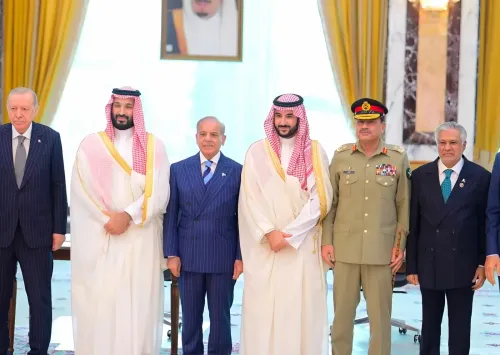
According to reports citing Iran International, the trilateral defence arrangement became active on 5 October following a fresh wave of Houthi strikes against Saudi infrastructure. Both Turkey and Pakistan confirmed they had begun taking measures in support of Saudi Arabia, setting the stage for Tehran's pointed response.
The pact's operationalisation marks a significant shift in regional security alignments, with Riyadh formalising defence ties with two major Muslim-majority states — one a NATO member and the other a nuclear power with deep ties to both Washington and Beijing.
Tehran's Official Response
Iranian Foreign Ministry spokesman Esmail Baghaei, responding to reports that tens of thousands of Pakistani troops could be deployed to Saudi Arabia, said: 'We have also heard this rumour, and we hope it is not true.' He followed up by stating that 'the countries of the region are well aware that any intervention in the Yemen issue could have undesirable consequences for the region,' and expressed hope that agreements such as the Mecca pact would not be used 'against the interests and welfare of the Muslim community.'
Iranian Foreign Minister Abbas Araghchi, without directly naming the pact, urged neighbouring nations to pursue 'self-reliance' and a policy grounded in 'genuine brotherhood,' adding that such arrangements would not constrain Iran.
Iranian Lawmakers Dismiss and Rebuke the Pact
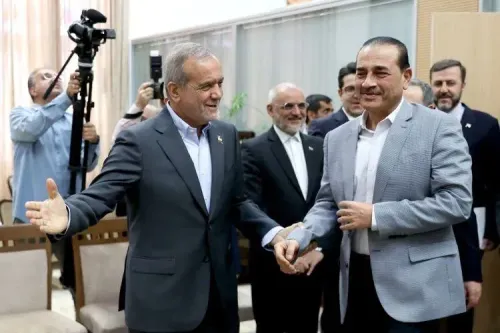
Several members of Iran's Parliament offered sharper assessments. Ahmad Bakhshayesh, a member of the National Security and Foreign Policy Commission, dismissed the arrangement as a 'paper and political pact.' Fellow commission member Ebrahim Rezaei directed pointed criticism at Riyadh, writing on X: 'The Saudis should know that a paper agreement with Turkey and Pakistan will not bring them security, just as years of one-sided milking of the Americans did not bring them security. Correct your policies so that you do not have to beg others for security.'
Lawmaker Ahmad Naderi singled out Pakistan on X, arguing that 'Pakistan's entry alongside Saudi Arabia into the war against the people of Yemen…shows that Pakistan should no longer be considered a mediator but a regional intervenor' — a pointed challenge to Islamabad's role as a back-channel between Tehran and Washington.
Pakistan's Mediator Role Under Scrutiny
Notably, Iran's criticism has landed more heavily on Pakistan than on Turkey, reportedly because of Islamabad's prominent position as a mediator between Tehran and Washington. By joining the Saudi-led security arrangement, Pakistan risks undermining that diplomatic credibility in Iranian eyes.
Iranian state media have amplified the backlash, with Tasnim News Agency framing the development as 'Turkey and Pakistan join the Saudi war against the Yemeni people.' Nour News, seen as close to Iran's Supreme National Security Council, raised pointed questions about the pact's intent, asking: 'Mecca alliance or alliance against the oppressed people of Yemen?!'
What Comes Next
The activation of the trilateral pact deepens the fault lines running through the Muslim world, setting a Saudi-Turkey-Pakistan axis against Iran-aligned forces in Yemen. Whether Pakistani troops are actually deployed — the figure of 'tens of thousands' remains unconfirmed — will determine whether this escalates into a direct confrontation or stays in the realm of deterrence. Iran's parallel criticism of Islamabad's mediator credentials signals that the diplomatic cost for Pakistan has already begun.
Point of View
And aligned closely enough with Gulf states to remain indispensable. That balancing act is now visibly cracking. If Iran formally withdraws recognition of Pakistan as a neutral party, it removes one of the few informal back-channels left in a region where direct diplomacy has collapsed. The framing of Pakistan as a 'regional intervenor' rather than a peacemaker is a diplomatic demotion with real consequences for any future Iran-US engagement routed through Islamabad.
NationPress
11 Oct 2026
Frequently Asked Questions
What is the Saudi Arabia-Pakistan-Turkey defence pact?
It is a trilateral security arrangement between Saudi Arabia, Pakistan, and Turkey that became operational on 5 October 2026, following escalating Houthi missile and drone attacks on Saudi infrastructure. Turkey and Pakistan have confirmed they began taking supportive measures for Riyadh under the pact.
Why is Iran criticising the pact?
Iran views the pact as a potential vehicle for military intervention in Yemen, where it backs the Houthi movement against Saudi-led forces. Iranian officials warned that such intervention could have 'undesirable consequences for the region' and criticised the arrangement as being directed against Muslim interests.
How does this affect Pakistan's role as a mediator?
Pakistan has acted as a back-channel between Iran and the United States, a role Tehran had implicitly accepted. By joining the Saudi-led defence arrangement, Islamabad has drawn direct criticism from Iranian lawmakers who now argue Pakistan can no longer be considered a neutral mediator but a 'regional intervenor.'
What did Iranian lawmakers say about the pact?
Iranian lawmakers dismissed the pact as a 'paper and political pact' with no real security value. Lawmaker Ebrahim Rezaei wrote on X that the agreement would not bring Saudi Arabia security, while Ahmad Naderi warned that Pakistan had compromised its mediator status by aligning with Riyadh.
Are Pakistani troops actually being deployed to Saudi Arabia?
Reports have cited figures of tens of thousands of Pakistani troops potentially being deployed, but this remains unconfirmed. Iranian Foreign Ministry spokesman Esmail Baghaei said Iran had 'heard this rumour' and hoped it was not true, indicating the deployment is not yet verified.