Pakistan-Saudi defence pacts under scrutiny after Houthi strikes near Mecca
Synopsis
Pakistan signed sweeping mutual-defence pacts with Saudi Arabia in 2025, even placing a commodore as deputy commander of a 14-nation maritime coalition. But when Houthi drones struck near Mecca on 15 September, Islamabad's Foreign Ministry said no military response was being discussed — raising a pointed question: are these treaties operational commitments or elaborate deterrence theatre?
Key Takeaways
Pakistan and Saudi Arabia signed the Strategic Mutual Defence Agreement (SMDA) in September 2025 , treating aggression against one as aggression against both.
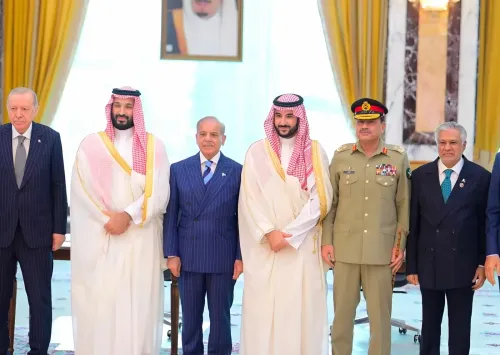
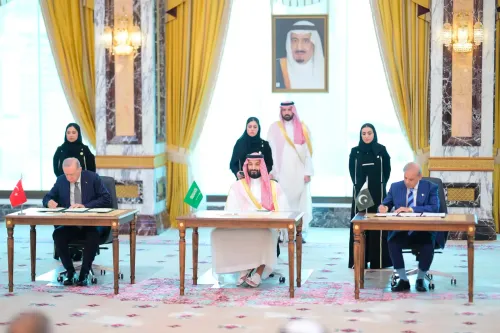
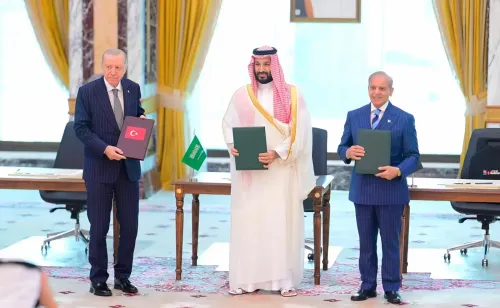
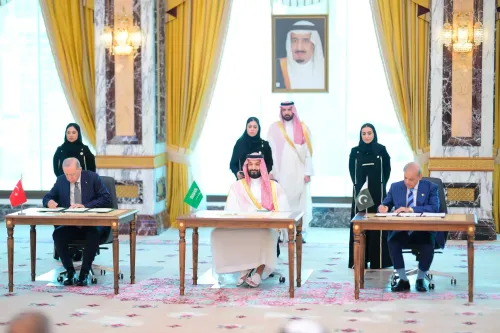
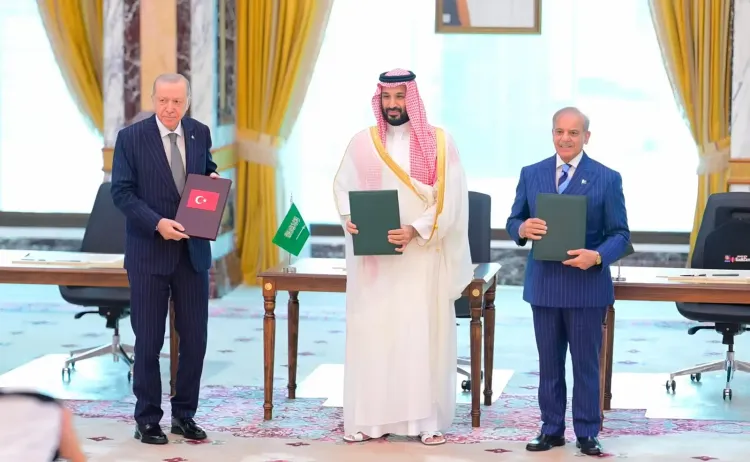
The Mecca Joint Defence Agreement , signed on 7 August by PM Shehbaz Sharif , Saudi Crown Prince Mohammed bin Salman , and Turkish President Recep Tayyip Erdogan , carries equally explicit collective-defence language.
Pakistan's Commodore Rashid Sheikh serves as deputy commander of the Multinational Maritime Defence Coalition , operational since 2 September .
Pakistan's Foreign Ministry said on 10 September that no military response under the Mecca Agreement was under discussion.
A Houthi drone was intercepted south of Mecca on 15 September ; the Houthis denied targeting the holy city.
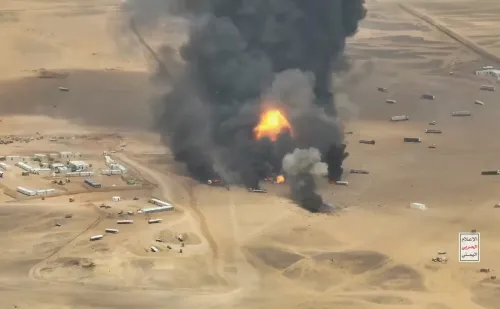
Houthi strikes have hit Saudi cities including Abha , Khamis Mushait , Jazan , and Najran .
Pakistan's defence commitments to Saudi Arabia are facing their first serious operational test, as renewed Houthi strikes on Saudi cities and energy infrastructure expose a widening gap between the country's formal treaty obligations and its apparent willingness to act on them, according to an analysis published in Eurasia Review.
The Architecture of Commitments
Pakistan and Saudi Arabia signed the Strategic Mutual Defence Agreement (SMDA) in September 2025, under which aggression against either state is to be treated as aggression against both. That framework was reinforced by the Mecca Joint Defence Agreement, signed on 7 August by Saudi Crown Prince Mohammed bin Salman, Turkish President Recep Tayyip Erdogan, and Pakistani Prime Minister Shehbaz Sharif.
The Mecca accord contains unusually explicit language: 'An armed attack against one of the three states is to be regarded as an attack against all,' the Eurasia Review report noted. Pakistan has publicly described the agreement as a mechanism for collective deterrence and regional stability.
Operational Role and Maritime Deployment
Islamabad is also embedded in the Multinational Maritime Defence Coalition, announced on 30 July by Saudi Arabia and 13 other countries and declared operational from 2 September. Pakistan's Commodore Rashid Sheikh serves as deputy commander — the second-highest position in the force — underscoring the depth of Islamabad's institutional integration into the coalition structure.
Caution Over Clarity
Despite the dense treaty architecture, Pakistan's response to the escalating Houthi campaign has been notably restrained. The country's Foreign Ministry stated on 10 September that no military response under the Mecca Agreement was being discussed, a position the Eurasia Review analysis characterised as producing 'caution rather than clarity.'
The report framed the core dilemma sharply: 'The renewed Houthi assault on Saudi territory is exposing the unresolved question beneath that architecture: how much of Pakistan's security role is an operational commitment, and how much remains declaratory deterrence?'
Strikes Near the Holy Cities
The Houthi campaign has struck Saudi cities and energy infrastructure across Abha, Khamis Mushait, Jazan, and Najran. The confrontation reached its most politically charged moment on 15 September, when Saudi Arabia said its air defences intercepted a Houthi drone south of Mecca before it entered the holy city's restricted airspace.
Saudi coalition spokesperson Major General Turki al-Malki declared the security of Mecca, Medina, and pilgrims a 'red line.' The Houthis denied targeting Mecca, leaving the intended target disputed, but the incident drew the confrontation into the most politically sensitive terrain possible for Pakistan — a country whose domestic religious politics make any perceived inaction over the holy cities deeply fraught.
What the Analysis Signals
This comes amid broader questions about the durability of regional security architectures built on mutual-defence language without agreed escalation thresholds or enforcement mechanisms. Notably, the three-party Mecca accord has no publicly known protocol for when and how collective military action would be triggered. As the Houthi campaign intensifies, the gap between Pakistan's treaty commitments and its stated posture is likely to draw sharper scrutiny from both Riyadh and domestic audiences in Islamabad.
Point of View
The Mecca accord, and a deputy-commander slot in a 14-nation maritime force — represent the most explicit defence architecture Islamabad has ever entered in the Gulf. Yet the Foreign Ministry's September 10 statement that no military response was being discussed reveals a familiar pattern: Pakistan signs agreements with maximalist language and then reserves the right to interpret them minimally when activation is demanded. The drone intercept near Mecca is the most dangerous test yet, because it triggers not just treaty clauses but Pakistan's own domestic religious sensitivities. If Islamabad cannot articulate a credible threshold for action, its partners in Riyadh and Ankara will draw their own conclusions about the value of its signature on future agreements.
NationPress
20 Sept 2026
Frequently Asked Questions
What defence agreements has Pakistan signed with Saudi Arabia?
Pakistan signed the Strategic Mutual Defence Agreement (SMDA) with Saudi Arabia in September 2025, under which an attack on one state is treated as an attack on both. This was followed by the Mecca Joint Defence Agreement of 7 August, a three-way pact also signed by Turkey, containing explicit collective-defence language.
What is the Mecca Joint Defence Agreement?
The Mecca Joint Defence Agreement is a trilateral security pact signed on 7 August by Saudi Crown Prince Mohammed bin Salman, Turkish President Recep Tayyip Erdogan, and Pakistani Prime Minister Shehbaz Sharif. It states that an armed attack against any one of the three countries is to be regarded as an attack against all.
Why are Pakistan's commitments under scrutiny now?
Renewed Houthi strikes have targeted Saudi cities and energy infrastructure, and a Houthi drone was intercepted near Mecca on 15 September. Despite the mutual-defence treaties, Pakistan's Foreign Ministry stated on 10 September that no military response under the Mecca Agreement was being discussed, raising questions about whether the commitments are operational or declaratory.
What role is Pakistan playing in the multinational coalition?
Pakistan is embedded in the Multinational Maritime Defence Coalition announced on 30 July by Saudi Arabia and 13 other countries, which became operational on 2 September. Pakistan's Commodore Rashid Sheikh serves as deputy commander — the second-highest position in the force.
What happened near Mecca on 15 September?
Saudi Arabia announced that its air defences intercepted a Houthi drone south of Mecca before it entered the holy city's restricted airspace on 15 September. The Houthis denied targeting Mecca, leaving the intended target disputed, but the incident brought the conflict into the most politically sensitive zone for Pakistan given Mecca's religious significance.