Karnataka to give 7% quota in professional courses for rural govt school students
Synopsis
At the 71st Kannada Rajyotsava, Karnataka CM D.K. Shivakumar unveiled a 7% reservation in professional courses — engineering and medical — exclusively for rural government school students, bundled with 15,000 teacher recruitments, AI training from Class 6, and ₹30,000 crore in farmer loans. It is the most sweeping education equity push the state has announced in years.
Key Takeaways
Shivakumar announced a 7% reservation in professional education (engineering and medical) for rural government school students on 1 November 2025 .
Orders issued for recruitment of 15,000 teachers ; 25,498 bilingual schools launched across the state.
AI training to be introduced from Class 6 through Class 12 in government schools.
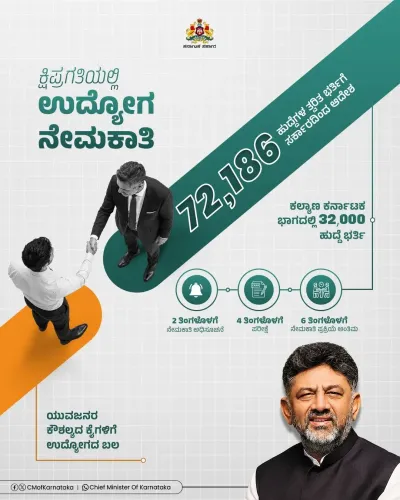
72,000 government vacancies to be filled; 10,000 Bharat Jodo youth associations planned with ₹10 lakh annual grants each.
Milk price hike of ₹8 per litre defended — ₹7 goes to farmers; set to benefit 11 lakh farming families .
Shivakumar alleged 'deliberate' deletion of voters from electoral rolls and backed a Congress-led protest in Delhi on voting rights.
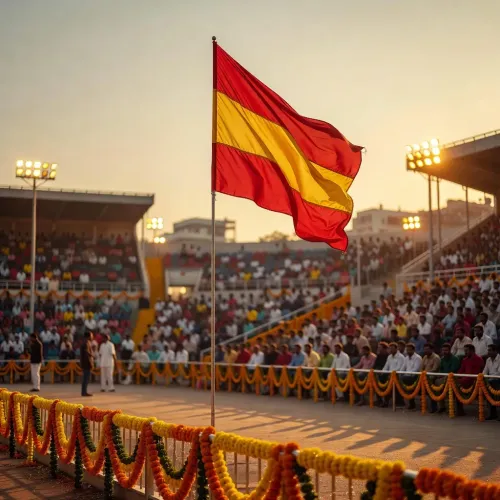
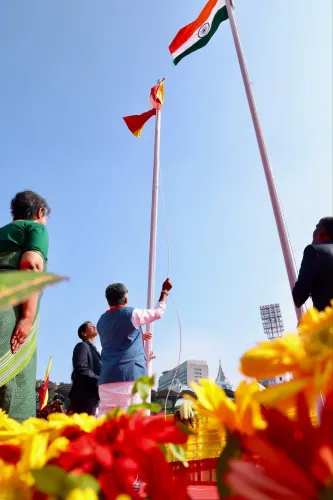
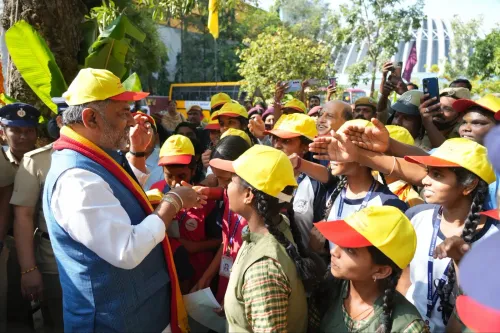
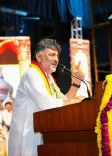
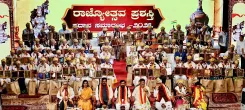
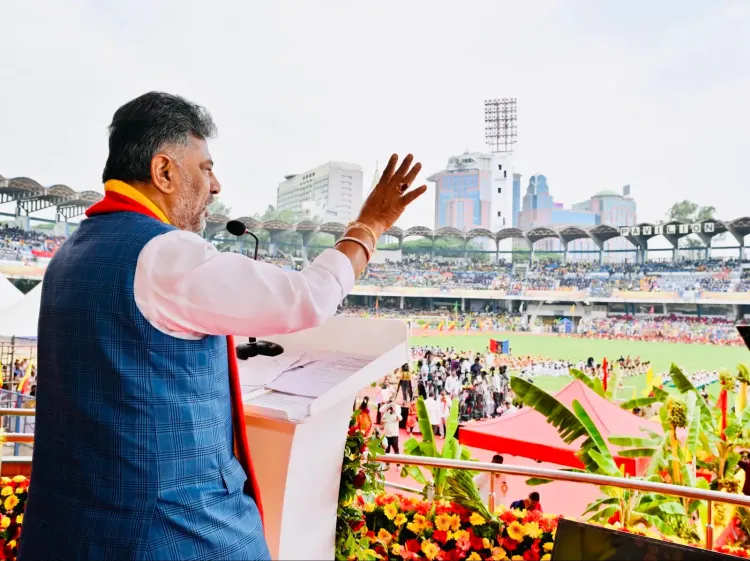
Karnataka Chief Minister D.K. Shivakumar on Sunday, 1 November 2025 announced a 7% reservation in professional education — including engineering and medical courses — for students who have studied in rural government schools. The announcement was made during the 71st Kannada Rajyotsava celebrations at Kanteerava Stadium in Bengaluru, marking one of the most significant education policy moves of the current Congress government in the state.
What the Reservation Covers
The 7% quota is specifically designed to widen access to professional courses for students from rural government-run schools, who have historically been underrepresented in engineering and medical admissions. Shivakumar said the reservation was intended to provide 'greater opportunities' for this segment of students to pursue higher professional education.
This comes amid a broader state push to upgrade rural schooling infrastructure. According to the Chief Minister, orders have been issued for the recruitment of 15,000 teachers, and 25,498 bilingual schools have been launched across Karnataka. Science laboratories have been established in 250 government schools, and the state government is utilising Corporate Social Responsibility (CSR) funds for further upgrades.
School Transformation Initiatives
Shivakumar outlined a series of measures aimed at bringing panchayat-level schools on par with urban institutions. Skill-based education has been introduced from Class 6, with artificial intelligence training to be offered from Class 6 through Class 12. The government is also working to support Kannada-medium aided schools established after 1995, pending discussions with the Finance Department.
Notably, the state is deploying drone- and satellite-based crop surveys worth ₹3.32 crore across 1,000 square kilometres — a signal of technology integration extending beyond classrooms into rural governance.
Jobs, Sports, and Youth Schemes
The Chief Minister announced that orders have been issued to fill 72,000 government vacancies, with 66,000 jobs already created. The Udyoga Sethu platform has been introduced by the Skill Development Department to connect job seekers with private-sector employment, and around 100 ITIs have signed agreements with leading industries.
On sports, Shivakumar said Karnataka athletes won eight medals at the Asian Games. Cash incentives announced include ₹1 crore for gold medallists, ₹75 lakh for silver medallists, and ₹50 lakh for bronze medallists. Athletes who participated in the Asian Games received ₹5 lakh each, while those preparing for the Paralympics are being given ₹10 lakh each. A 2% reservation for sportspersons in government jobs and 3% in the Forest and Police departments has also been introduced.
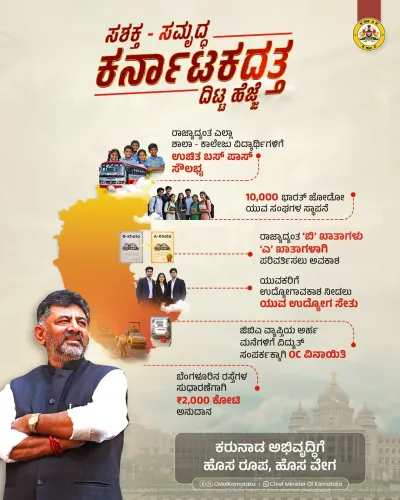
To foster youth leadership, the state plans to establish 10,000 Bharat Jodo youth associations at the panchayat and ward levels for those aged 16 to 35 years, with each association receiving an annual grant of ₹10 lakh.
Agriculture, Milk Prices, and Farmer Support
Defending a recent ₹8 per litre increase in milk prices, Shivakumar said drought conditions had put farmers under stress, and ₹7 of the increase would go directly to farmers, with the remaining ₹1 allocated to milk unions and societies. The decision is expected to benefit approximately 11 lakh farming families.
Agricultural support measures include crop loans worth ₹30,000 crore distributed to 38 lakh farmers, crop insurance for 37.32 lakh farmers, and agricultural equipment for 3.41 lakh farmers. Drip irrigation projects worth ₹2,825 crore are underway, along with the construction of 32,138 farm ponds at a cost of ₹363 crore. Other schemes mentioned include the Neagilu Yogi scheme for small farmers, distribution of five lakh housing sites, the Bhugyaranti initiative for property ownership records, and the Teak Siri scheme for farmer income improvement.
Voting Rights and Delhi Protest
Shivakumar also addressed the Congress-led protest planned in Delhi to protect voting rights, alleging that the names of 'lakhs of voters' had been deliberately removed from electoral rolls in Karnataka. 'Every voter's right must be protected, and it is the responsibility of all of us,' he said. He expressed confidence that the Delhi demonstration would be successful and framed the fight against alleged voter roll deletions as a fundamental democratic issue.
As Karnataka marks its Rajyotsava, the education quota and school transformation package signal that the Shivakumar government intends to make rural equity a centrepiece of its second-year agenda — with rollout timelines and legal challenges likely to define whether this promise translates into seats.
Point of View
And it arrives on Kannada Rajyotsava for maximum symbolic impact. Yet the announcement raises implementation questions: does the state have the legal architecture to layer a new rural quota atop existing OBC, SC, and ST reservations without breaching the Supreme Court's 50% ceiling? The school transformation initiatives — 25,498 bilingual schools, AI from Class 6 — are commendable in ambition, but Karnataka's track record on teacher recruitment timelines and infrastructure completion suggests the gap between order and execution will be where this policy lives or dies. The blending of education policy, farmer welfare, and electoral-roll allegations in a single Rajyotsava address also signals that the government is in mobilisation mode — stitching together a coalition narrative ahead of local body elections.
NationPress
1 Nov 2026
Frequently Asked Questions
What is the 7% reservation announced by Karnataka CM D.K. Shivakumar?
It is a reservation of 7% seats in professional education courses — including engineering and medical — exclusively for students who have studied in rural government schools in Karnataka. The announcement was made on 1 November 2025 at the 71st Kannada Rajyotsava celebrations in Bengaluru.
When will the Karnataka rural education quota take effect?
Chief Minister Shivakumar announced the reservation but did not specify an implementation date. A formal government order and potential legal review against existing reservation structures will be required before it can be applied to admissions.
What other education reforms did Shivakumar announce at Kannada Rajyotsava 2025?
He announced recruitment of 15,000 teachers, launch of 25,498 bilingual schools, science labs in 250 government schools, skill-based education from Class 6, and AI training from Class 6 through Class 12. The state also plans support for Kannada-medium aided schools established after 1995.
Why did Karnataka raise milk prices by ₹8 per litre?
Chief Minister Shivakumar defended the hike citing drought-related hardship faced by farmers. Of the ₹8 increase, ₹7 will go directly to farmers and ₹1 to milk unions and societies, with around 11 lakh farming families expected to benefit.
What did Shivakumar say about the Congress protest in Delhi over voting rights?
He alleged that the names of lakhs of voters had been deliberately removed from Karnataka's electoral rolls and expressed confidence that the Congress-led protest in Delhi to protect voting rights would be successful. He called protecting every voter's right 'the responsibility of all of us.'