CM Sai Celebrates 45,000 Surgeries at Sanjeevani Hospital, Lays Nursing College Foundation
Synopsis
Chief Minister Vishnu Deo Sai and Union Minister Mansukh Mandaviya marked 45,000 successful free paediatric cardiac surgeries at Nava Raipur's Sanjeevani Hospital, and CM Sai laid the foundation stone of a nursing college and dormitory for tribal students.
Key Takeaways
Shri Satya Sai Sanjeevani Hospital in Nava Raipur has completed 45,000 successful paediatric cardiac surgeries , as celebrated at the 1 November 2026 event.
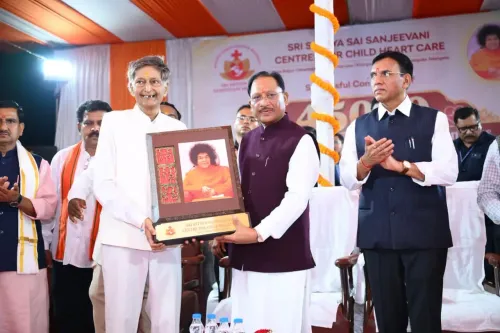
Chief Minister Vishnu Deo Sai personally felicitated the doctors and full medical team at the milestone function.
Union Health Minister Dr.
Mansukh Mandaviya was present, reflecting Central government interest in the charitable hospital model.
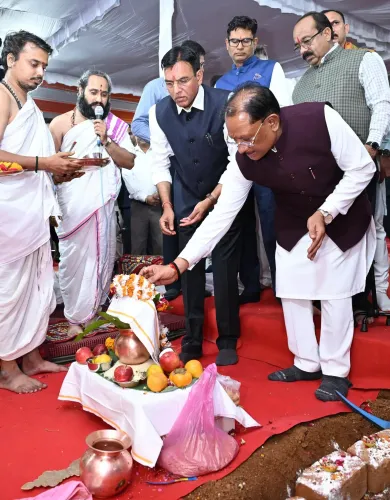
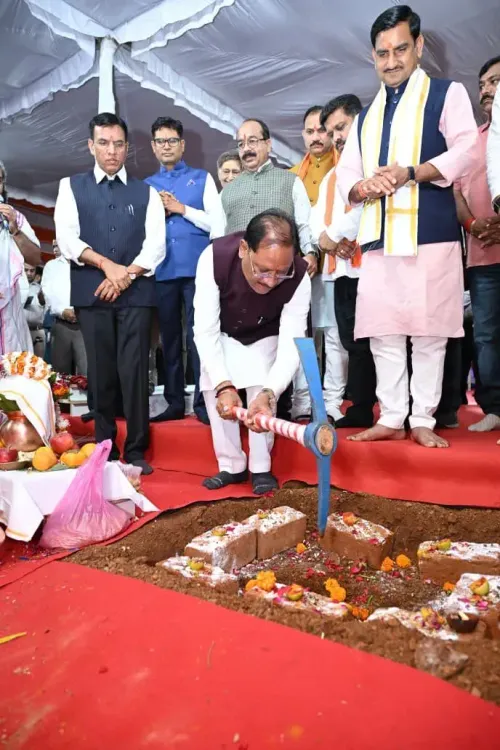
CM Sai performed the bhoomi pujan for a new nursing college and dormitory specifically for tribal students , with a stated focus on tribal girls.
The initiative aims to create healthcare education and employment pathways for tribal youth in one of India's most tribal-dense states.
The Sanjeevani network has provided free congenital heart disease surgeries across India since the early 2010s.
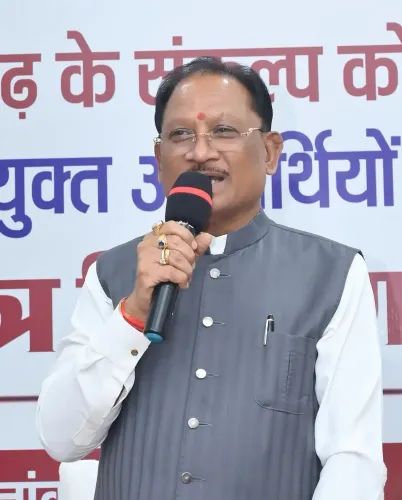
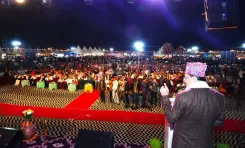
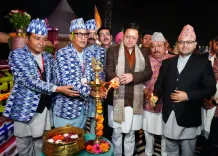
Forty-five thousand children. Each one arrived with a broken heart — literally — and left with a second chance. On Sunday, 1 November 2026, Chief Minister Vishnu Deo Sai stood at the Shri Satya Sai Sanjeevani Hospital in Nava Raipur to mark that milestone, honouring the surgical teams who made it possible in the presence of Union Health Minister Dr. Mansukh Mandaviya.
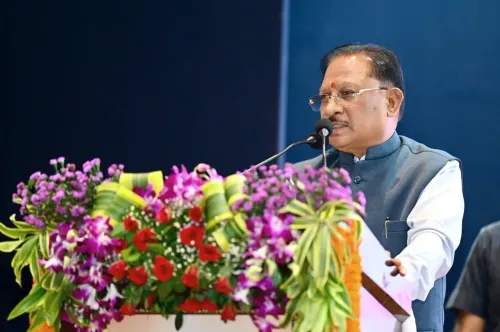
Speaking at the event, CM Sai described the hospital as 'maanav seva, karuna aur samarpan ki adbhut misal' — 'a remarkable example of human service, compassion and dedication.' The tribute was aimed squarely at the doctors and the full medical team whose cumulative work across thousands of free paediatric cardiac surgeries has made the institution a quiet landmark in Indian charitable healthcare.
What Sanjeevani Has Built in Nava Raipur
The Shri Satya Sai Sanjeevani Hospital is part of a pan-India network of child heart care centres that has operated since the early 2010s, delivering congenital heart disease surgeries to children from under-served communities — almost entirely free of cost. The Nava Raipur facility sits in Chhattisgarh's planned capital city, a region the state has steadily built up as a hub for government institutions and social infrastructure. The milestone of 45,000 successful surgeries — as stated in the Chief Minister's Office post — represents an extraordinary volume of complex paediatric intervention for a state-based charitable centre.
Union Minister Mandaviya's presence elevated the occasion, signalling the Central government's alignment with the hospital's model at a time when national health policy has increasingly spotlighted public-private and public-charitable partnerships in tertiary care.
A Nursing College and Dormitory for Tribal Girls
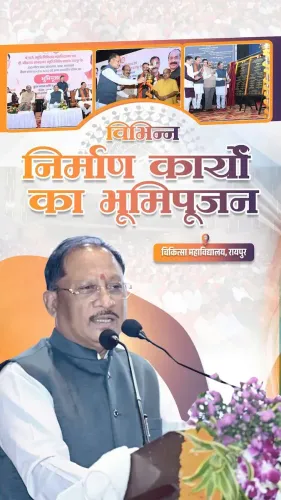
The headline number was not the only news. CM Sai performed the bhoomi pujan — the formal ground-breaking — for a proposed nursing college and dormitory specifically earmarked for tribal students. The Chief Minister made the intent explicit: the facility will open 'new opportunities in health education and employment for tribal youth, especially daughters.'
Chhattisgarh carries one of the highest proportions of tribal population among Indian states, and successive governments have linked healthcare delivery to tribal development. The new nursing college fits squarely into that pattern — channelling young women from Scheduled Tribe communities into a credentialled, employment-ready health workforce rather than leaving their healthcare access dependent solely on external provision.
Why the Timing Matters
The double announcement — a surgical milestone celebrated and a new educational institution launched on the same day — frames Nava Raipur as both a delivery point and a training ground for Chhattisgarh's health ambitions. The nursing college's construction timeline and admissions process will determine how quickly that promise translates into placements. What is already clear is the political and developmental logic: build the infrastructure, train the workforce locally, and reduce the chronic healthcare gap in one of India's most tribal-dense states.
Forty-five thousand surgeries done. The next chapter is about who performs the next forty-five thousand.
Point of View
Tribal welfare is both a developmental necessity and an electoral constituency, and health-sector projects that visibly benefit Scheduled Tribe communities carry outsized political dividend. The Central minister's presence also signals that New Delhi sees the Sanjeevani model as a replicable template, potentially drawing national policy attention and funding toward Nava Raipur as a health infrastructure showcase. The real test will be whether the nursing college moves from foundation stone to functional admissions within a politically credible window.
NationPress
2 Nov 2026
Frequently Asked Questions
What is the Shri Satya Sai Sanjeevani Hospital in Nava Raipur?
It is a charitable paediatric cardiac care hospital in Nava Raipur, Chhattisgarh, part of the Sri Sathya Sai Sanjeevani network that provides free congenital heart disease surgeries for children, primarily from under-served communities, and has operated since the early 2010s.
How many surgeries has Sanjeevani Hospital Nava Raipur completed?
According to the Chief Minister's Office of Chhattisgarh, the hospital has completed 45,000 successful surgeries — a milestone celebrated on 1 November 2026 by CM Vishnu Deo Sai and Union Minister Mansukh Mandaviya.
What is the new nursing college announced in Chhattisgarh for tribal students?
CM Vishnu Deo Sai laid the foundation stone of a proposed nursing college and dormitory in Nava Raipur specifically for tribal youth, with a focus on creating healthcare education and employment opportunities for tribal girls in Chhattisgarh.
Why was Union Minister Mansukh Mandaviya at the Nava Raipur hospital event?
Dr. Mansukh Mandaviya, Union Minister of Health and Family Welfare, attended the milestone celebration at Sanjeevani Hospital to mark the 45,000-surgery achievement and the foundation laying of the tribal nursing college, reflecting Central government support for the charitable healthcare model.
What is Nava Raipur and why are health projects being built there?
Nava Raipur is Chhattisgarh's planned capital city developed since the early 2010s to host government institutions, healthcare facilities and social infrastructure. The state has consistently invested in health and education projects in the region as part of broader capital-area development.