Bangladesh Hindu family killing: Rights body urges probe into militant links

Synopsis
Four members of a Hindu family — including a 12-year-old boy — were found dead in Rangpur, Bangladesh. Police arrested two suspects and cited a drug dispute as the motive. But a Paris-based rights body says the shifting police narrative, the victims' religious identity, and a fresh UN warning about Al-Qaida activity inside Bangladesh make a fully independent probe non-negotiable.
Key Takeaways
Four members of the Chakraborty Hindu family — including a 12-year-old child — were killed in Rangpur, Bangladesh ; bodies recovered on 22 August .
Bangladesh police arrested Siddhartha Das, 23 , and Mugdha Das, 19 , citing a dispute over yaba drug use as the motive.
Justice Makers Bangladesh in France (JMBF) has condemned the killings and demanded an independent, impartial investigation into possible religious extremist or militant links .
The UN Security Council recently warned that AQIS is attempting to use Bangladesh as a base for terrorist cells, per the 38th UN Sanctions Monitoring Team report .
Bangladesh Home Minister Salahuddin Ahmed reportedly said the government was not taking the UN report into account, drawing sharp criticism from JMBF.
JMBF has urged authorities to not exclude any motive — communal, extremist, criminal, or otherwise — from the investigation.
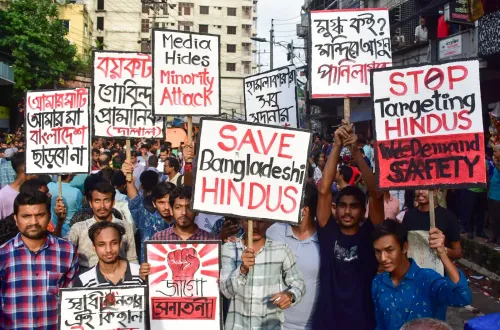
A Paris-based international human rights organisation has strongly condemned the killing of four members of a Hindu family in Rangpur city, Bangladesh, demanding an independent investigation into possible religious extremist or militant links — a call that comes amid a recent UN Security Council warning about terrorist activity inside Bangladesh. The victims were found on 22 August 2025, two days after the incident on 20 August.
The Victims and What Happened
The four deceased were identified as retired Rangpur Zilla School teacher Ganapati Chakraborty, 65; his wife Pritilata Chakraborty, 50; their daughter Agami Chakraborty Prarthi, 23; and their son Priyam Chakraborty, 12. Police recovered the bodies on the night of 22 August, two days after the incident is believed to have occurred.
Bangladesh police subsequently arrested two young men — Siddhartha Das, 23, and Mugdha Das, 19 — from the Dakhiganj cremation ground in Rangpur city. According to local media reports, police stated the duo planned and carried out the murders after the retired teacher attempted to stop them from consuming yaba, a potent methamphetamine-based illicit drug, on the rooftop of the building.
Why the Rights Body Is Not Satisfied
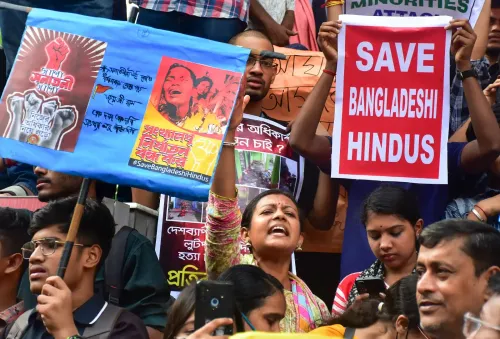
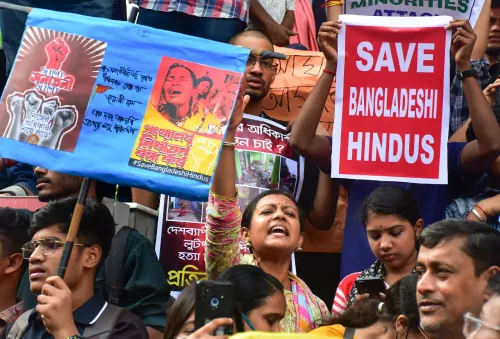
Justice Makers Bangladesh in France (JMBF) said the killing of a religious minority family — including a woman and a child — cannot be dismissed as an ordinary or isolated crime. The organisation cited several factors warranting deeper scrutiny: the victims' religious identity, significant shifts in the police's initial and subsequent accounts of the motive, and doubts raised by the victims' relatives over the official narrative.
In a statement, JMBF said: 'In light of the UN's recent warning, the victims' religious minority identity, the changing police narrative, and the serious questions raised by the victims' relatives, it would be equally irresponsible to dismiss possible religious extremist or militant links without proper investigation.'
The UN Security Council Warning
The JMBF's concerns are set against a broader security backdrop. The UN Security Council recently warned that Al-Qaida in the Indian Subcontinent (AQIS) has been attempting to use Bangladesh as a base to establish terrorist cells. The finding was contained in the 38th report of the UN Analytical Support and Sanctions Monitoring Team, submitted to the Security Council committee dealing with the Islamic State, Al-Qaida and associated groups.
JMBF acknowledged that the UN report does not directly link the Rangpur killings to AQIS or any other militant group, but argued the international security warning 'strengthens the need to investigate all possible motives and connections in this case impartially.'
Concern Over Bangladesh Government's Response
The rights body also expressed concern over remarks reportedly made by Bangladesh Home Minister Salahuddin Ahmed following publication of the UN report. According to JMBF, the minister publicly stated that the government was not taking the report into account and reportedly said he had not yet read it at the time of making the statement. JMBF called it 'deeply troubling to effectively dismiss a potential international security warning connected to national security and the protection of religious minorities without properly examining it.'
What JMBF Is Demanding
The organisation has called on the Bangladesh government to immediately ensure an independent, impartial, credible, and high-level investigation into the quadruple murder, rather than relying solely on the current police inquiry. It also urged authorities to ensure that no possibility — including a communal motive, religious extremist or militant involvement, premeditation, robbery, personal dispute, or a broader criminal network — is excluded in advance. The case is being closely watched by minority rights groups across South Asia.
Point of View
And the subsequent shifts in the official narrative, have done little to build credibility. When a minority family is killed, the burden of proof on authorities is higher, not lower. The Home Minister's reported dismissal of a UN Security Council report — without reading it — is not a posture that inspires confidence in an impartial inquiry. Bangladesh's track record on minority protection is already under international scrutiny; how Dhaka handles this investigation will signal whether that scrutiny is warranted.
NationPress
11 Oct 2026
Frequently Asked Questions
Who were the victims of the Rangpur Hindu family killing in Bangladesh?
The four victims were retired Rangpur Zilla School teacher Ganapati Chakraborty, 65; his wife Pritilata Chakraborty, 50; their daughter Agami Chakraborty Prarthi, 23; and their son Priyam Chakraborty, 12. Their bodies were recovered on the night of 22 August, two days after the incident on 20 August.
Who has been arrested in connection with the Rangpur killings?
Bangladesh police arrested Siddhartha Das, 23, and Mugdha Das, 19, both detained from the Dakhiganj cremation ground in Rangpur city. Police stated they carried out the murders after the retired teacher tried to stop them from consuming yaba, an illicit methamphetamine-based drug, on the rooftop.
Why is Justice Makers Bangladesh in France calling for an independent investigation?
JMBF says the victims' religious minority identity, shifting police accounts of the motive, doubts raised by the family's relatives, and a recent UN Security Council warning about Al-Qaida activity in Bangladesh collectively make an independent, impartial probe essential. The organisation argues no possible motive — including religious extremism — should be ruled out without thorough investigation.
What did the UN Security Council say about Bangladesh and Al-Qaida?
The UN Security Council recently warned that Al-Qaida in the Indian Subcontinent (AQIS) has been attempting to use Bangladesh as a base to establish terrorist cells. The finding was published in the 38th report of the UN Analytical Support and Sanctions Monitoring Team, submitted to the committee dealing with Islamic State and Al-Qaida.
How has the Bangladesh government responded to the UN report on AQIS?
According to JMBF, Bangladesh Home Minister Salahuddin Ahmed publicly stated that the government was not taking the UN report into account, and reportedly said he had not yet read it when making the statement. JMBF described this as 'deeply troubling' and called it an effective dismissal of a potential international security warning.