Why Did India Suspend Visa Services After Violence Near Its Chittagong Mission?
Click to start listening
Synopsis
Violence erupted in Chittagong, prompting India to suspend visa operations amid escalating tensions. With security concerns on the rise, this situation highlights the ongoing challenges faced by diplomatic missions in Bangladesh. Will the security conditions improve enough for services to resume?
Key Takeaways
- Visa operations at the IVAC in Chittagong are suspended indefinitely.
- Violence erupted due to political tensions following a radical group's spokesperson's death.
- Authorities are assessing the security situation before resuming services.
- Protests have led to injuries and arrests, highlighting growing unrest.
- India has urged Bangladesh to ensure the safety of its diplomatic missions.
Chittagong, Dec 21 (NationPress) In light of a recent violent event at the Indian Assistant High Commission in Chittagong, Bangladesh, Indian visa processing at the Indian Visa Application Centre (IVAC) in the city will be temporarily halted starting Sunday until further notice, as confirmed by officials.
They emphasized that any updates regarding the restoration of visa services will be communicated only after evaluating the current security situation.
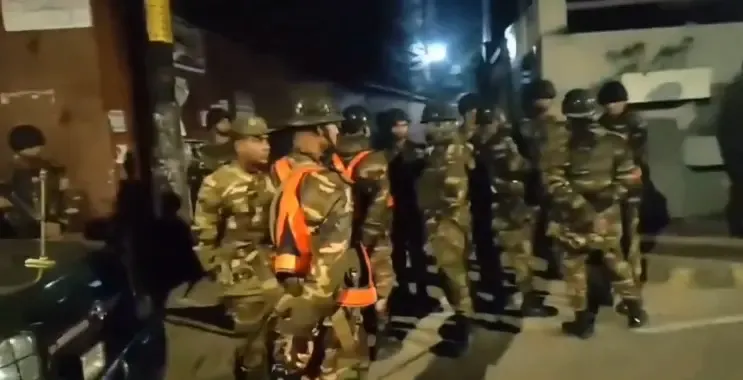
This decision follows a violent outbreak outside the Indian mission on Friday, which resulted in at least four injuries, including two police officers.
Local media reports indicate that unrest erupted after the passing of Sharif Osman Hadi, a spokesperson for the radical group Inqilab Mancha.
According to police, demonstrators congregated outside the Indian mission in the Khulshi neighborhood of Chittagong, throwing bricks and damaging parts of the building during the early hours of Friday.
Chittagong Metropolitan Police Commissioner Hasib Aziz noted that police action led to a pursuit involving law enforcement and the protesters. He stated that the injured individuals were transported to Chittagong Medical College Hospital for medical care.
Aziz further mentioned that several individuals were detained at the scene and may face charges under the Anti-Terrorism Act, as reported by the Bangladeshi daily Dhaka Tribune.
Earlier in the week, the Ministry of External Affairs (MEA) summoned the Bangladeshi High Commissioner to India, Riaz Hamidullah, to express New Delhi's strong concerns regarding the deteriorating security climate in Bangladesh.
The MEA specifically highlighted the activities of extremist factions that have allegedly announced intentions to instigate a security crisis around the Indian mission in Dhaka.
India categorically dismissed what it termed a misleading narrative being propagated by extremist groups concerning recent developments in Bangladesh.
The MEA also expressed apprehensions that the interim government led by Muhammad Yunus has not conducted a thorough investigation or provided any substantial evidence to India regarding these incidents.
New Delhi urged the Yunus-led interim administration to uphold its diplomatic obligations by ensuring the safety and security of Indian missions and personnel in Bangladesh.
In a separate occurrence in Chittagong, amid protests following Hadi's death, demonstrators set fire to the residence of former Awami League Education Minister Mohibul Hasan Chowdhury Naufel.
This incident unfolded on Thursday night in the Chashmahill area, where furious protesters also ignited a motorcycle inside the house, belonging to former Chittagong mayor Mohiuddin Chowdhury.
Officer-in-Charge of Panchlaish Police Station, Md Solaiman, confirmed that around 200 protesters had assembled in the Soloshahar and No. 2 Gate areas of Chittagong to voice their discontent over Hadi's death.
Bangladesh has experienced a noticeable surge in violence and a decline in law and order under the interim government of Muhammad Yunus.
Point of View
It's crucial to recognize the escalating violence in Bangladesh and its potential impacts on diplomatic relations. Our commitment is to provide a balanced view on these unfolding events, emphasizing the need for safety and security in our international dealings.
NationPress
22/12/2025
Frequently Asked Questions
Why were visa services suspended in Chittagong?
Visa services were suspended due to a violent incident outside the Indian Assistant High Commission, prompting security concerns.
When will Indian visa services resume?
The resumption of visa services will depend on a review of the security situation, with no specific timeline provided yet.
What led to the violence in Chittagong?
The violence erupted following the death of Sharif Osman Hadi, a spokesperson for a radical group, which incited protests outside the Indian mission.
How is the Indian government responding to the situation?
The Indian government has expressed serious concerns regarding the safety of its diplomatic missions and is urging the Bangladeshi authorities to ensure security.
Are there any arrests related to the protests?
Yes, several individuals were detained by police during the protests and may face charges under the Anti-Terrorism Act.