Bangladesh NCP's Jamaat alliance raises identity crisis, costs 60 leaders
Synopsis
Bangladesh's NCP — born from the student uprising that toppled the Awami League — is now routinely sharing platforms with Jamaat-e-Islami, an organisation linked to opposing the 1971 Liberation War. At least 60 party members have quit over it. The question The Diplomat is asking is the same one voters may be asking: what, exactly, still separates these two parties?
Key Takeaways
National Citizen Party (NCP) of Bangladesh joined the Jamaat-e-Islami (JI) -led coalition, drawing criticism over Jamaat's 1971 Liberation War history.
At least 60 NCP leaders and activists resigned by the party's first anniversary in February 2026 , citing the JI alliance as a key reason.
NCP convener Nahid Islam addressed a JI-led long march on 19 September , attacking Prime Minister Tarique Rahman from a Jamaat platform.
Post-election, JI chief Shafiqur Rahman became opposition leader and Nahid Islam became opposition chief whip, deepening ties beyond the polls.
The NCP insists its relationship with JI is strategic, not ideological , but a The Diplomat report questions whether voters will accept that distinction.
The National Citizen Party (NCP) of Bangladesh is facing a deepening political identity crisis after joining the Jamaat-e-Islami (JI)-led coalition, a move that has drawn sharp scrutiny given Jamaat's documented history of opposing Bangladesh's 1971 Liberation War and collaborating with Pakistani forces, according to a report in The Diplomat. The alliance has already cost the NCP at least 60 leaders and activists, who quit by the party's first anniversary in February 2026.
How the Alliance Took Shape
The NCP was born out of the student-led protests that brought down the Awami League government in August 2024. It entered the political arena promising a new kind of politics — distinct from the country's established parties. However, its electoral alliance with JI emerged as the clearest public signal of an internal rift over the party's ideological direction.
Following the election, the partnership did not dissolve. JI chief Shafiqur Rahman became leader of the opposition, while NCP convener Nahid Islam took over as opposition chief whip. The two parties have since maintained close coordination both inside and outside Parliament.
Nahid Islam's Remarks at a Jamaat Platform
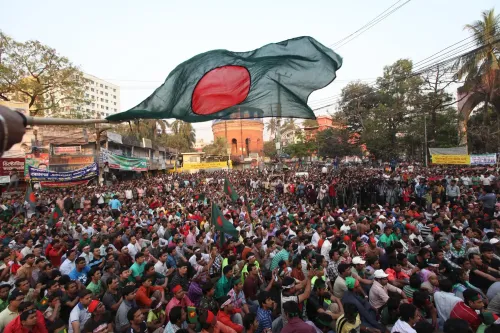
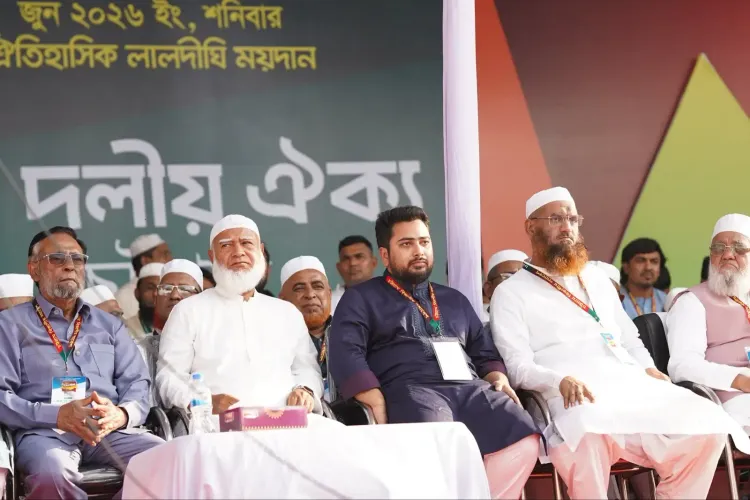
The optics sharpened on 19 September, when Nahid addressed a long march organised by the JI-led 11-party opposition alliance — not an NCP rally. At the event, he launched a pointed attack on Bangladesh Prime Minister Tarique Rahman, saying the premier would eventually have to decide how he wanted to leave office. 'He must decide whether he will flee the country by helicopter or resign with dignity,' Nahid said, according to reports.
The long march was organised to press a seven-point set of demands, including implementation of the February referendum verdict, measures to address rising prices, the energy and fertiliser crisis, deteriorating law and order, and corruption.
The Identity Problem the NCP Cannot Shake
The report in The Diplomat framed the challenge starkly: 'NCP routinely joins JI in long marches, alliance meetings and parliamentary protests.' It questioned what now distinguishes the NCP from Jamaat in the eyes of ordinary voters.
The NCP has maintained that its relationship with JI is strategic, not ideological. But analysts note that voters do not judge political identity solely through party constitutions or official statements — they observe shared platforms, coordinated parliamentary action, and joint street campaigns.
'This creates challenges for its political identity. NCP says it is a separate party. That is true institutionally. But voters do not judge political identity only through party constitutions or official statements,' the report noted.
Internal Fallout and What It Signals
The departure of at least 60 leaders and activists by February underscores the scale of discontent within the party. Critics inside the NCP reportedly argued that aligning with an organisation carrying the baggage of 1971 contradicts the founding promise of the student uprising that gave the party its legitimacy.
This is not merely an internal party dispute — it reflects the broader difficulty facing post-uprising movements across South Asia when they transition from protest to governance and coalition politics.
What Comes Next
The NCP's ability to carve out a distinct political identity ahead of future electoral cycles will likely depend on whether it can demonstrate policy or ideological differences from JI in practice, not just in official statements. As the Diplomat report concluded, less than two years after the student-led uprising, the party is struggling to show voters what still makes it politically distinct.
Point of View
And those allies come with ideological baggage. Aligning with Jamaat — whose 1971 record is not contested history but a live political wound in Bangladesh — is not a neutral strategic choice. The departure of 60 members in under two years suggests the party's founding base sees it as a betrayal, not a pragmatic manoeuvre. Unless NCP can publicly differentiate itself on policy, governance, and democratic norms, the 'strategic, not ideological' defence will ring hollow with each joint rally it attends.
NationPress
2 Oct 2026
Frequently Asked Questions
Why is the NCP's alliance with Jamaat-e-Islami controversial in Bangladesh?
Jamaat-e-Islami is widely associated with opposing Bangladesh's 1971 Liberation War and collaborating with Pakistani forces, making any political alliance with it deeply sensitive. For the NCP — which emerged from a pro-democracy student uprising in 2024 — partnering with Jamaat raises questions about ideological consistency and political identity.
How many NCP members have quit over the Jamaat alliance?
At least 60 NCP leaders and activists had resigned by the party's first anniversary in February 2026, according to a report in The Diplomat. The electoral alliance with JI was cited as the clearest public manifestation of the internal dispute over the party's direction.
What did NCP convener Nahid Islam say at the Jamaat-led long march?
Nahid Islam addressed a long march organised by the JI-led 11-party opposition alliance on 19 September and attacked Prime Minister Tarique Rahman, saying he 'must decide whether he will flee the country by helicopter or resign with dignity.' The march was called to press seven demands, including action on prices, energy, law and order, and corruption.
What is NCP's official position on its relationship with Jamaat-e-Islami?
The NCP has described the relationship as strategic rather than ideological, maintaining that it is institutionally a separate party. However, analysts and The Diplomat report argue that voters assess political identity through shared platforms and joint action, not just official statements.
How did the NCP-Jamaat partnership develop after the elections?
Following the elections, JI chief Shafiqur Rahman became leader of the opposition and NCP convener Nahid Islam took over as opposition chief whip. The two parties continued coordinating both inside Parliament and through joint street campaigns, deepening their alliance beyond the original electoral arrangement.