Bangladesh violence against women, children spikes amid UNICEF alarm
Synopsis
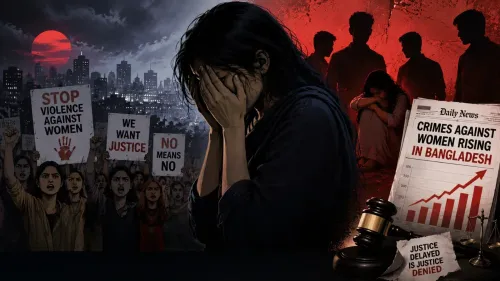
Multiple rape cases reported across four Bangladeshi districts in a single week have pushed a deepening child and gender-based violence crisis into sharp focus. UNICEF has issued a formal alarm, warning that a culture of impunity and broken institutional safeguards are driving the surge — and the crisis has outlasted two consecutive governments.
Key Takeaways
Multiple alleged rape and attempted rape incidents were reported from Chuadanga , Jashore , Kushtia , and Cumilla within days of each other.
Tarikul Islam , 20 , was arrested for the alleged rape of a 71-year-old woman in Damurhuda Upazila , Chuadanga.
Jayanta Biswas was arrested for the alleged rape of a nine-year-old girl in Jashore ; Delwar Hossain , 43 , was jailed for an attempted assault on a 12-year-old boy in Cumilla .
UNICEF representative Rana Flowers warned of a 2026 surge in brutal violence against children and called for an end to the 'culture of impunity.' The violence has persisted across both the Muhammad Yunus -led interim government and the current Tarique Rahman -led BNP administration.
Attempts to resolve one Kushtia case through village arbitration drew criticism, highlighting gaps in formal accountability mechanisms.
Bangladesh is recording a sharp and sustained rise in violence against women and children, with multiple alleged rape and attempted rape incidents reported across several districts in a single week, triggering grave concern from UNICEF and human rights organisations. The incidents, reported from Chuadanga, Jashore, Kushtia, and Cumilla, point to a deepening public safety crisis that has persisted across successive administrations in Dhaka.
Key Incidents Reported
In Chuadanga's Damurhuda Upazila, police arrested Tarikul Islam, 20, over the alleged rape of a 71-year-old woman. The arrest was made during an early-morning operation at the School Mor area of the village on Monday.
In Jashore, a youth identified as Jayanta Biswas was arrested in connection with the alleged rape of a nine-year-old girl in Sagardari village, Keshabpur upazila. Sub-inspector Shamim Hossain was quoted as saying: 'Jayanta Biswas has been arrested on charges of raping the minor girl. The child is now in police custody. Legal action is underway in this regard.'
A separate incident in Kumarkhali upazila, Kushtia, involved the alleged rape of a minor schoolboy by a mango orchard caretaker on Sunday morning. Notably, local influential figures in Kushtia reportedly attempted to resolve the matter through village arbitration — a move that drew sharp criticism from rights groups.
In Cumilla, police on Sunday arrested shopkeeper Delwar Hossain, 43, accused of attempting to rape a 12-year-old boy inside his shop in Daudkandi upazila. The court subsequently sent him to judicial custody; the incident is said to have occurred on 18 May.
UNICEF Raises Alarm
Last week, UNICEF expressed grave concern over the surge in brutal violence against children across Bangladesh, including rape and killing of girls and boys in places meant to ensure their safety. Rana Flowers, UNICEF representative in Bangladesh, said the growing number of reports of brutal and sexual violence against women and children in 2026 underscored the urgent need to strengthen child and gender-based violence prevention measures nationwide.
In a statement, Flowers said: 'The culture of impunity enjoyed by perpetrators must end, and the gaps in prevention, reporting, institutional safeguarding, child-friendly police and justice, community protection and social services must be addressed. There is also a need for psychosocial support for the women and children, with far stronger accountability of schools, madrasas, workplaces, neighbourhoods and care settings.'
A Crisis Spanning Two Administrations
The surge in gender-based violence reportedly persisted through the 18-month tenure of the Muhammad Yunus-led interim government and has continued under the current Tarique Rahman-led Bangladesh Nationalist Party (BNP) administration. This continuity across governments suggests the problem is structural rather than a product of any single political moment.
Critics argue that institutional safeguards — including police response protocols, judicial timelines, and community-level protection mechanisms — have consistently failed to keep pace with reported incidents. The attempt to settle the Kushtia case through informal arbitration illustrates the accountability gap that rights organisations have long flagged.
What Needs to Happen Next
UNICEF's statement calls for systemic reform across schools, madrasas, workplaces, and care settings, alongside dedicated psychosocial support for survivors. Human rights organisations are pressing the BNP administration for a credible national action plan with measurable outcomes. Whether Dhaka responds with policy action or rhetoric will determine whether 2026 marks a turning point or another year of unaddressed escalation.
Point of View
Including an interim administration that came in on a reform mandate, suggests that political transitions alone will not fix this. The Kushtia arbitration attempt is the most telling detail: when communities reach for informal resolution over formal justice, it signals that faith in state institutions has collapsed. UNICEF's intervention adds international pressure, but without a national action plan backed by enforcement teeth and survivor-centred services, statements of concern risk becoming routine. Bangladesh's accountability gap on gender violence is no longer a domestic oversight — it is a governance failure with international visibility.
NationPress
23 Sept 2026
Frequently Asked Questions
What is driving the rise in violence against women and children in Bangladesh?
Rights organisations and UNICEF attribute the surge to a culture of impunity, weak institutional safeguards, and gaps in reporting and justice mechanisms. The violence has persisted across both the Muhammad Yunus-led interim government and the current BNP administration, suggesting deep structural causes rather than a short-term spike.
What did UNICEF say about the situation in Bangladesh?
UNICEF representative Rana Flowers issued a statement warning that the growing number of reports of brutal and sexual violence against women and children in 2026 underscores the urgent need to strengthen prevention measures nationwide. She called for an end to the 'culture of impunity' and demanded stronger accountability from schools, madrasas, workplaces, and care settings.
Which districts reported incidents and who was arrested?
Incidents were reported from Chuadanga, Jashore, Kushtia, and Cumilla. Tarikul Islam was arrested in Chuadanga, Jayanta Biswas in Jashore, and Delwar Hossain in Cumilla. A separate case in Kushtia drew criticism after local figures allegedly tried to settle it through village arbitration.
Has the Bangladesh government responded to the violence surge?
The current Tarique Rahman-led BNP administration has not announced a specific national action plan in response to the surge, according to available reports. Human rights organisations are pressing for systemic reform, including child-friendly police protocols and dedicated psychosocial support for survivors.
What is the significance of the Kushtia arbitration attempt?
In Kushtia, influential local figures allegedly tried to resolve a rape case involving a minor through informal village arbitration rather than formal legal channels. Rights groups criticised the move as emblematic of the accountability gaps that allow perpetrators to escape justice in Bangladesh.