Bangladesh presidential election 2025: First contested ballot in 35 years on August 20

Synopsis
For the first time since before 1991, Bangladesh's presidency will be decided by an actual vote on 20 August — but experts and lawyers are already calling the outcome predetermined. With BNP holding 210 parliamentary seats against the opposition's 77, the 'ballot battle' is more political theatre than genuine contest, yet its symbolism for Bangladesh's democratic trajectory is hard to dismiss.
Key Takeaways
Bangladesh will hold a contested presidential election on 20 August 2025 — the first in over 35 years .
The vacancy arose after President Mohammed Shahabuddin resigned on 24 July ; Speaker Hafiz Uddin Ahmed is acting president.
BNP Secretary General Mirza Fakhrul Islam Alamgir is reportedly the ruling party's likely presidential nominee.
The BNP holds 210 parliamentary seats versus 77 for the Jamaat-led opposition alliance, giving it a decisive advantage.
Legal experts and civil society observers have described the election as 'predetermined' , with the opposition's participation characterised as a political strategy rather than a genuine bid for the presidency.
Bangladesh is set to hold a contested presidential election on 20 August 2025 — the first time in more than 35 years that the country's highest constitutional office will be decided by a ballot rather than an unopposed acclamation. The election will take place in the session chamber of the National Parliament Building in Dhaka, where members of parliament will vote by secret ballot, according to the Bangladesh Election Commission's schedule.
Why the Office Fell Vacant
The vacancy was triggered by the resignation of President Mohammed Shahabuddin on 24 July. Following his departure, Speaker of the National Parliament Hafiz Uddin Ahmed assumed the role of acting president. Under Bangladesh's Constitution, a presidential election must be held within 90 days of the office falling vacant, according to reports from Bangladeshi daily Dhaka Tribune.
Who Is Running
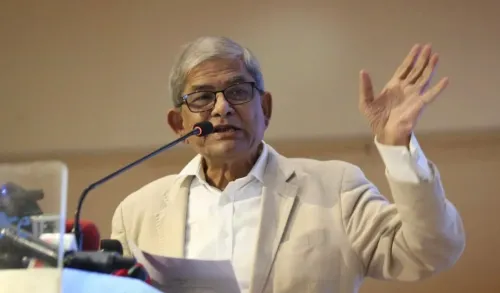
Both the ruling Bangladesh Nationalist Party (BNP) and the Jamaat-e-Islami-led 11-party alliance — the main opposition bloc in parliament — have decided to field candidates. Citing multiple party sources, Bangladesh's The Daily Star reported that BNP Secretary General Mirza Fakhrul Islam Alamgir, who also serves as Local Government, Rural Development and Cooperatives Minister, is likely to be the BNP's presidential nominee. Fakhrul has reportedly signed the consent form for the nomination, with a formal announcement expected as early as Wednesday or Thursday.
BNP's Clear Parliamentary Advantage
Although the election will be contested, the BNP enters the race with a commanding numerical edge. In the 2026 parliamentary election, the BNP secured 210 seats against 77 seats won by the Jamaat-led 11-party alliance, giving the ruling party an outright majority in parliament — the body that elects the president.
What Legal and Civil Society Voices Say
Senior Supreme Court Appellate Division lawyer Advocate Manzil Morshed told Dhaka Tribune: 'The opposition knows that it will lose the election. Even then, fielding a candidate is a political strategy.' He added that the move may be designed to deflect accusations of non-participation: 'There is a discussion in the political arena that Jamaat and BNP are closely connected. They may have fielded a candidate merely as a showpiece so that no one can accuse them of not participating or raise questions about the matter.'
Election expert and founder of Dhaka-based civil society platform Shujan, Badiul Alam Majumdar, was more direct, saying: 'The presidential election is predetermined. Whoever the ruling party wants will become president.'
Historical Significance
Bangladesh last witnessed a contested presidential election before 1991, after which the practice of electing presidents unopposed became entrenched across successive governments. The return of a ballot contest — even one where the outcome is widely considered a foregone conclusion — marks a notable, if largely symbolic, departure from that pattern. Observers will watch whether the contest sets a precedent for greater institutional competition in future cycles.
Point of View
The vote is structurally decided before a single ballot is cast. What is more revealing is why the Jamaat-led alliance is participating at all: legal observers suggest it is a calculated move to distance the two parties publicly while their political interests remain aligned. The real question this election raises is not who wins on 20 August, but whether Bangladesh's institutions can evolve beyond elections that are contests in form only.
NationPress
24 Sept 2026
Frequently Asked Questions
When is Bangladesh's presidential election being held?
The presidential election is scheduled for 20 August 2025 , in the session chamber of the National Parliament Building in Dhaka. Members of parliament will vote by secret ballot if more than one candidate remains in the race.
Why is Bangladesh holding a presidential election now?
President Mohammed Shahabuddin resigned on 24 July , creating a vacancy. Bangladesh's Constitution requires a presidential election within 90 days of the office falling vacant, making the 20 August date a constitutional necessity.
Who is likely to be the BNP's presidential candidate?
BNP Secretary General Mirza Fakhrul Islam Alamgir , who also serves as Local Government, Rural Development and Cooperatives Minister, is reportedly the ruling party's likely nominee. He has signed the consent form, with a formal announcement expected by Wednesday or Thursday.
Why is this election significant for Bangladesh?
It is the first contested presidential election in Bangladesh in more than 35 years , breaking a long-standing practice of presidents being elected unopposed that has persisted since 1991. Even so, experts describe the outcome as largely predetermined given the BNP's parliamentary majority.
Does the opposition have a realistic chance of winning?
Analysts consider it unlikely. The BNP holds 210 parliamentary seats against the Jamaat-led alliance's 77 , giving the ruling party a decisive majority among the electors. Legal experts have characterised the opposition's candidacy as a political strategy rather than a genuine bid for the presidency.