Is Bangladesh's Media Freedom a Myth Under the Yunus Administration?

Synopsis
In a shocking turn of events, Bangladesh's media freedom is under siege as the Yunus administration adopts authoritarian tactics. Promises of reform have given way to oppression, threatening the very essence of democracy. This article explores the grim reality facing journalists and the implications for the future of free expression in the country.
Key Takeaways
Systematic persecution of journalists has intensified under the Yunus administration.
Legal harassment and violence have become commonplace.
The government has yet to announce an election date, prolonging unaccountable rule.
Minority journalists face disproportionate risks and challenges.
Immediate action is needed for reform and to protect press freedom.
New Delhi, Dec 8 (NationPress) The persecution of journalists by the state represents a stark truth across numerous authoritarian regimes—from Taliban-controlled Afghanistan to Myanmar, Belarus, Turkiye, and the Philippines. In these environments, the press—often labeled the “fourth pillar of democracy”—is not viewed as a guardian but rather as a menace. Bangladesh is mirroring this worldwide pattern.
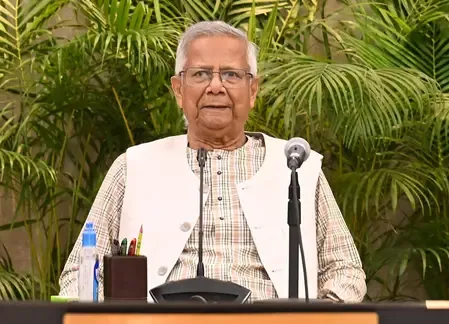
Following the collapse of the Sheikh Hasina government on August 5, 2024, many perceived the rise of Nobel Laureate Dr Muhammad Yunus as a pivotal moment. Supported by student demonstrations and public opinion, his designation as Chief Adviser and Prime Minister of the interim government was seen as a symbolic “second liberation,” particularly for the nation’s long-oppressed media.
However, within a few months, that hope transitioned into disillusionment. Despite initial commitments to revive freedom of expression and maintain democratic principles, Yunus’s government has overseen an intensified assault on press freedom. Journalists, regardless of their location—urban or rural—are now subjected to threats, fictitious charges, detentions, and violent assaults. Existing laws like the Digital Security Act—previously condemned by Yunus himself—persist. New regulations, framed as “digital safety,” threaten to further silence the media.
More alarmingly, the government has yet to declare an election date, thereby extending its “interim” status into an indefinite, unaccountable rule. Institutions designed to uphold democracy have either fallen silent or become accomplices in repression. The optimism of August has devolved into fear, as the Yunus administration reconfigures authoritarian methods under the pretense of reform.
Within just one year, the Yunus-led government has systematically compromised media freedom in Bangladesh. Hope has turned into control, and the aspiration for a freer, more democratic society is increasingly elusive. Behind the accolades, the familiar hand of oppression remains.
A Dangerous Time for Free Expression
Freedom of speech, a fundamental pillar of democracy, is under severe threat. Journalists—particularly those from minority backgrounds—face increasing violence, legal harassment, and coordinated state-backed intimidation.
A report released on World Press Freedom Day 2025 presents a grim scenario: within eight months of Dr Yunus assuming office, at least 640 journalists were targeted. Among them, 182 faced criminal charges, 206 experienced violence, and 85 were subjected to financial scrutiny by the Bangladesh Financial Intelligence Unit.
The assaults are not isolated incidents; they are systematic, intentional, and widespread. From legal persecution to outright physical violence, the Yunus administration has rendered Bangladesh one of the most perilous places in Asia for journalists.
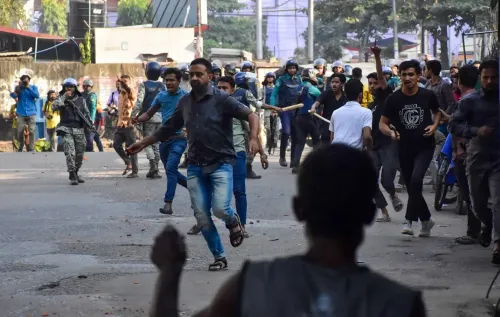
Attacks on journalists have become routine. In March 2025, two journalists were assaulted at Barishal Court, while others faced violence in Dhaka and near the Dhaka Reporters’ Unity. The most heinous incident occurred on March 18, when a female journalist was gang-raped in Dhaka—a case that sparked international outrage, including condemnation from ARTICLE 19 and other watchdogs.
In April, Rafia Tamanna of New Age and Sajedul Islam Selim of Daily Prantojon were physically assaulted. News outlet offices were vandalized. Prothom Alo, a publication accused of being an “agent of India,” saw its Rajshahi office destroyed. These incidents illustrate a perilous trend: the discrediting of critical voices via nationalist propaganda, followed by violent suppression.
Legal harassment has emerged as a favored tactic to silence dissent. Journalists are being dragged into courtrooms and prisons over trivial or fabricated allegations. Kamruzzaman, a journalist in Satkhira, received a 10-day jail sentence from a mobile court for “obstructing government work.” His actual offense? Reporting on substandard construction.
Rubel Hossain of Dhaka Mail was falsely implicated in a murder case related to student protests. Three notable journalists—Naem Nizam, Moynal Hossain Chowdhury, and Syed Burhan Kabir—faced arrest warrants under the heavily criticized Digital Security Act. Their only crime: publishing content critical of influential figures.
The State vs. Media Institutions
Media institutions have also faced scrutiny. An adviser at the Ministry of Information and Broadcasting announced audits targeting “opposition-affiliated” media outlets—an action widely seen as financial intimidation.
Deepto TV halted its news broadcasts following political backlash. ATN Bangla terminated a reporter for simply posing a sensitive question. In both instances, official denials of state interference were undermined by clear patterns of state-coordinated pressure.
In a troubling incident on May 4, journalists at Daily Janakantha protesting unpaid wages were attacked by assailants reportedly linked to the National Citizen Party. This combination of financial exploitation and physical violence has fostered a stifling environment for critical journalism.
The Yunus government has taken minimal steps to alleviate concerns regarding surveillance and data privacy. Instead, it has intensified efforts with proposed legislation like the Cyber Protection Ordinance 2025 and the Personal Data Protection Ordinance—laws that could further entrench censorship and mass surveillance.
With travel bans imposed on over 300 journalists and bank accounts frozen for more than 100 of them, the message is unmistakable: dissent will be suppressed not only through force but through bureaucratic means.
Journalists from minority communities are disproportionately affected by the crackdown. Shyamol Dutta, a prominent Hindu journalist and editor of Bhorer Kagoj, was imprisoned after being ousted from his position at the National Press Club. Munni Saha, a well-known media figure, is facing multiple cases and has been detained for questioning.
More than 50 minority journalists are reportedly living in fear, many dismissed from their jobs under opaque circumstances. This pattern signifies not just a press freedom issue but an attack on the basic rights of minority groups.
Targeting Prominent Figures and Media Houses
The arrest of leading media figures like Mozammel Babu, CEO of Ekattor TV, and Syed Ishtiaq Reza, former news chief at GTV, has sent shockwaves through the industry. The allegations—often murder or conspiracy—lack substance, indicating a broader political agenda.
In one peculiar incident, a complaint filed with the International Crimes Tribunal accused 29 journalists and editors, along with former Prime Minister Sheikh Hasina, of disseminating “false news to justify genocide.” The charges are ludicrous and serve merely to instill fear and paralyze the press.
Even high-profile reporters like Shahnaz Sharmin, known for her courageous on-the-ground reporting, have been named in criminal complaints. Her alleged connection to the death of a protester is widely regarded as a fabricated attempt to tarnish her reputation.
Dr Yunus’s ascension was marketed as a “second liberation.” His international standing as a humanitarian and social entrepreneur inspired hope. However, the initial optimism has quickly faded. The arrests, torture, and surveillance of journalists under his administration represent a profound betrayal of those ideals.
Instead of dismantling the repressive mechanisms of the prior regime, the interim government has adopted and amplified them. Laws are weaponized, courts serve as instruments of intimidation, and civil liberties—once anticipated for restoration—have only regressed.
Despite the grim reality, there are signs of resistance. A Media Reform Commission, proposed by information adviser Nahid Islam, presents an opportunity for dialogue and reform. However, unless these proposals lead to immediate action—beginning with the release of unjustly detained journalists and the dismissal of politically motivated cases—the initiative risks becoming yet another hollow gesture.
Civil society must remain watchful. International watchdogs, human rights organizations, and democratic nations must apply pressure on the Yunus administration. Silence is not neutrality; it is complicity.
The Fight for Truth Must Go On
Over the past year, Bangladesh has shifted from the promise of change to the peril of authoritarianism. The interim government led by Dr Muhammad Yunus was anticipated to restore justice, transparency, and democratic principles. Instead, it has turned against the very institutions and individuals that constitute the backbone of a functioning democracy—the free press.
The persecution of journalists, the weaponization of laws, the sidelining of minority voices, and the continual postponement of elections paint a bleak picture of a government that is losing its legitimacy by the day. If Yunus does not take decisive action to reverse this trend, he risks undermining not only his reputation but also the democratic foundation of the nation.
Bangladesh’s journalists are not merely chroniclers of events; they are defenders of democracy, truth, and public interest. Silencing them will not extinguish the truth; it will only postpone the reckoning. The moment for reform is now—before the shadows of repression become permanent.
(Dr Sreoshi Sinha is a Senior Fellow at the Centre for Joint Warfare Studies (CENJOWS), while Abu Obaidha Arin is a student at the University of Delhi.)
Point of View
I stand firmly with the nation and its unwavering commitment to press freedom. Despite the challenges posed by the current regime, we must remain vigilant and advocate for the fundamental rights of journalists. Upholding democracy and protecting free expression is essential for the future of our society.
NationPress
3 Oct 2026
Frequently Asked Questions
What is the current state of media freedom in Bangladesh?
Media freedom in Bangladesh is currently under severe threat, with reports of violence, legal harassment, and intimidation against journalists, particularly under the Yunus administration.
How many journalists have been targeted since Dr Yunus took office?
At least 640 journalists have been targeted within eight months of Dr Yunus assuming office, with numerous cases of violence and legal issues reported.
What measures are being taken against critical media outlets?
The government has initiated financial audits targeting opposition-affiliated media houses and has imposed travel bans on over 300 journalists, creating a stifling environment for critical journalism.
What role do minority journalists play in this context?
Minority journalists face heightened risks, experiencing increased violence and harassment, reflecting a broader issue of press freedom and fundamental rights in Bangladesh.
Is there hope for reform in Bangladesh's media landscape?
While proposals for a Media Reform Commission exist, immediate action is necessary to support journalists and restore press freedom in Bangladesh.