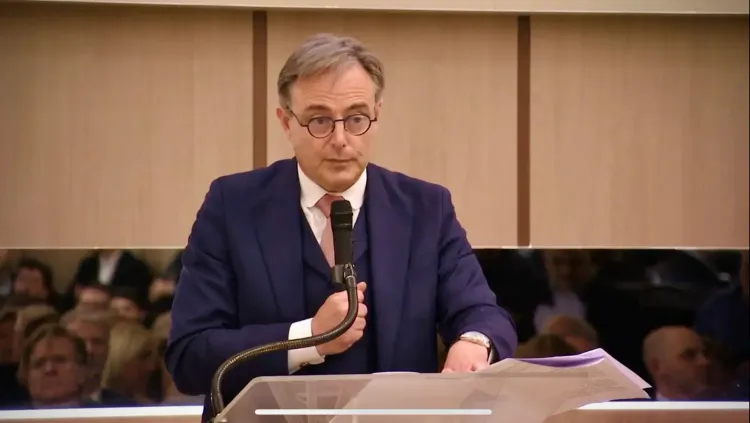
Belgian King rejects PM De Wever's resignation, orders budget talks to restart
Synopsis
Belgium's political standoff took a dramatic turn on 6 November when King Philippe refused to accept Prime Minister Bart De Wever's resignation, ordering him back to the negotiating table. With the country's deficit at 5.2% of GDP and debt at 108% — well above EU limits — the king's intervention buys a narrow window to forge a €10 billion deal. De Wever must report back by 16 November.
Key Takeaways
King Philippe rejected Prime Minister Bart De Wever's resignation on 6 November 2026 and ordered immediate resumption of budget talks.
The coalition is deadlocked over a €10 billion package of spending cuts and tax increases.
N-VA and MR favour spending restraint; socialist and centrist partners want more taxes on wealth.
Belgium's budget deficit stood at 5.2% of GDP in 2025 , with public debt at 108.1% of GDP — both well above EU limits.
De Wever is scheduled to report back to the king on 16 November .
Belgium's King Philippe on Friday, 6 November 2026 rejected the resignation of Prime Minister Bart De Wever and directed him to immediately resume budget negotiations, according to a statement from the Royal Palace. The move comes as the country's fragile five-party governing coalition remains deadlocked over a package of public finance reforms worth 10 billion euros (approximately 11.17 billion US dollars).
What Led to the Crisis
De Wever submitted his resignation on Monday after coalition partners failed to agree on a budget plan covering the next three years. The king withheld an immediate decision and subsequently held separate consultations with the leaders of all five governing coalition parties before arriving at Friday's ruling.
The coalition has been seeking a combination of spending cuts and tax increases to stabilise Belgium's public finances, but remains sharply divided over how the burden should be distributed. De Wever's Flemish nationalist party N-VA and the liberal MR favour deeper spending restraint — including in healthcare — while their socialist and centrist partners want a larger share of the adjustment to come from taxes on wealth.
The King's Intervention
Following his consultations, King Philippe emphasised the importance of striking a balance between maintaining social cohesion and promoting economic growth. Each of the five party leaders reportedly pledged to prioritise compromise and a sense of responsibility. The five parties also formally committed to making concessions to reach an agreement within the government, the Royal Palace said.
Based on these assurances, the king rejected De Wever's resignation and called for the immediate resumption of talks. De Wever is scheduled to report back to the king on 16 November.
Belgium's Fiscal Challenge
The scale of the fiscal problem underpinning the political standoff is considerable. Belgium's budget deficit stood at 5.2% of GDP in 2025, while government debt reached 108.1% of GDP at year-end, according to Eurostat. Both figures far exceed the European Union's reference thresholds of 3% for the deficit and 60% for debt — placing Belgium under significant pressure from Brussels to consolidate its finances.
What Happens Next
With negotiations now formally restarted, all attention turns to 16 November, when De Wever is due to update the king on the coalition's progress. Analysts note that the king's intervention, while constitutionally significant, does not resolve the underlying ideological fault lines between the coalition's right-leaning and left-leaning partners. A failure to reach agreement by mid-November could trigger a fresh political crisis in one of the European Union's founding member states.
Point of View
Not a solution. The fault line between N-VA's austerity instincts and the coalition's left flank on wealth taxation has not moved. Belgium has navigated record-long government formations before, but this time the EU's deficit enforcement framework leaves far less room to defer hard choices. If 16 November passes without a deal, the king's intervention will look less like a rescue and more like a postponement.
NationPress
6 Nov 2026
Frequently Asked Questions
Why did Belgian PM Bart De Wever resign?
De Wever submitted his resignation on Monday after his five-party coalition failed to reach an agreement on a budget plan covering the next three years. The coalition has been unable to agree on how to split a €10 billion package of spending cuts and tax increases.
Why did King Philippe reject De Wever's resignation?
King Philippe rejected the resignation after consulting all five coalition party leaders, each of whom reaffirmed their determination to reach a budget agreement and pledged to make concessions. The king cited the importance of balancing social cohesion with economic growth.
What is Belgium's current fiscal position?
Belgium's budget deficit stood at 5.2% of GDP in 2025 and government debt at 108.1% of GDP, according to Eurostat. Both figures significantly exceed the EU's reference values of 3% and 60% respectively, placing the country under pressure to consolidate its finances.
What are the main divisions within Belgium's coalition?
The N-VA and liberal MR parties favour greater spending restraint, including cuts to healthcare, while their socialist and centrist coalition partners want a larger share of the fiscal adjustment to come from taxes on wealth. This ideological divide has prevented agreement on the €10 billion package.
What happens next in Belgium's budget crisis?
Prime Minister De Wever is scheduled to report back to King Philippe on 16 November with an update on the coalition's progress. A failure to reach a deal by that date could trigger a fresh political crisis in Belgium.