How Does the MRO Facility in Bengaluru Transform the India-US Defence Alliance?
Synopsis
India's new MRO facility in Bengaluru is a game-changer in its defence partnership with the US. This report reveals how it strengthens local capabilities and positions India as a regional leader in aerospace maintenance. Discover the implications for operational readiness and local industry growth.
Key Takeaways
India's new MRO facility enhances defence collaboration with the US.
Projected completion by late 2026.
Supports the Indian Air Force's C-130J aircraft.
Strengthens local technical expertise and capabilities.
Positions India as a regional hub for aerospace support.
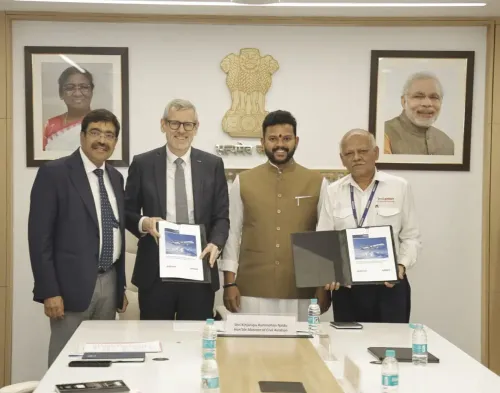
Washington, Jan 30 (NationPress) India’s newly established Maintenance, Repair and Overhaul (MRO) facility for military transport aircraft in Bengaluru marks a crucial advancement in the defence partnership with the United States, significantly improving industrial integration and strategic cooperation, according to a report released on Friday.
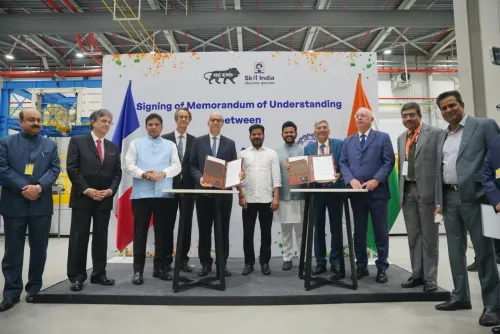
The facility, projected to be finalized by late 2026, is led by Indian company Tata Advanced Systems in collaboration with Lockheed Martin from the US.
As reported by the military magazine ‘Indo-Pacific Defense FORUM,’ this initiative is set to enhance India’s aerospace sector, broaden regional sustainment capabilities, and propel New Delhi’s “Make in India” and “Self-Reliant India” initiatives.
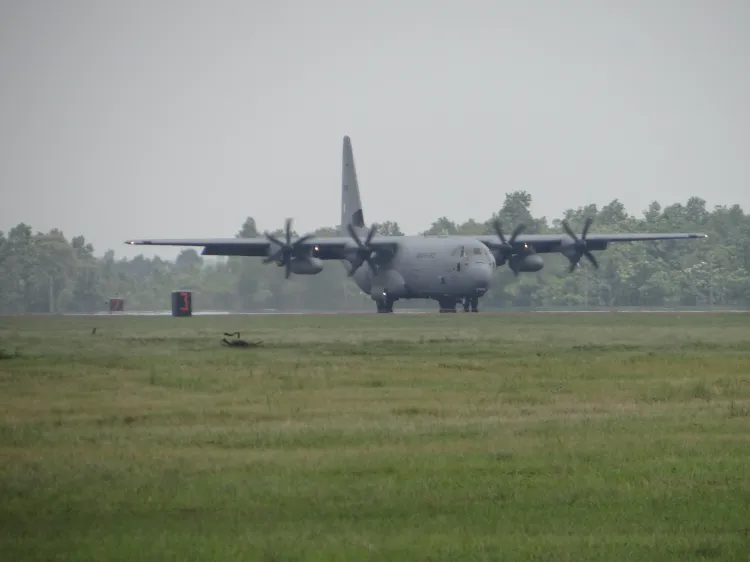
Policy analyst Prateek Joshi, based in New Delhi, noted that the MRO centre is designed to support the Indian Air Force’s fleet of 12 C-130J Super Hercules aircraft and could serve regional operators, effectively positioning India as “a hub for heavy-airlift support across the Indo-Pacific.”
“The strategic significance of this facility extends beyond basic maintenance. It encompasses depot-level sustainment, covering heavy structural work, avionics upgrades, and in-depth inspections that directly influence the operational lifespan of aircraft,” Joshi stated.
The report further indicated that establishing domestic depot-level maintenance enables the Indian Air Force (IAF) to minimize project timelines and costs while enhancing local technical proficiency.
Lockheed Martin has emphasized the importance of training and certifying Indian engineers and technicians, transforming this from a mere service contract into a long-term investment in capability. Essentially, it’s about readiness and resilience rather than just maintenance tasks,” Joshi added.
Rod McLean, vice president of Lockheed Martin’s air mobility and maritime missions, highlighted the MRO facility's role in enhancing operational readiness across the Indo-Pacific, stating that it “will improve response times and security in the Pacific while advancing sustainment capabilities for the C-130J fleet globally.”
The report underlined that this “forward-looking sustainment infrastructure” supports regional resilience goals.
“If realized, this ambition could expedite repair processes during crises and diminish dependence on a limited number of distant depots,” Joshi remarked.
Additionally, the project generates opportunities for Indian suppliers like Tata, which manufactures C-130 tail sections domestically and has recently achieved its 250th delivery.
Joshi elaborated that obtaining original equipment manufacturer MRO certification “opens pathways into global aerospace supply chains — encompassing components, repairs, tooling, testing, and specialized services.”
Point of View
I firmly believe that the establishment of the MRO facility in Bengaluru is a significant step forward for India. This initiative not only reinforces our defence capabilities but also paves the way for greater self-reliance and industrial growth. It’s imperative that India continues to foster such strategic partnerships to enhance our global standing and regional security.
NationPress
28 Sept 2026
Frequently Asked Questions
What is the significance of the MRO facility in Bengaluru?
The MRO facility represents a major evolution in India-US defence ties, enhancing local aerospace capabilities and positioning India as a key player in regional military support.
When is the MRO facility expected to be completed?
The facility is projected to be completed by late 2026.
Who are the key players involved in this project?
The project is spearheaded by Tata Advanced Systems in collaboration with Lockheed Martin.
How will this facility impact the Indian Air Force?
It will support the maintenance of the Indian Air Force's C-130J Super Hercules fleet, improving operational readiness and reducing maintenance times.
What are the broader implications of this facility?
It enhances India's self-reliance in defence, strengthens regional security, and creates opportunities for local suppliers.