How is South Korea's Finance Minister boosting domestic consumption?
Synopsis
In a significant pledge, South Korea’s Finance Minister Koo Yun-cheol aims to bolster domestic consumption amid the largest shopping event ever. The Korea Grand Festival, akin to Black Friday, promises extensive participation and discounts, supporting the economy and small businesses. Discover how government initiatives are shaping this vibrant economic landscape.
Key Takeaways
South Korea's Finance Minister Koo Yun-cheol emphasizes boosting domestic consumption.
The Korea Grand Festival features wide participation and discounts.
Government initiatives aim to support small businesses.
Critical mineral recycling market projected to grow significantly.
Regulatory reforms are intended to enhance recycling rates.
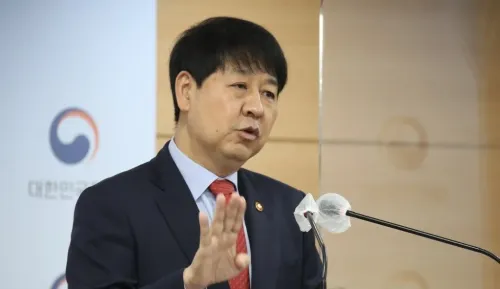
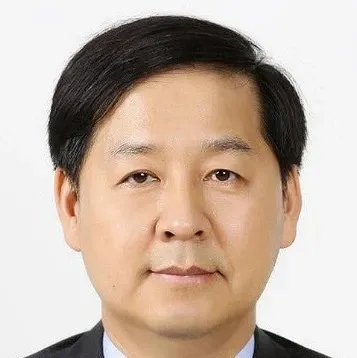
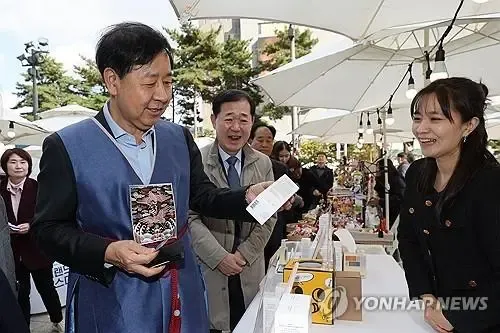
Seoul, Nov 2 (NationPress) South Korea's Finance Minister Koo Yun-cheol on Sunday committed to intensifying efforts to stimulate domestic consumption as the nation's annual shopping extravaganza unfolds on an unprecedented scale, according to his office.
The Korea Grand Festival, akin to Black Friday, is occurring both online and offline across the country from Wednesday to Nov. 9, with approximately 37,000 companies participating, as reported by the Ministry of Economy and Finance.
Prominent department stores, discount retailers, traditional markets, and convenience stores, along with various online platforms, are offering substantial discounts, while the government is orchestrating a series of promotional events nationwide, as noted by Yonhap News Agency.
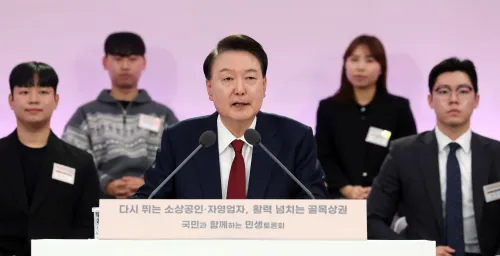
"Private consumption has surged at its highest rate in years. This festival is anticipated to enhance the economy and support small business owners," Koo stated, urging the public to actively engage in the event.
"The government will persist in efforts to ensure that livelihood-related policy measures are effectively executed and refined as needed," he emphasized.
Earlier on Friday, the South Korean government announced a strategy to encourage the recycling of critical minerals by loosening regulations and enhancing financial and tax incentives, as part of a broader initiative to stabilize supply chains, according to the industry ministry.
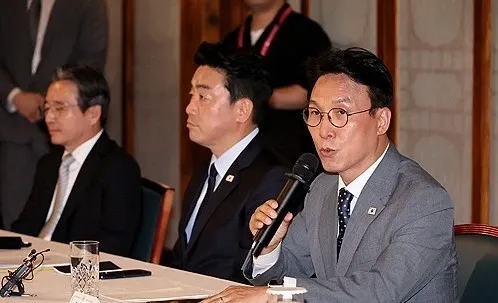
These measures were revealed during a supply chain meeting led by Finance Minister Koo, against a backdrop of increasing global uncertainty in raw material supply chains due to rising technological competition and escalating geopolitical tensions.
"The Asia-Pacific Economic Cooperation (APEC) summit in Gyeongju marks a significant turning point amidst ongoing global economic uncertainty," Koo remarked, expressing hope that the outcomes would positively impact South Korea's supply chain resilience.
Recycling critical minerals entails reprocessing materials extracted from waste to generate vital minerals essential for advanced industries.
The domestic market for critical mineral recycling is projected to grow from 6.7 trillion won ($4.7 billion) in 2024 to 21.1 trillion won by 2040.
Despite this growth potential, high technological and financial barriers have impeded private sector expansion, with many companies lacking the resources for new investments, officials noted.
The government aims to elevate the recycling rate of 10 strategic critical minerals to 20 percent by 2030 through regulatory reforms and industry support.
Initially, the government intends to lower tariffs, taking global rates into account, the ministry indicated. Currently, major economies like Japan, the United States, and the European Union impose zero tariffs on key materials utilized in critical mineral recycling.
The government will also form a joint council comprising representatives from both public and private sectors to identify promising recycling projects and allocate direct investments through a supply chain stabilization fund.
Moreover, the government plans to ease regulations on recycling material distribution by categorizing certain materials as "recyclable resources" instead of waste, thereby reducing restrictions on transport and storage.
Separately, the government will establish a response team to facilitate the supply of rare earth elements. Initiatives will include promoting investment in overseas resource development, devising technologies to minimize rare earth usage, and augmenting public reserves.
Point of View
I believe South Korea's approach to enhancing domestic consumption through strategic initiatives is crucial. By aligning government efforts with public engagement, the nation can foster economic growth while supporting local businesses. This approach not only addresses immediate consumer needs but also positions South Korea favorably in a competitive global market.
NationPress
21 Sept 2026
Frequently Asked Questions
What is the Korea Grand Festival?
The Korea Grand Festival is South Korea's version of Black Friday, featuring extensive discounts from around 37,000 participating companies across the nation, running from November 2 to November 9.
How is the government supporting small businesses?
The government is promoting domestic consumption through various initiatives, including the Korea Grand Festival, which is designed to boost economic activity and provide support for small business owners.
What measures is the government taking to stabilize supply chains?
The government has unveiled plans to promote the recycling of critical minerals by easing regulations and expanding financial and tax incentives to stabilize supply chains amid global uncertainties.
What is the expected growth of the critical mineral recycling market?
The domestic critical mineral recycling market is anticipated to grow from 6.7 trillion won ($4.7 billion) in 2024 to 21.1 trillion won by 2040.
How will tariffs on critical minerals be affected?
The government plans to reduce tariffs on key materials used in critical mineral recycling, aligning with global rates where major economies apply zero tariffs.