Bulgaria PM summons Russian envoy over Black Sea drone attacks on merchant ships
Synopsis
Bulgaria has summoned Russia's ambassador after drone strikes sank or damaged four merchant ships in its Black Sea exclusive economic zone within a week — including a Ukrainian-owned vessel. With 11 sailors still missing and no confirmed perpetrator, the incidents are testing NATO's eastern flank and raising the spectre of deliberate escalation in one of Europe's most contested maritime corridors.
Key Takeaways
Bulgarian PM Rumen Radev summoned Russian Ambassador Eleonora Mitrofanova in Sofia on 13 October over drone attacks in Bulgaria's Black Sea EEZ .
The Ukrainian-owned, Maltese-flagged 'Chelsea 3' was attacked 18 nautical miles east of Byala ; all 15 crew were rescued.
The Guinea-Bissau-flagged 'HS Dignity' sank near Krapets ; 5 crew rescued, 11 remain missing .
A first wave of drone strikes on 6 October sank one ship and set another ablaze 70 nautical miles east of Byala.
Ambassador Mitrofanova said Moscow had no information on the attacks and suggested a possible third-country provocation .
Radev has called for joint investigations with EU and NATO allies to establish the origin of the drones.
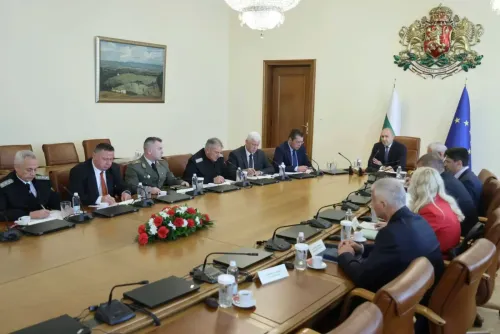
Bulgarian Prime Minister Rumen Radev summoned Russian Ambassador Eleonora Mitrofanova on Tuesday, 13 October in Sofia, demanding answers over a wave of drone strikes on merchant vessels in Bulgaria's exclusive economic zone (EEZ) in the Black Sea. The diplomatic confrontation comes after at least four commercial ships were attacked within a single week, raising fears of a significant escalation in the wider conflict.
Key Developments in the Attacks
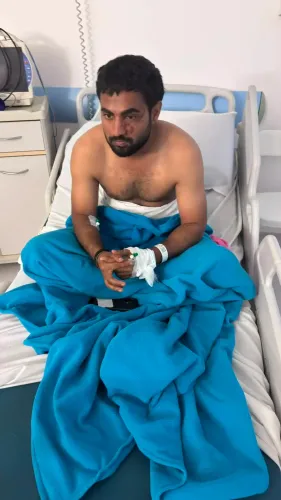
Tensions first peaked on 6 October, when unidentified drones sank one merchant ship and set another ablaze roughly 70 nautical miles east of the coastal town of Byala, within Bulgaria's EEZ. Early on Tuesday, two more vessels came under attack. The 'Chelsea 3' — flying a Maltese flag, registered in Ukraine, and Ukrainian-owned — was struck 18 nautical miles east of Byala. Bulgarian authorities mounted a rescue operation, bringing all 15 crew members aboard safely to the port of Varna. The second vessel, the Guinea-Bissau-flagged 'HS Dignity', sank near Krapets. As of the latest update from Bulgarian authorities, five crew members had been rescued while 11 remained missing. Five of the rescued sailors required medical care after reaching Varna.
What Bulgaria's Prime Minister Said
Radev acknowledged that Sofia did not yet possess conclusive evidence establishing the origin of the drones. Nevertheless, he drew a pointed inference during the meeting with Ambassador Mitrofanova: since the 'Chelsea 3' was both registered in and owned by Ukraine, he argued that 'it makes no sense for Ukraine to destroy its own ships,' according to a statement by the Bulgarian Government Information Service (GIS). Radev was unequivocal that strikes on civilian merchant shipping were 'absolutely unacceptable,' warning that continued attacks risked a significant escalation of the regional conflict. He also called for coordinated investigations alongside EU and NATO allies to determine responsibility.
Russia's Response and the 'Third Party' Theory
Ambassador Mitrofanova told Radev she understood his reasoning but stated she had received no information from the Russian government concerning the recent Black Sea attacks, the GIS noted. Notably, Mitrofanova raised the possibility that the strikes could have been orchestrated as a provocation by a third, unnamed country — a claim that, while unsubstantiated, introduces a layer of diplomatic ambiguity into an already volatile situation.
Broader Context and Regional Stakes
Bulgaria, a NATO member and EU state, shares Black Sea coastline with both Ukraine and Russia, placing it in a uniquely exposed position as the war in Ukraine grinds on. Commercial shipping through the Black Sea has been under pressure since Russia's full-scale invasion, but attacks inside a NATO member's exclusive economic zone mark a qualitative shift. This is the second such wave of drone strikes on merchant vessels near Bulgarian waters in under a week, and the incidents have drawn fresh attention to the vulnerability of non-military shipping to drone warfare in contested maritime corridors. The investigation, Radev indicated, will be pursued in close coordination with European and Alliance partners.
Point of View
But the absence of conclusive evidence leaves Bulgaria — and by extension NATO — in an uncomfortable limbo. Radev's implicit finger-pointing at Russia is logical, yet the 'third-party provocation' suggestion from Mitrofanova cannot be dismissed without a thorough investigation, precisely because several regional actors have strategic reasons to complicate the Black Sea order. What is undeniable is that drone strikes inside a NATO member's exclusive economic zone against civilian shipping represent a dangerous new frontier — one the Alliance has no clear doctrine to address. The missing 11 crew members are not just a humanitarian tragedy; they are a test of whether collective defence commitments extend meaningfully to maritime grey-zone warfare.
NationPress
14 Oct 2026
Frequently Asked Questions
Why did Bulgaria summon the Russian ambassador over the Black Sea attacks?
Bulgarian Prime Minister Rumen Radev summoned Russian Ambassador Eleonora Mitrofanova on 13 October to demand accountability for drone strikes on merchant ships inside Bulgaria's Black Sea exclusive economic zone. Radev argued that since one targeted vessel was Ukrainian-owned, it made no sense for Ukraine to destroy its own ship, implicitly pointing toward Russia as the likely perpetrator.
Which ships were attacked near Bulgaria in the Black Sea?
Four merchant vessels have been struck in under a week. On 6 October, one ship was sunk and another set on fire about 70 nautical miles east of Byala. On 13 October, the Maltese-flagged, Ukrainian-owned 'Chelsea 3' was hit 18 nautical miles east of Byala, and the Guinea-Bissau-flagged 'HS Dignity' sank near Krapets.
What happened to the crew members of the attacked ships?
All 15 crew members of the 'Chelsea 3' were rescued and transported to the port of Varna, where five required medical attention. Of the 'HS Dignity' crew, five were rescued as of the latest update from Bulgarian authorities, while 11 remained missing.
What was Russia's response to Bulgaria's diplomatic protest?
Russian Ambassador Eleonora Mitrofanova said she had received no information from Moscow regarding the recent Black Sea attacks. She also raised the possibility that the strikes could have been a provocation staged by a third, unnamed country, though no evidence was presented to support that claim.
What is Bulgaria calling for in response to the drone attacks?
Prime Minister Radev has called for joint investigations with EU and NATO allies to establish who is behind the attacks. He described strikes on merchant shipping as 'absolutely unacceptable' and warned they risked significantly escalating the regional conflict.