How Did Bush Fires Lead to Home Destruction in New South Wales?
Synopsis
A fierce bushfire in New South Wales has wreaked havoc, destroying multiple homes and prompting urgent evacuation warnings. With conditions worsening, residents are advised to take immediate action for their safety. This alarming situation highlights the urgent need for awareness and preparedness in fire-prone areas.
Key Takeaways
Multiple homes destroyed by bushfires in New South Wales.
Emergency warnings issued for evacuation in affected areas.
Residents advised to seek shelter inside sturdy structures.
High temperatures and strong winds worsen fire conditions.
Officials emphasize the importance of preparedness.
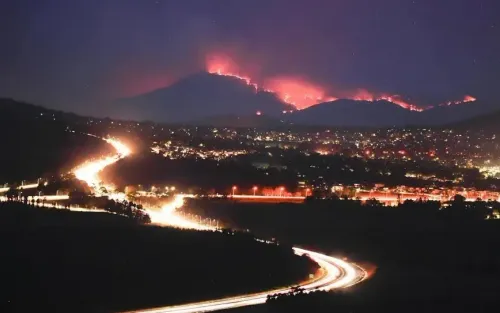
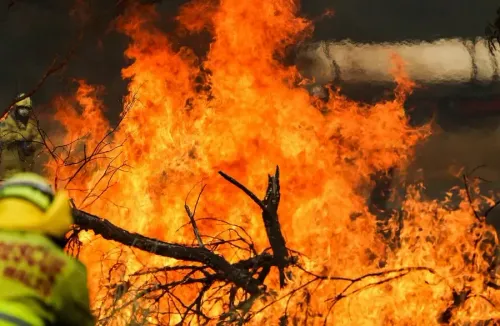
New South Wales, Dec 6 (NationPress) - The New South Wales Rural Fire Service (NSW RFS), which is the primary agency battling bush fires in the Australian state of NSW, has confirmed that several residences have been devastated by flames, as reported by the Australian Broadcasting Corporation (ABC) on Saturday afternoon.
This announcement followed a live broadcast from a news helicopter that revealed at least six buildings obliterated on Nimbin Road, close to Koolewong, according to ABC.
The NSW RFS had issued an emergency alert on Saturday afternoon for Nimbin Road because of a bush fire progressing in a southerly direction behind Glenrock Parade towards Lara Street, as reported by Xinhua news agency.
"If you are in the Nimbin Road, Glenrock Parade, Lara St, and Nimala Ave regions, you are in danger. Evacuate now if it is safe to proceed towards Woy Woy," stated the authorities.
Koolewong is located on the Central Coast of NSW, about an hour's drive from Sydney CBD. ABC also noted that train services on the Central Coast & Newcastle Line were halted due to a fire affecting the tracks at Koolewong.
Later, the NSW RFS issued another emergency alert for the regions of Baerami, Baerami Creek, Widden, Yarrawa, and Kerrabee because of a significant bush fire. These areas are situated in the Upper Hunter region of NSW, over 200 km northwest of Sydney CBD.
The agency warned individuals in these regions that it is now too late to evacuate and urged them to find shelter within a sturdy structure, such as a house.
Earlier on Thursday, authorities in the island state of Tasmania advised residents on the outskirts of Hobart to evacuate due to a life-threatening bushfire.
The Tasmania Fire Service (TFS) issued a warning shortly before 2 p.m. local time, advising residents of Glenlusk, located 12 km northwest of central Hobart, to evacuate immediately.
The TFS indicated that an uncontrolled bushfire advancing towards Glenlusk poses a threat to lives and could lead to the destruction of homes.
"Thick smoke and showers of embers are anticipated, which may ignite fires all around you,” said the TFS.
Residents unable to evacuate safely have been advised to seek shelter inside a building, in a large open area, or in a stationary vehicle in a clear space to protect themselves from fire and radiant heat.
The Bureau of Meteorology (BoM) reported maximum temperatures exceeding 30 degrees Celsius and wind gusts surpassing 100 km per hour in the Hobart vicinity on Thursday.
Point of View
It is imperative to recognize the devastating impact of bush fires in New South Wales. This incident not only threatens lives and property but also serves as a reminder of the increasing frequency and intensity of such natural disasters. Our coverage aims to provide crucial information for affected communities while fostering awareness about fire safety and preparedness.
NationPress
3 Oct 2026
Frequently Asked Questions
What areas are affected by the bushfire in New South Wales?
The bushfire has impacted areas including Nimbin Road, Glenrock Parade, and regions like Baerami, Baerami Creek, Widden, Yarrawa, and Kerrabee.
What should residents do if they are in danger?
Residents in affected areas should evacuate immediately if it is safe to do so. If unable to leave, they should seek shelter in a sturdy building.
What safety measures are recommended during a bushfire?
Stay indoors, avoid windows, and find a safe area away from the fire. Have a plan in place and stay updated with local authorities.
How can I stay informed about bushfire updates?
Follow local news channels, social media updates, and official announcements from the NSW Rural Fire Service.
What are the weather conditions contributing to the fire?
High temperatures exceeding 30 degrees Celsius and strong wind gusts over 100 km per hour are exacerbating the fire risk.