Baloch workers shot in Gwadar: BYC calls firing 'state terrorism'
Synopsis
Pakistan's Baloch Yakjehti Committee has alleged that a state-sponsored 'death squad' opened fire on oil-trade workers in Gwadar's Jiwani area on 15 October, calling it 'economic genocide' and demanding international action — a charge Islamabad has not yet addressed. The incident highlights the deepening flashpoint around CPEC's port city and the Baloch community's shrinking economic space.
Key Takeaways
The Baloch Yakjehti Committee (BYC) condemned the firing on Baloch oil workers in Jiwani, Gwadar on 15 October 2026 .
BYC alleged the attack was carried out by a 'death squad' with state patronage — a claim the Pakistani government has not responded to.
The group described the incident as 'state terrorism' and part of an ongoing pattern of 'economic genocide' against Baloch communities.
BYC alleged that border trade closures have pushed Baloch workers toward sea routes, which are now also reportedly under threat.
The committee appealed to international human rights institutions to take practical action beyond issuing statements.
Gwadar , the site of the attack, is the hub of the China-Pakistan Economic Corridor (CPEC) and has long been a flashpoint for Baloch rights grievances.
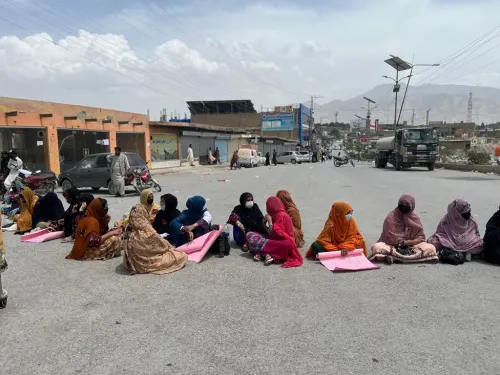
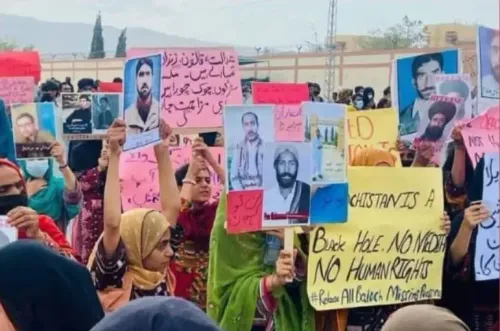
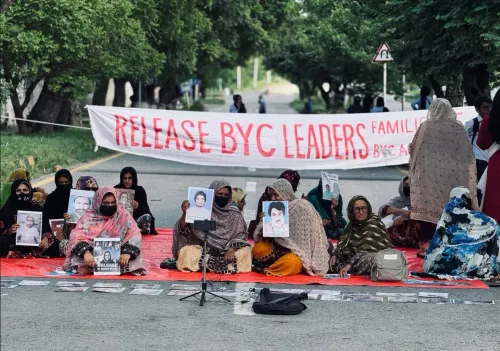
The Baloch Yakjehti Committee (BYC), a prominent human rights organisation, on Sunday, 18 October 2026, condemned an armed attack on Baloch workers in the Jiwani area of Gwadar, Balochistan, Pakistan, describing it as 'state terrorism' and calling on international institutions to move beyond statements and take practical action to protect the rights of the Baloch people.
What Happened in Jiwani
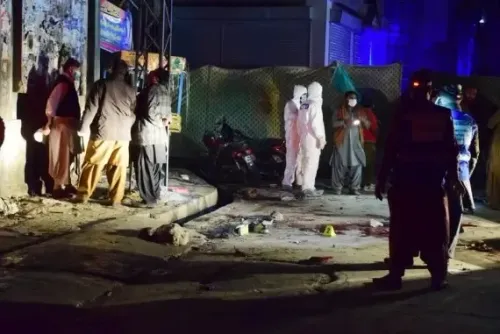
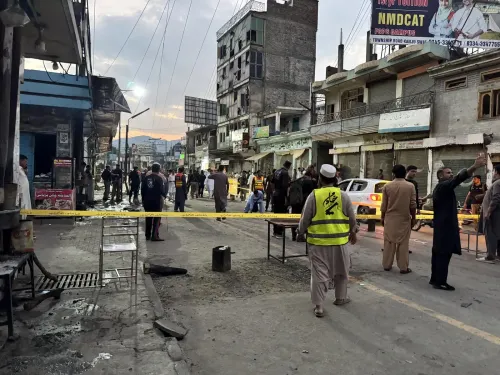
According to the BYC, workers connected to the oil trade were targeted by what the group alleges was a 'death squad' operating with state patronage in the Panwan Chale area of Gwadar on 15 October 2026. The organisation characterised the attack as 'an extremely barbaric act' and framed it within what it describes as a broader pattern of violence against Baloch civilians.
The Pakistani government has not issued a response to the BYC's allegations as of the time of this report. The claims of 'state patronage' are the BYC's own characterisation and have not been independently verified.
BYC's Allegation: 'Economic Genocide'
In a post on X (formerly Twitter), the BYC escalated its language significantly, using the phrase 'economic genocide' to describe conditions in Balochistan. The group alleged that border trade — described as the 'sole means of livelihood' for many Baloch communities — has been 'forcibly shut down,' and that armed groups have now been deployed to restrict economic activity through sea routes as well.
'After the closure of borders, the Baloch people have turned to the sea for their livelihood, and targeting workers there with bullets is tantamount to intensifying the economic exploitation and state oppression of the Baloch people,' the BYC posted.
The group further alleged that such squads have been 'formed under state sponsorship' and have been 'continuously used to suppress the Baloch people and paralyse their political and economic life' across regions stretching 'from Gwadar to the Koh-e-Suleman.'
Call to International Institutions
The BYC directed a formal appeal to global human rights bodies, urging them to move past 'mere statements' and take practical steps. 'The trust of the people in global human rights institutions can be maintained' only through concrete action, the group stated.
This appeal reflects a recurring frustration among Baloch civil society groups, who have argued that organisations such as the United Nations Human Rights Council have consistently acknowledged concerns about Balochistan without triggering enforceable protections or formal investigations.
Broader Context: Balochistan's Long Crisis
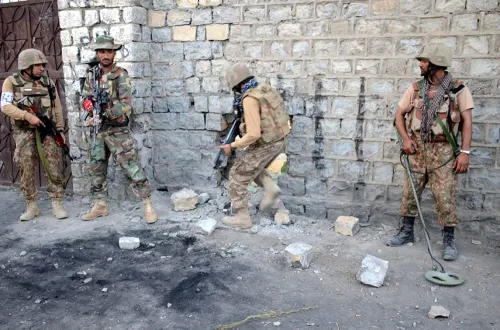
Balochistan, Pakistan's largest but most sparsely populated province, has been at the centre of an unresolved insurgency and human rights dispute for decades. Rights groups — including Amnesty International and Human Rights Watch — have documented enforced disappearances, extrajudicial killings, and restrictions on civil liberties in the region. The Pakistani state has consistently denied systematic abuses, attributing violence to separatist militancy.
The Gwadar district, site of the China-Pakistan Economic Corridor (CPEC)'s flagship deep-sea port, has been a particular flashpoint. Critics argue that CPEC-linked development has marginalised local Baloch communities economically, a charge the Pakistani government rejects. The BYC's framing of the latest attack as an attempt to 'further restrict business through sea routes' appears to situate it within this longstanding controversy.
With international attention on Pakistan's human rights record already heightened, the BYC's appeal for external intervention is likely to add pressure on Islamabad — though whether it translates into action from global institutions remains to be seen.
Point of View
Designed to force a response from international bodies that have long treated Balochistan as a bilateral Pakistani matter. What makes this incident notable is its location: Gwadar, the crown jewel of CPEC, where Beijing's strategic investment interest sits awkwardly alongside persistent Baloch displacement. International institutions have proved reluctant to confront Pakistan on Balochistan precisely because of those geopolitical entanglements — the BYC knows this, which is why the appeal to 'trust in global human rights institutions' is as much a pressure tactic as a genuine plea. The deeper question mainstream coverage glosses over is whether CPEC's economic architecture has structurally foreclosed livelihood options for Baloch communities — and if so, who bears accountability for that.
NationPress
18 Oct 2026
Frequently Asked Questions
What happened to Baloch workers in Gwadar's Jiwani area?
According to the Baloch Yakjehti Committee (BYC), workers linked to the oil trade were fired upon by an alleged 'death squad' in the Panwan Chale area of Jiwani, Gwadar, on 15 October 2026. The BYC has characterised the attack as 'state terrorism,' though the Pakistani government has not issued a formal response to these allegations.
Who is the Baloch Yakjehti Committee (BYC)?
The Baloch Yakjehti Committee is a civil society and human rights organisation that advocates for the rights of Baloch people in Pakistan's Balochistan province. It has been vocal about alleged state-sponsored violence, enforced disappearances, and economic marginalisation in the region.
What is 'economic genocide,' as alleged by the BYC?
The BYC uses the term 'economic genocide' to describe what it alleges is a deliberate, multi-pronged effort to destroy Baloch livelihoods — first through the forced closure of cross-border trade, and now, it claims, through violence targeting workers who turned to sea-route commerce as an alternative. These are the organisation's own characterisations and have not been independently verified.
Why is Gwadar significant in the context of Balochistan?
Gwadar is the centrepiece of the China-Pakistan Economic Corridor (CPEC), housing a deep-sea port that is central to Beijing's regional trade ambitions. Rights groups and Baloch civil society organisations have long argued that CPEC development has economically marginalised local communities, a charge the Pakistani government disputes.
What action has the BYC demanded from international institutions?
The BYC has urged global human rights bodies to move beyond issuing statements and take 'practical' steps to protect Baloch rights. The group specifically warned that continued inaction risks undermining public trust in international human rights mechanisms.