Baloch Yakjehti Committee slams Sindh govt's Aurat March ban as 'state fascism'
Synopsis
Pakistan's Sindh government barred the Baloch Yakjehti Committee from the Aurat March by naming it a banned organisation in the event's conditional permit — a move the BYC has called 'state fascism'. The rights body says no Pakistani court has ever issued such a ban, and alleges anti-terror laws are being weaponised against peaceful Baloch activists.
Key Takeaways
The Sindh government named the Baloch Yakjehti Committee (BYC) and Jeay Sindh Qaumi Mahaz (JSQM) as banned organisations in the conditional permit issued for the Aurat March .
The BYC has condemned the move as "state fascism" , asserting that no Pakistani court has ever declared it a banned organisation.
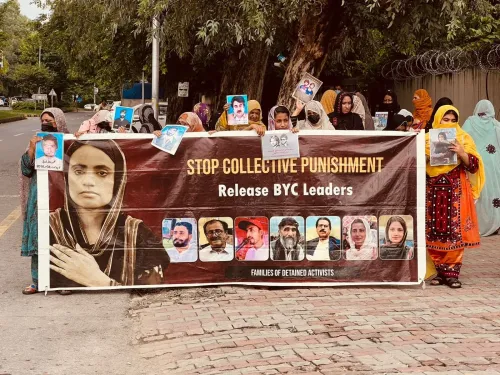
The rights body alleges its leaders have been "illegally and unconstitutionally" detained and denied bail despite facing only bailable charges.
The Anti-Terrorism Act (ATA) and the Fourth Schedule are allegedly being used against peaceful Baloch political activists, students, and human rights advocates.
The BYC has called on international human rights organisations and democratic forces worldwide to stand in solidarity with Balochistan.
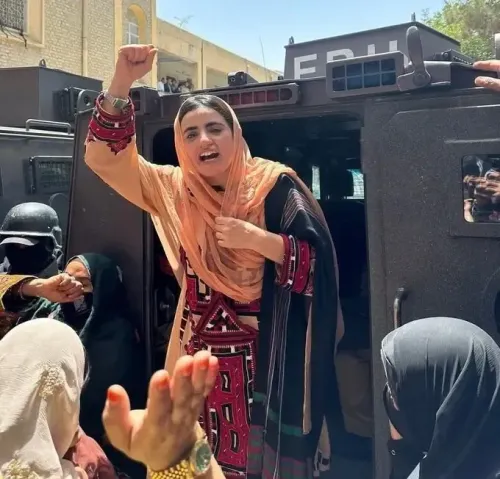
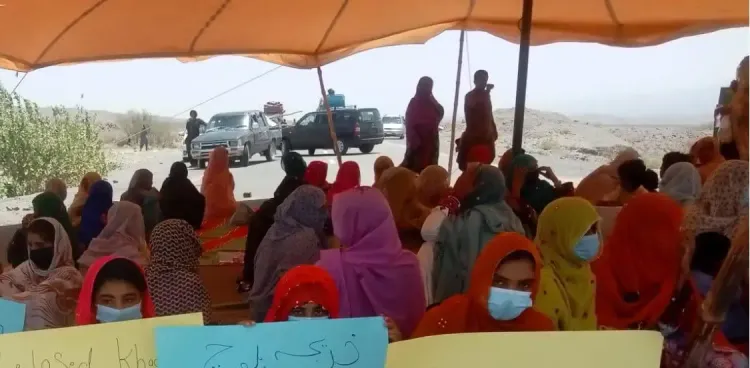
The Baloch Yakjehti Committee (BYC), a human rights organisation based in Balochistan, has sharply condemned Pakistan's Sindh government for barring it from participating in the Aurat March programme, describing the move as an act of "state fascism" against the people of Balochistan. The condemnation came after the Sindh government's conditional permit for the march, issued on Sunday, explicitly named the BYC and the Jeay Sindh Qaumi Mahaz (JSQM) as banned organisations.
What the Sindh Government Did
The conditional permit issued for the Aurat March singled out the BYC and the JSQM, effectively barring both organisations from taking part in the event. The BYC characterised this designation as demonstrating the "extreme of state fascism." The rights body questioned the legal basis of the ban, asking under what law or judicial ruling it had been declared a prohibited organisation.
"In this context, the imposition of such conditions by the Sindh government on the Aurat March — conditions that single out and declare the BYC as banned — is an utterly shameful and condemnable act," the BYC said in its statement.
BYC's Legal Challenge to the Ban
The BYC asserted that no Pakistani court has issued any order banning the organisation, and that it remains a "peaceful political organisation" with no legal basis for such a designation. The rights body stated that despite its leaders facing only bailable charges, they are allegedly being denied their fundamental right to bail.
The organisation further alleged that its leaders have been "illegally and unconstitutionally" detained for extended periods. It stressed that throughout an entire year-long period, the state had failed to produce even a single piece of legal evidence against it.
Anti-Terrorism Laws Allegedly Weaponised
The BYC alleged that Pakistan's anti-terrorism legislation, including the Anti-Terrorism Act (ATA) and the Fourth Schedule, are being weaponised against thousands of Baloch political activists, students, and human rights advocates. According to the BYC, these laws — originally enacted to counter terrorism — are being misapplied against peaceful political workers.
"The state has been continuously attempting to crush this public movement through the use of violence," the BYC stated, describing itself as a democratic movement against human rights abuses, enforced disappearances, extrajudicial measures, and Baloch genocide in Balochistan.
Call for International Solidarity
The BYC reiterated its resolve to continue exposing what it described as ongoing "human rights violations, enforced disappearances, political vendettas, and state oppression" in Balochistan before the international community. It called on human rights organisations worldwide, women's movements, democratic forces, and justice-seeking individuals to stand in solidarity with the BYC and the "peaceful struggle" of the people of Balochistan.
The Sindh government has not publicly responded to the BYC's allegations. The episode adds fresh pressure on Pakistan's human rights record, which has faced sustained scrutiny from international bodies over reported disappearances and crackdowns in Balochistan.
Point of View
Using administrative gatekeeping to achieve what a legal ban would require evidence to justify. The BYC's challenge is pointed: if no court has issued the ban, on what authority does the state act? This matters beyond Balochistan. Pakistan's use of anti-terror frameworks against political dissidents has drawn repeated censure from UN bodies, and incidents like this one illustrate why. The Aurat March, a feminist mobilisation, becoming the site of a crackdown on a Baloch rights group also reveals how multiple strands of Pakistan's internal tensions — gender rights, ethnic identity, state authority — converge in ways mainstream coverage rarely traces.
NationPress
25 Sept 2026
Frequently Asked Questions
Why did the Sindh government ban the BYC from the Aurat March?
The Sindh government named the Baloch Yakjehti Committee (BYC) and Jeay Sindh Qaumi Mahaz (JSQM) as banned organisations in the conditional permit issued for the Aurat March, effectively barring their participation. The government has not publicly explained the legal basis for this designation.
Has any Pakistani court declared the BYC a banned organisation?
According to the BYC, no Pakistani court has issued any ruling declaring it a banned organisation. The rights body argues it remains a legal, peaceful political organisation and that the Sindh government's action has no judicial or legislative basis.
What is the Baloch Yakjehti Committee (BYC)?
The BYC is a human rights organisation based in Balochistan, Pakistan, that describes itself as a democratic public movement against enforced disappearances, extrajudicial measures, and human rights abuses in the region. It has been active in raising concerns about the treatment of Baloch people by Pakistani state authorities.
How are anti-terrorism laws being used against Baloch activists, according to the BYC?
The BYC alleges that Pakistan's Anti-Terrorism Act (ATA) and the Fourth Schedule — laws enacted to counter terrorism — are being applied against peaceful Baloch political activists, students, and human rights advocates. It says thousands of Baloch activists have been targeted under these provisions.
What has the BYC called for in response to the ban?
The BYC has called on international human rights organisations, women's movements, and democratic forces worldwide to stand in solidarity with its cause. It has also vowed to continue exposing what it describes as human rights violations, enforced disappearances, and state oppression in Balochistan before the global community.