Did Cambodia and Thailand Reach Consensus on the Draft Joint Statement?
Synopsis
In a significant development, Cambodia's Ministry of Defence has announced a consensus with Thailand on a draft Joint Statement during critical ceasefire talks. As both nations strive to end rising tensions, the potential for peace hinges on the outcomes of ongoing negotiations, which are backed by ASEAN observers.
Key Takeaways
Consensus reached: Cambodia and Thailand have agreed on a draft Joint Statement amid ceasefire negotiations.
Escalating conflict: Recent air strikes and accusations of indiscriminate attacks highlight the gravity of the situation.
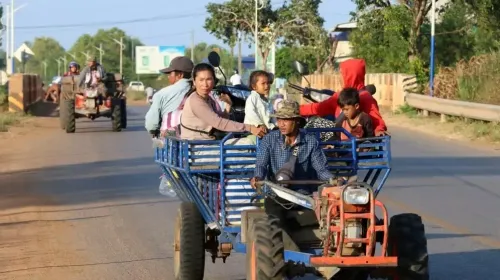
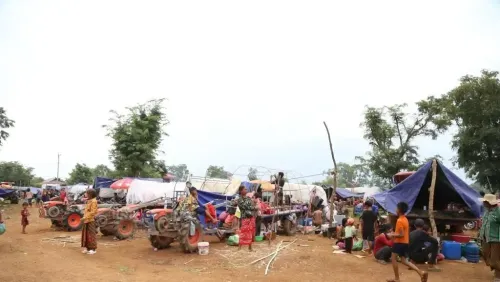
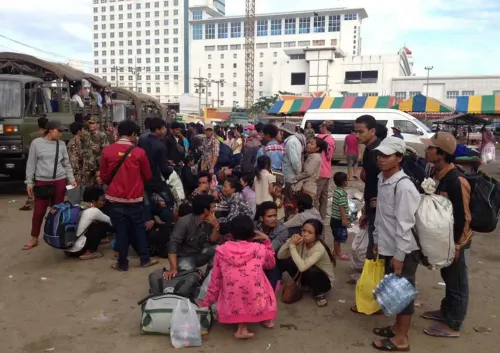
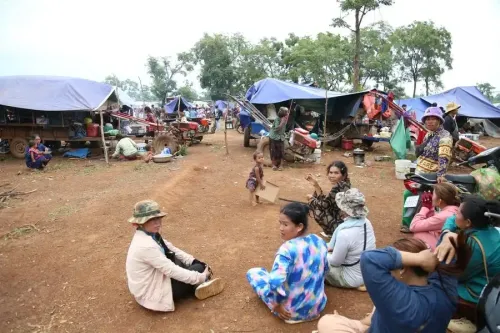
Humanitarian impact: The ongoing conflict has led to significant civilian casualties and mass displacement.
Historical roots: The border dispute is rooted in colonial-era demarcations, underscoring the complexity of resolution.
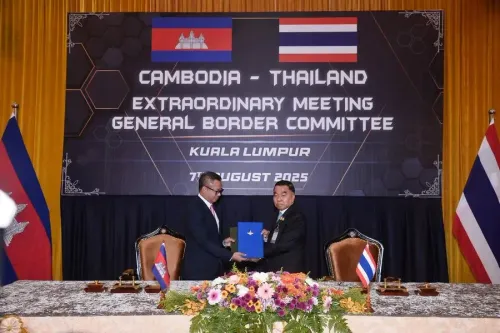
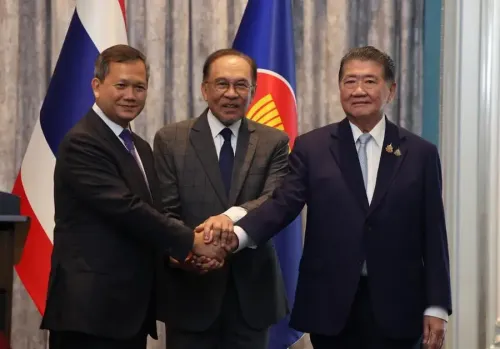
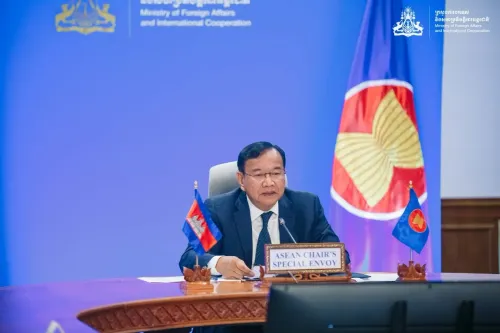
Phnom Penh, Dec 27 (NationPress) The Cambodian Ministry of Defence announced on Saturday that it has achieved a consensus with Thailand regarding the draft Joint Statement from the third Special Cambodia-Thailand General Border Committee meeting held on Friday evening, which included representatives from ASEAN.
Ceasefire negotiations commenced at approximately 9:40 a.m. local time on Saturday at a border post in Thailand’s Chanthaburi Province.
If a formal agreement is finalized, both parties are expected to sign a ceasefire declaration by noon, as reported by media outlets, including Xinhua news agency.
On Friday, Thailand executed air strikes in a contested border region with Cambodia while officials continued discussions to halt the ongoing conflict.
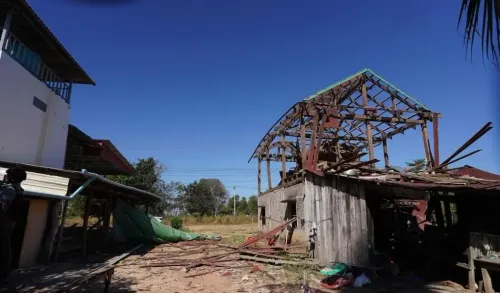
The Thai Air Force reported that they targeted a Cambodian “fortified military position” after all civilians had vacated the area. However, Cambodia's defence ministry accused Thailand of conducting indiscriminate attacks on civilian homes, resulting in injuries to several individuals.
Recent violence erupted earlier this month following the collapse of a fragile ceasefire established in July, which had temporarily quelled five days of intense clashes, but hostilities resumed shortly thereafter, re-igniting conflict in the border region.
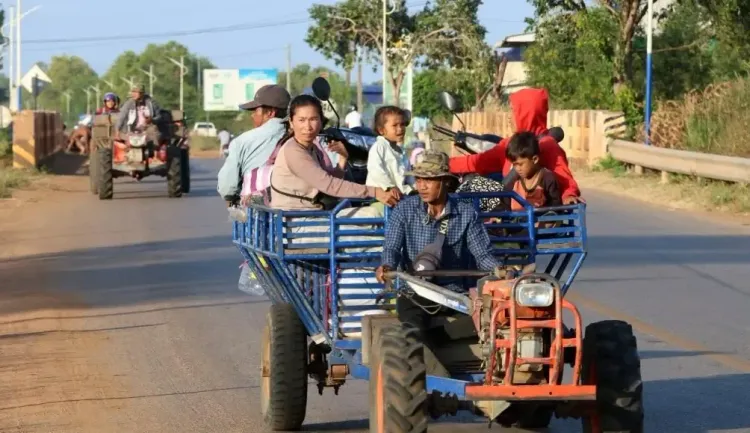
Estimates indicate that at least 41 individuals have died since the resumption of hostilities, with nearly one million residents displaced from their homes. Both Bangkok and Phnom Penh have accused each other of violating the ceasefire, escalating tensions further.
Since the truce's breakdown, fighting has spread across nearly the entire 500-mile (800-kilometre) border shared by Thailand and Cambodia. The Cambodian Defence Ministry reported that the latest air strikes occurred in the northwestern province of Banteay Meanchey, claiming that Thai F-16 jets dropped approximately 40 bombs during the operation.
In contrast, Thailand characterized the strikes as efforts to assert control over Nong Chan village, labeling the mission as “precise, effective and successful.”
This military action coincided with a third consecutive day of negotiations between Thai and Cambodian representatives at a border checkpoint. The defence ministers from both nations are anticipated to join discussions on Saturday, raising hopes for de-escalation.
Thai Prime Minister Anutin Charnvirakul stated on Friday that a ceasefire agreement could be signed once both parties agree to each other's terms.
The border dispute between Thailand and Cambodia stems from colonial-era demarcations established over a century ago. Over time, this disagreement has frequently escalated into violence, resulting in casualties on both sides of the border.
Point of View
It is crucial that both Cambodia and Thailand prioritize dialogue and diplomacy to resolve their longstanding border disputes peacefully. As hostilities escalate, the humanitarian impact on civilians cannot be overlooked. Continued engagement and cooperation are essential for regional stability and the well-being of affected populations.
NationPress
24 Sept 2026
Frequently Asked Questions
What led to the recent violence between Cambodia and Thailand?
The recent violence was triggered by the collapse of a fragile ceasefire established in July, leading to renewed hostilities after months of tension.
What is the significance of the Joint Statement draft?
The Joint Statement draft represents a potential framework for peace and a roadmap to de-escalate the conflict, emphasizing the importance of dialogue.
How many people have been affected by the conflict?
Estimates suggest that at least 41 individuals have died, and nearly one million residents have been displaced due to the ongoing hostilities.