Canada sends largest trade mission to India in 30 years, eyes $70 bn by 2030

Synopsis
Canada is sending its biggest-ever trade delegation to India in 30 years — nearly 300 business delegates across aerospace, clean tech, and agri-food — as Ottawa and New Delhi race to seal a comprehensive trade deal by year-end. With C$108 billion in Canadian institutional exposure to India already on the books and a $70-billion trade target by 2030, this is less a trade mission and more a strategic bet on post-US economic diversification.
Key Takeaways
Canadian International Trade Minister Maninder Sidhu is leading nearly 300 business delegates to Mumbai and Bengaluru from 12 to 17 October 2026 — Canada's largest trade mission to India in over 30 years .
The mission covers aerospace, clean technology, ICT, life sciences, agri-food , and forestry sectors.
Two-way Canada-India goods and services trade stood at C$30.4 billion in 2025 ; the target is to more than double this to $70 billion by 2030 .
Canadian pension funds and asset managers had approximately C$108 billion in total exposure to India in 2025, according to Export Development Canada .
The mission follows the fifth round of CEPA negotiations held in Ottawa from 5 to 9 October ; both sides aim to conclude the agreement by end- 2026 .
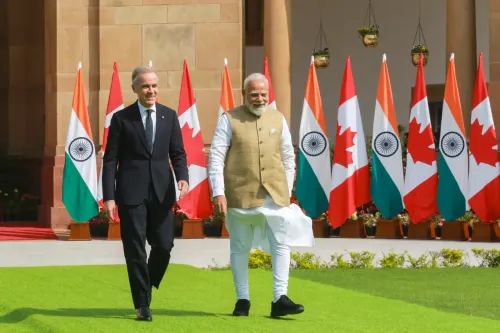
CEPA talks were relaunched after PM Mark Carney and PM Narendra Modi moved to reset ties that had sharply deteriorated in 2023 .
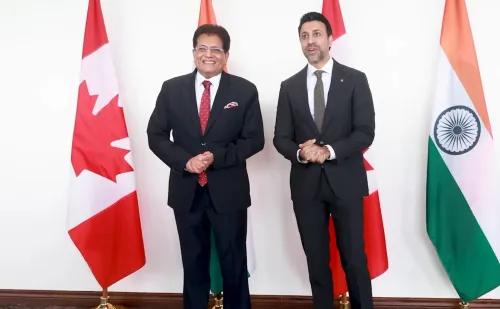
Canada is dispatching its largest trade delegation to India in over three decades, with Indian-origin Canadian International Trade Minister Maninder Sidhu leading nearly 300 business delegates to Mumbai and Bengaluru from 12 to 17 October 2026. The Team Canada Trade Mission comes as the two countries push to finalise a comprehensive trade agreement before year-end, underscoring a significant diplomatic and commercial reset.
What the Mission Covers
The delegation spans businesses across aerospace and space, clean technologies and energy transition, information and communication technologies, life sciences, and agri-food sectors. The Trade Commissioner Service has additionally listed forestry and wood products as a priority area, with programming that includes business-to-business meetings, site visits, and briefings by Canadian trade commissioners.
The mission is organised by Global Affairs Canada's Trade Commissioner Service, which typically focuses on helping Canadian small and medium-sized enterprises enter foreign markets. At nearly 300 delegates, this edition is notably larger than any Team Canada mission to India in living memory.
The Trade and Investment Backdrop
Two-way goods and services trade between Canada and India totalled C$30.4 billion in 2025, according to the Canadian government. Canadian merchandise exports to India were C$3.9 billion, led by vegetables, mineral fuels and oils, and wood pulp, while Indian merchandise imports into Canada stood at C$9.7 billion, driven by precious stones and metals, machinery, and pharmaceutical products.
Canadian direct investment in India reached C$11.4 billion in 2025, with Indian direct investment in Canada at C$9.7 billion. Canadian pension funds and asset managers reported approximately C$108 billion in total exposure to India that year, according to Export Development Canada — a figure that signals institutional conviction well beyond headline trade flows.
CEPA Talks and the Diplomatic Reset
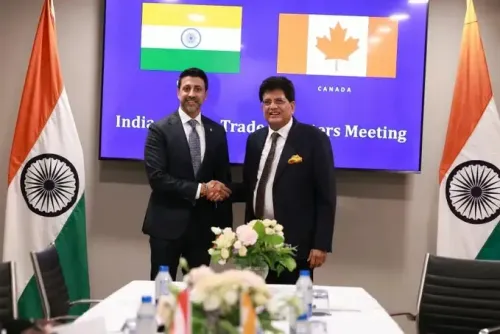
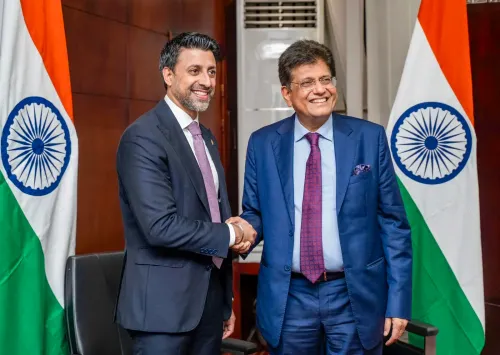
The mission follows the fifth round of negotiations on the Canada-India Comprehensive Economic Partnership Agreement (CEPA), held in Ottawa from 5 to 9 October. Neither government has released an outcome of that round. Minister Sidhu had earlier met Commerce and Industry Minister Piyush Goyal on the sidelines of the G20 Trade Ministers' Meeting in Milwaukee on 1 October, where the two reviewed negotiating progress.
The CEPA talks were relaunched after Prime Minister Mark Carney and Prime Minister Narendra Modi moved to reset ties that had deteriorated sharply in 2023, when bilateral relations soured over allegations related to Khalistani separatism. The current diplomatic momentum marks a tangible departure from that period of strain.
Geopolitical Context: Diversifying Beyond the US
The mission carries clear geopolitical subtext. Canada, facing its own trade friction with the Trump administration, has stated a goal of doubling exports to markets beyond the United States over the next decade. India, meanwhile, is simultaneously negotiating trade deals with several partners — including the United States — amid its own tensions with Washington over tariffs and New Delhi's continued purchases of Russian oil.
Notably, both nations share an incentive to reduce dependence on a single dominant trade partner, making the India-Canada alignment structurally logical even if the political path to CEPA has been bumpy. The target of more than doubling bilateral trade to $70 billion by 2030, as stated by Minister Sidhu, would require a near-tripling from current goods and services volumes — an ambitious but not implausible trajectory given the scale of Canadian institutional exposure already embedded in India.
What Comes Next
With the fifth round of CEPA negotiations just concluded and a sixth round presumably in the pipeline, the mission's outcomes — in terms of memoranda of understanding, investment commitments, and partnership deals — will be closely watched as a signal of whether the diplomatic reset is translating into commercial reality. Both governments have indicated a desire to conclude the agreement by the end of 2026.
Point of View
C$108 billion in institutional exposure, a $70-billion trade target — signals that the Canada-India reset is no longer just diplomatic rhetoric; it has acquired real commercial momentum. Yet the CEPA's fifth negotiating round concluded without a public outcome, which is a cautionary note: framework ambition and dealmaking reality are still some distance apart. Both countries are essentially pivoting away from US dependency at the same moment, which gives this bilateral unusual strategic alignment — but shared motivation is not the same as resolved differences on market access, dairy, or intellectual property. The next 60 days of CEPA talks will reveal whether this mission was a launchpad or a photo opportunity.
NationPress
12 Oct 2026
Frequently Asked Questions
What is the Team Canada Trade Mission to India in October 2026?
It is Canada's largest trade delegation to India in over 30 years, led by International Trade Minister Maninder Sidhu , with nearly 300 business delegates visiting Mumbai and Bengaluru from 12 to 17 October 2026. The mission aims to expand commercial ties and accelerate negotiations on the Canada-India Comprehensive Economic Partnership Agreement (CEPA).
What sectors are the Canadian delegates focused on?
The delegation includes businesses from aerospace and space, clean technologies and energy transition, information and communication technologies, life sciences, agri-food, and forestry and wood products. Programming includes business-to-business meetings, site visits, and briefings by Canadian trade commissioners.
What is the Canada-India CEPA and where do talks stand?
The Canada-India Comprehensive Economic Partnership Agreement (CEPA) is a proposed bilateral free-trade deal. A fifth round of negotiations was held in Ottawa from 5 to 9 October 2026, though neither government has released its outcome. Both sides aim to conclude the deal by the end of 2026.
How much do Canada and India currently trade with each other?
Two-way goods and services trade between Canada and India totalled C$30.4 billion in 2025. Canadian merchandise exports to India were C$3.9 billion, while Indian merchandise imports into Canada stood at C$9.7 billion. Canada's stated target is to more than double this to $70 billion by 2030.
Why has Canada made India a priority trade partner now?
Canada is seeking to diversify exports away from its dependence on the United States amid ongoing trade friction with the Trump administration. India, one of the world's fastest-growing major economies, offers an alternative market. The diplomatic reset between Prime Ministers Carney and Modi after the 2023 bilateral rift also reopened political space for the mission.