British Columbia declares wildfire emergency as evacuations surge
Synopsis
British Columbia has declared a provincial state of emergency as wildfires force mass evacuations and destroy homes near Summerland. Simultaneously, over 100 fires rage in northwestern Ontario, pushing Toronto's air quality to 'very high risk' — making this one of Canada's most widespread wildfire crises in years.
Key Takeaways
British Columbia declared a provincial state of emergency on Saturday due to fast-spreading wildfires.
Premier David Eby confirmed air evacuations are underway for residents cut off by flames near Summerland .
The emergency declaration grants authorities power to commandeer accommodations and impose local travel restrictions.
Canadian Prime Minister Mark Carney pledged full federal support to B.C. on Saturday .
More than 100 active fires are burning in northwestern Ontario , with Toronto 's air quality classified as 'very high risk' by Environment Canada .
A Canadian National (CN) train was surrounded by wildfire near Armstrong, Ontario ; crew evacuated safely, train operations suspended.
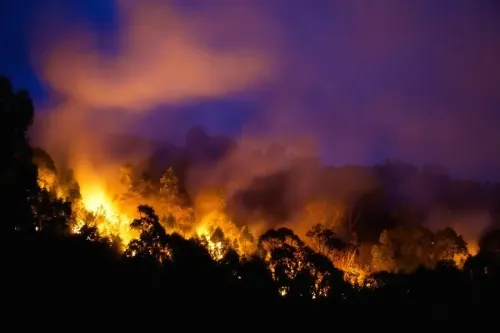
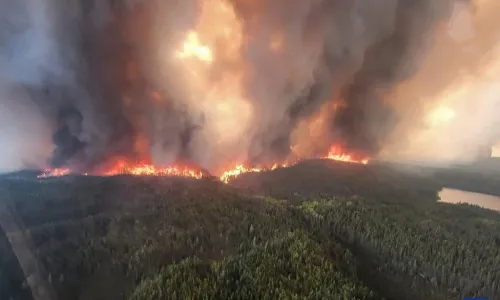
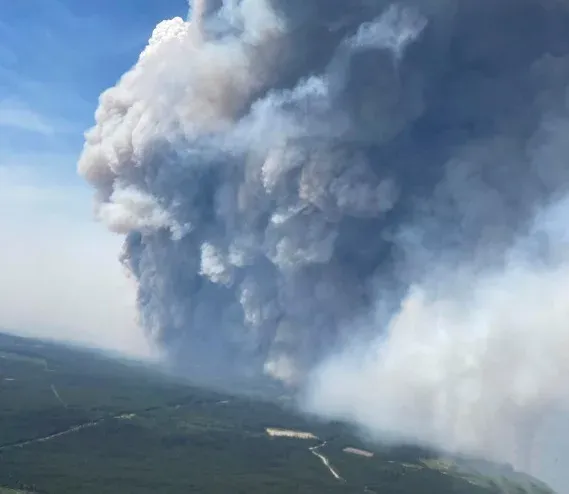
The western Canadian province of British Columbia (B.C.) declared a provincial state of emergency on Saturday as fast-moving wildfires threatened multiple communities, forced large-scale overnight evacuations, and destroyed homes near Summerland. The declaration grants authorities sweeping powers to manage the crisis, including commandeering accommodations and imposing local travel restrictions.
What the Emergency Declaration Means
Speaking at a news conference in Vancouver, B.C. Premier David Eby said the state of emergency was essential given the rapidly evolving fire situation. 'The conditions of this fire are extremely dangerous and are changing minute by minute,' Eby said, stressing that saving lives and supporting rescue efforts remain the government's top priority.
According to the provincial emergency management ministry, the declaration gives the government greater operational flexibility — including the authority to commandeer accommodations and restrict local movement — to accelerate the crisis response. Air evacuations are also underway to reach residents cut off by the flames.
Summerland Under Severe Threat
The wildfire near Summerland has emerged as the most acute flashpoint, forcing thousands of residents to evacuate and destroying several homes and properties. The scale of displacement underscores the speed at which the fires have spread across the province's interior.
Federal Government Pledges Support
Canadian Prime Minister Mark Carney said on social media on Saturday that the federal government stands ready to offer full support to B.C. in its firefighting and relief efforts. The statement signals Ottawa's readiness to deploy additional resources if the provincial response reaches its limits.
Ontario Fires Add to National Crisis
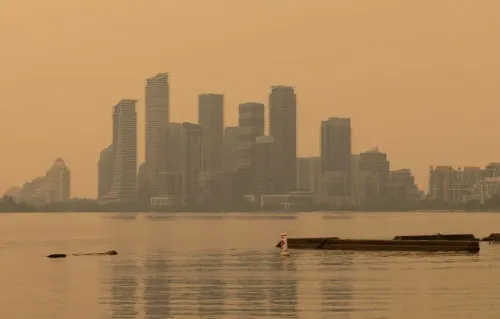
The emergency in B.C. comes as wildfires sweeping across northwestern Ontario have caused severe smog and a sharp deterioration in air quality across several regions, including the national capital Ottawa and Toronto, Canada's largest city. According to data released by Environment Canada, Toronto's Air Quality Health Index was classified as 'very high risk,' with the city's air quality ranking among the worst of any major global city at the time.
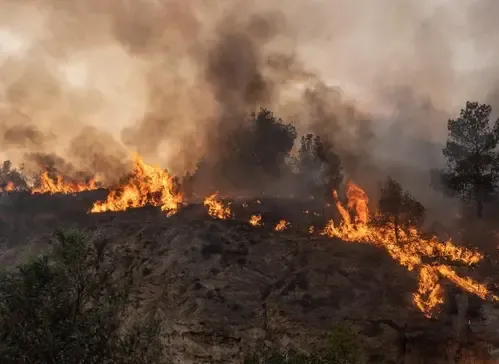
Ottawa also issued air quality alerts, with high humidity trapping wildfire smoke particles and turning the sky yellow. More than 100 active fires are still burning in northwestern Ontario, forcing emergency evacuations from several communities.
CN Train Video Highlights Scale of Danger
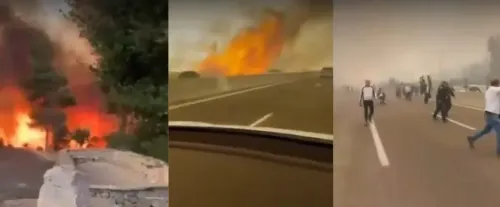
A video widely circulated on social media showed a Canadian National (CN) train surrounded by raging wildfires near Armstrong, Ontario. The footage, filmed by a locomotive crew member, captured towering flames engulfing forest on both sides of the train and casting an intense red glow inside the cab. CN confirmed the authenticity of the video and stated that the train crew had been safely evacuated. The railway has since announced a temporary suspension of train operations in the affected section.
With fires still active across two provinces and air quality emergencies compounding the crisis, Canada's wildfire season of 2025 is shaping up as one of the most disruptive in recent memory.
Point of View
Multi-region crises. The Toronto air quality ranking among the worst globally is a jarring data point for a G7 nation, and one that will intensify domestic debate about forest management and climate adaptation spending. Premier Eby's emergency declaration buys the province operational tools, but the real question is whether federal support can be mobilised fast enough when Ottawa itself is under a smoke advisory. The CN train footage, meanwhile, is a visceral reminder that critical infrastructure is increasingly in the fire's path — a risk that Canada's rail-dependent supply chains cannot afford to ignore.
NationPress
9 Aug 2026
Frequently Asked Questions
Why did British Columbia declare a state of emergency over wildfires?
B.C. declared a provincial state of emergency on Saturday because fast-spreading wildfires threatened multiple communities, triggered large-scale overnight evacuations, and required special government powers — such as commandeering accommodations and imposing travel restrictions — to manage the crisis effectively.
What is happening near Summerland, B.C.?
The wildfire near Summerland is among the most severe in the province, forcing thousands of residents to evacuate and destroying several homes and properties. Air evacuations are also underway for residents cut off by the flames.
How is the federal government responding to the B.C. wildfire emergency?
Canadian Prime Minister Mark Carney stated on social media on Saturday that the federal government is ready to offer full support to B.C. in its firefighting and relief efforts, signalling Ottawa's readiness to deploy additional resources if needed.
What is the wildfire situation in Ontario?
More than 100 active fires are burning in northwestern Ontario, forcing emergency evacuations from several communities. The fires have caused severe smog across the region, with Toronto's Air Quality Health Index classified as 'very high risk' by Environment Canada and Ottawa also issuing air quality alerts.
What happened to the CN train caught in the Ontario wildfires?
A Canadian National (CN) train was surrounded by raging wildfires near Armstrong, Ontario. Footage filmed by a crew member went viral on social media, showing flames engulfing forest on both sides of the train. CN confirmed the crew was safely evacuated and has temporarily suspended train operations in the affected section.