Should Canadian PM Carney Address Human Rights During China Visit?
Synopsis
As Prime Minister Mark Carney prepares for his first visit to China in over eight years, Human Rights Watch urges him to prioritize human rights issues, particularly concerning Xinjiang and labor rights. This visit comes amid strained relations and increasing repression in China.
Key Takeaways
Human Rights Watch calls for a focus on human rights during Carney's China visit.
Issues of forced labor and repression in Xinjiang must be highlighted.
The visit is part of efforts to enhance economic resilience between Canada and China.
Relations have been strained due to China's increasing repression .
Carney's approach could impact Canada's global standing on human rights .
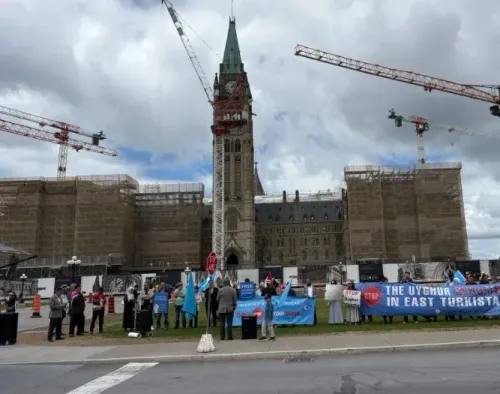
Ottawa, Jan 11 (NationPress) The US-based organization Human Rights Watch (HRW) is calling on Canadian Prime Minister Mark Carney to prioritize human rights during his upcoming trip to China from January 13-17. They are urging him to advocate for an end to the repression in Xinjiang and to ensure that China adheres to international labour rights conventions.
HRW emphasized that Carney should address critical matters, such as the connections between the forced labor practices of the Chinese government and imports to Canada, the ongoing persecution and imprisonment of human rights defenders, and the targeting of critics abroad, including those residing in Canada.
In a statement, HRW's Deputy Asia Director, Maya Wang, stated: "Prime Minister Carney needs to understand that the increasing repression by the Chinese government threatens not only the rights of individuals in China but also the fundamental interests and values of Canada."
"Carney must ensure that discussions with the Chinese government on trade and security align with Canada’s values, particularly the promotion of human rights."
This visit marks the first time in over eight years that a Canadian Prime Minister has traveled to China. Relations between the two nations have deteriorated in recent years as Chinese President Xi Jinping has intensified repression both domestically and internationally.
The Canadian government’s announcement regarding Carney's visit indicated that it aims to enhance economic resilience and reduce dependency on the United States by improving trade, energy, agriculture, and international security ties with China. However, the statement notably lacked any reference to human rights.
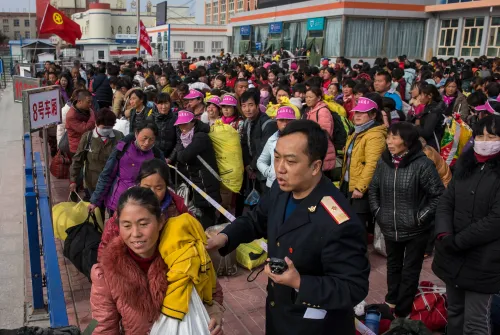
HRW remarked: "Carney should insist that the Chinese government cease its repression in Xinjiang and ensure full adherence to the international labour rights conventions that China has recently ratified, which include the ILO Convention No. 29 on forced labor and ILO Convention No. 105 on state-imposed forced labor."
HRW highlighted that the abuses of labour rights by the Chinese government extend beyond the Uyghur region. Their laws prohibit independent labor unions and include the detention and imprisonment of labor activists, suppression of labor protests, and the closure of labor monitoring organizations in Hong Kong.
The Chinese government has significantly curtailed freedoms related to expression, association, and assembly, alongside free and fair elections, fair trial rights, and judicial independence in Hong Kong, where approximately 300,000 Canadians live. Additionally, China has engaged in cross-border oppression, referred to as transnational repression, targeting critics of the government residing in other countries, including Canadian citizens.
Point of View
It is imperative that we approach Prime Minister Carney's trip to China with a balanced perspective. While economic ties are crucial, the pressing need for a dialogue on human rights cannot be overlooked. The call from Human Rights Watch serves as a reminder that Canada must uphold its values on the global stage.
NationPress
13 Oct 2026
Frequently Asked Questions
What is the purpose of Prime Minister Carney's visit to China?
The visit aims to enhance economic resilience and strengthen trade ties between Canada and China while addressing various international security concerns.
Why is Human Rights Watch urging Carney to focus on human rights?
HRW believes that the ongoing repression in Xinjiang and labor rights violations are critical issues that must be addressed to protect both international standards and Canadian values.
What specific issues should Carney raise during his visit?
Carney should address forced labor practices, the persecution of human rights defenders, and the targeting of critics abroad, including in Canada.
How have Canada-China relations changed in recent years?
Relations have become strained due to increased repression in China under President Xi Jinping, affecting diplomatic and economic engagements.
What is the significance of this visit?
This visit marks the first by a Canadian Prime Minister to China in over eight years, making it a crucial opportunity to address both economic and human rights concerns.