CCP tightens grip on officials: Retired leaders must now report phone calls
Synopsis
The CCP's post-Fifth Plenum discipline push has crossed a new threshold: even retired senior officials must now report private phone calls and informal gatherings to the party's Central Committee General Office. With 33 figures purged and Xi Jinping's most trusted general removed, China's internal power consolidation is at its most visible since the 19th Party Congress.
Key Takeaways
The CCP now requires retired senior officials to report private phone calls and social gatherings to the General Office of the Central Committee .
Private meetings involving more than three senior officials must be formally declared to party authorities.
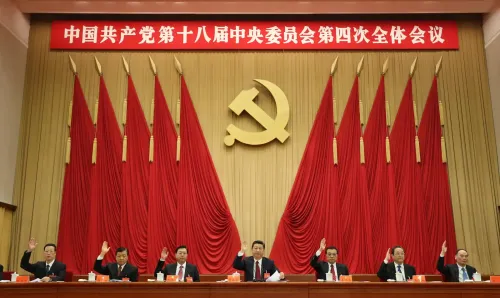
During the Fifth Plenum (concluded 29 October ), officials were barred from returning home and required to stay in designated hotels.
The plenum confirmed the expulsion of 33 senior figures — 17 civilians and 16 military officers — including Zhang Youxia , formerly Xi's most trusted general.
10 alternate members were promoted to full CCP membership; Zhang Shengmin was added to the Political Bureau in the first such plenum expansion since 1994 .
The plenum resolution organises party discipline demands across nine areas .
The Chinese Communist Party (CCP) has imposed sweeping new surveillance controls over its officials — including retired senior figures — requiring them to formally report private phone calls and social gatherings to party authorities, according to a report citing a Beijing-based insider. The measures, which reportedly tightened further following the CCP's Fifth Plenum that concluded on 29 October, mark a significant escalation in Xi Jinping's drive for internal party discipline.
What the New Controls Entail
According to the insider, identified by the pseudonym Tang Ming, private gatherings involving more than three senior officials must now be reported to the General Office of the CCP's Central Committee. The requirement extends to phone calls and social encounters — even among retired high-ranking officials. Tang Ming offered a pointed illustration: if former Premier Wen Jiabao wished to call former Chairman of the Chinese People's Political Consultative Conference Jia Qinglin, that communication would need to be declared to the General Office.
Meetings between retired officials and their former subordinates — a traditional form of patronage networking — now also require formal reporting. Critics and analysts argue this effectively dismantles informal political coalitions that have historically operated within the party's upper echelons.
Plenum Procedures Reflect New Discipline
Tang Ming reportedly noted that the stricter rules were visible during the plenum sessions themselves. Senior officials who previously returned home each evening during CCP Central Committee sessions were instead required to stay in designated hotels throughout the Fifth Plenum. Informal dinners among State Councillors or Politburo members — a customary feature of past plenums — were also curtailed, with officials directed to eat at the designated hotel.
This comes amid a broader doctrinal push: the plenum's guiding philosophy has been summarised in one report as 'keep your head down, notebook open and Marxist conscience spotless' — a formulation that underscores the ideological tightening under Xi's third term.
Key Decisions From the Fifth Plenum
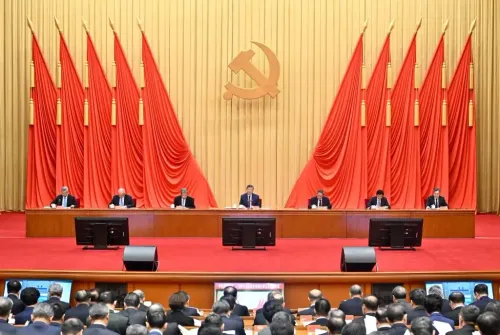
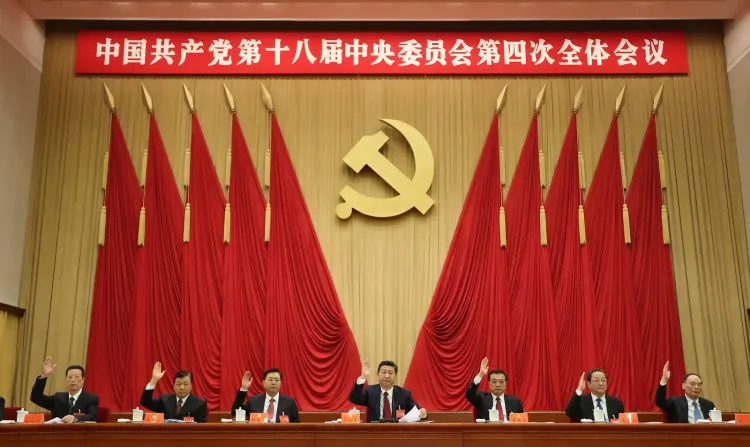
The 20th Central Committee of the CCP concluded its fifth plenary session by adopting a document titled 'Resolution of the Central Committee of the Communist Party of China on Certain Major Issues Concerning Persevering with Full and Rigorous Party Self-Governance'. The resolution organises disciplinary demands across nine areas, each adding to what one report described as a cadre's growing obligations.
The plenum also confirmed the ouster of 33 senior figures — 17 civilians and 16 military officers — from the CCP. The military purge is reportedly led by Zhang Youxia, until recently the senior Vice Chairman of the Central Military Commission (CMC) and once considered among President Xi's most trusted generals, according to a report in Bitter Winter.
Promotions and Structural Shifts
With multiple members expelled, 10 alternate members were elevated to full membership, while five alternates ranked above them in the official order were reportedly bypassed — a move analysts say signals Xi's preference for loyalty over seniority. Zhang Shengmin, a Vice Chairman of the CMC, was included in the Political Bureau, marking what is reportedly the first plenum expansion since Huang Ju joined it in 1994.
Notably, this is not the first time Xi's administration has used plenum mechanisms to consolidate internal control — the trajectory since the 19th Party Congress has consistently moved toward centralising authority and reducing the autonomy of both serving and retired officials.
What This Signals Going Forward
The latest measures suggest that the CCP's internal surveillance architecture is now extending beyond active officialdom into retirement networks — historically a sanctuary for informal political dealings. How these controls affect elite coalition-building ahead of future leadership transitions remains a key question for China-watchers worldwide.
Point of View
Xi Jinping's reportedly closest military confidant, signals that personal loyalty is no longer a shield — a chilling signal for the entire officer corps. What mainstream coverage tends to underplay is that these controls are as much about pre-empting future succession manoeuvring as they are about anti-corruption — Xi is not just cleaning house, he is sealing the exits.
NationPress
18 Nov 2026
Frequently Asked Questions
What new controls has the CCP imposed on its officials?
The CCP now requires senior and retired officials to report private phone calls, social gatherings, and informal meetings to the General Office of the CCP's Central Committee, particularly when more than three senior figures are involved. The measures reportedly tightened after the Fifth Plenum concluded on 29 October.
What was decided at the CCP's Fifth Plenum?
The Fifth Plenum adopted a resolution on 'full and rigorous party self-governance', organised around nine disciplinary areas. It confirmed the expulsion of 33 senior figures, promoted 10 alternate members to full membership, and saw Zhang Shengmin added to the Political Bureau — the first such expansion since 1994.
Who is Zhang Youxia and why does his ouster matter?
Zhang Youxia served as the senior Vice Chairman of the Central Military Commission and was widely regarded as one of Xi Jinping's most trusted generals. His removal signals that even the innermost circle of Xi's military allies is not immune from the current purge.
Why does the CCP require officials to report private interactions?
According to the Beijing-based insider Tang Ming, the measures are part of an escalating drive to prevent informal political coalitions and unsanctioned communication among both serving and retired officials. Analysts argue it reflects Xi Jinping's effort to centralise control ahead of future leadership transitions.
How does this compare to past CCP discipline campaigns?
While the CCP has periodically tightened internal discipline since Xi's anti-corruption drive began in 2012, extending mandatory reporting requirements to retired officials' private calls is an unprecedented step. Previous campaigns focused primarily on serving officials and financial misconduct rather than the social networks of those already out of office.