Is China's Military Purge a Sign of Weakness in War Readiness?
Synopsis
The recent military purge in China, highlighted by the dismissal of General Zhang Youxia, raises alarming questions about the PLA’s war readiness and internal dynamics. This upheaval may affect US-China military dialogues and poses risks to regional stability.
Key Takeaways
General Zhang Youxia's dismissal signifies a major shift in China's military hierarchy.
The purge raises questions about the PLA's preparedness for conflict.
US-China military communication has deteriorated, increasing risks of miscalculations.
Internal instability may lead to strategic vulnerabilities for China.
The situation is critical for Taiwan and regional security dynamics.
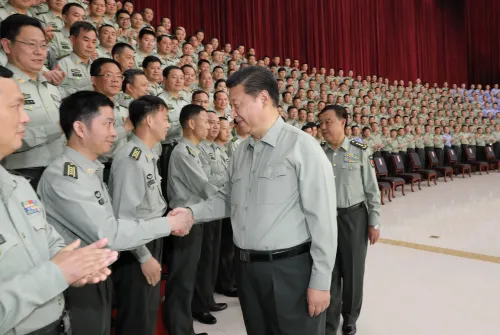
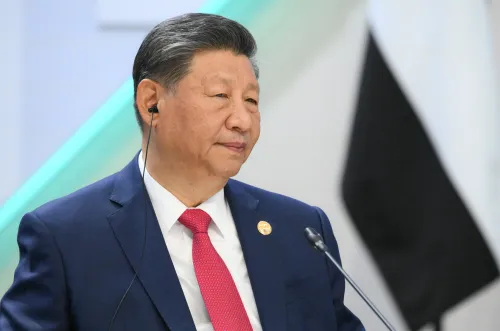
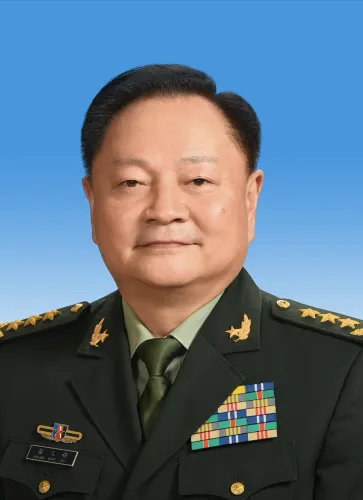
Sofia, Feb 7 (NationPress) The abrupt removal of General Zhang Youxia, who was once the most influential officer in the People’s Liberation Army (PLA) and a close ally of President Xi Jinping, has plunged China's military hierarchy into chaos, according to a recent report.
What started as mere speculation about corruption has transformed into a significant purge, which has decimated the upper echelons of the PLA, prompting serious concerns regarding China's preparedness for conflict, its internal integrity, and the future of military discussions between Beijing and Washington, as highlighted in an analysis by Bulgaria-based Modern Diplomacy.
“Zhang’s dismissal is not an isolated incident. Over the last two years, dozens, potentially hundreds of high-ranking officers have been ousted, many from crucial sectors. Analysts remark that a significant portion of those removed are commanders from China’s nuclear forces, the Eastern Theatre Command responsible for Taiwan, and elite units stationed in Beijing,” the report noted.
This analysis encapsulates the purge as a blend of paranoia, consolidation, and ambiguity.
It pointed out that the typical seven-member Central Military Commission has now been reduced to mainly the President and Zhang Shengmin, the head of the military’s disciplinary branch.
“The outcome is a stark disparity: political enforcers remain, while professional military leaders have largely disappeared,” wrote the publication’s news editor, Sana Khan.
Zhang’s removal occurred in January, just a month after US National Security Advisor Jake Sullivan had met him in Beijing in August 2024, which the writer characterized as an attempt “to stabilize a perilous relationship.”
Washington aimed to maintain contact with the PLA to minimize the chances of misunderstandings, accidental confrontations in the air or at sea, cyber incidents spiraling out of control, or misinterpreted missile tests.
“At present, that delicate effort appears on the verge of collapse,” the article emphasized.
The timing is crucial, it noted, as Xi has reportedly directed the PLA to be ready to secure victory in a Taiwan conflict by 2027, hastening objectives initially set for 2035. With this deadline approaching, the purge hints at significant discontent and potential distrust at the very top, the article mentioned.
Official narratives highlight corruption, claiming officers have plundered defense budgets and allowed decay to spread. Some PLA publications have even described the military as a “paper tiger” – a shocking acknowledgment for a force that Beijing has long depicted as modern and invincible.
The writer argues that either Xi perceives corruption as having critically weakened the PLA, or Beijing is projecting weakness while secretly retaining strength.
“Either interpretation presents risks. Declaring your military unreliable undermines deterrence. Pretending it’s unreliable while gearing up for conflict invites disastrous miscalculations,” the analysis suggested.
Meanwhile, China’s nuclear expansion persists amid reports of mismanagement at missile sites. Whether these reports are exaggerated or not, they exacerbate suspicion and anxiety within the ranks, it added.
“Perhaps the most immediate outcome is the near demise of US-China military engagement. Contacts that once included senior generals have dwindled to mere formalities,” wrote Khan, adding, “Commanders Washington hoped to engage, including those overseeing Taiwan and the South China Sea, seem to have been purged themselves.”
Future discussions may become untenable if communication with the West is perceived as perilous or treacherous within the PLA, she suggested, leaving intelligence agencies, rather than dialogue, as the primary means of insight and a far more fragile basis for managing rivalry between nuclear-armed nations.
For Taiwan, the silence from Beijing’s generals could be more disconcerting than their threats. For Washington, the breakdown of military dialogue necessitates managing rivalry solely through intelligence. For Xi, the purge embodies both authority and insecurity – a wager that loyalty will replace competence.
“The greatest risk may not be that China is gearing up for war imminently, but that it is entering a phase where misjudgment is easier and rectification more challenging. For the world, particularly for Taiwan, that silence from Beijing’s generals may turn out to be more alarming than their threats ever were,” concluded the article.
Point of View
I emphasize that while the internal dynamics of China's military are concerning, it's crucial to maintain a balanced perspective. The focus should remain on how these changes impact international relations and regional stability.
NationPress
19 Sept 2026
Frequently Asked Questions
What led to the dismissal of General Zhang Youxia?
General Zhang Youxia's dismissal is part of a larger military purge linked to corruption allegations within the PLA, which has raised concerns about its internal stability and war readiness.
How has this purge affected China's military leadership?
The purge has significantly reduced the number of senior officers in the PLA, particularly from vital commands, potentially impacting operational effectiveness and decision-making.
What are the implications for US-China military dialogue?
The breakdown in military contacts may hinder communication and increase the risk of misunderstandings or conflicts between the two nuclear-armed powers.
What does this mean for Taiwan?
The uncertainty within the PLA could pose risks for Taiwan, as the lack of communication from Beijing's military leaders may lead to miscalculations.
Is China's military still strong despite the purge?
While the purge indicates potential weaknesses, China continues its military expansion, which raises questions about its true capabilities and readiness.