CCP plenum ousts 33 senior figures, tightens party discipline rules
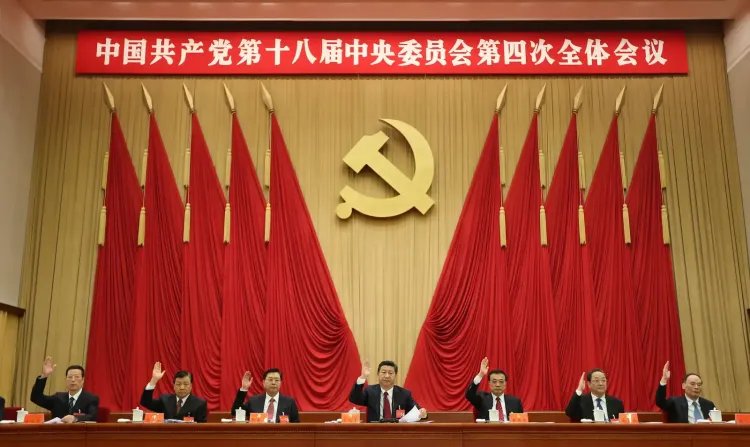
Synopsis
The CCP's fifth plenary session has formally purged 33 senior figures — including Xi Jinping's once most-trusted general Zhang Youxia — and issued a sweeping nine-point discipline resolution demanding lifelong 'party spirit', tighter anti-corruption controls, and party penetration into private companies. The first Political Bureau expansion since 1994 signals this is no routine housekeeping.
Key Takeaways
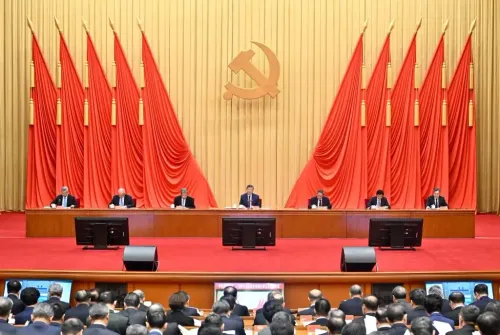
The CCP's 20th Central Committee concluded its fifth plenary session , issuing a major party self-governance resolution.
33 senior figures — 17 civilians and 16 military officers — were formally confirmed as expelled from the party.
Top ousted military figure: Zhang Youxia , formerly senior Vice Chairman of the Central Military Commission and once Xi Jinping's most trusted general.
Zhang Shengmin was added to the Political Bureau — the first such plenum-level expansion since 1994 .
The resolution organises new obligations across nine areas , including lifelong 'party spirit' cultivation, stricter democratic centralism, and extending party building into private companies and the new economy . 'Xi Jinping Thought on Party Building' has been formally incorporated as the guiding framework for the resolution's implementation.
The 20th Central Committee of the Chinese Communist Party (CCP) has concluded its fifth plenary session, producing a sweeping resolution titled 'Resolution of the Central Committee of the Communist Party of China on Certain Major Issues Concerning Persevering with Full and Rigorous Party Self-Governance'. The document, according to an analysis in Bitter Winter, amounts to a comprehensive tightening of ideological and behavioural standards across the party — one that analyst Hu Zimo summarised with a pointed formula: 'keep your head down, your notebook open, and your Marxist conscience spotless.'
Senior Purges and Membership Reshuffles
The plenum formally confirmed the ouster of 33 senior figures — 17 civilians and 16 military officers — from the CCP. The most prominent name on the military list is Zhang Youxia, who until recently served as the senior Vice Chairman of the Central Military Commission and was once regarded as the most trusted general in President Xi Jinping's inner circle, according to the Bitter Winter report.
To fill the gaps left by the expulsions, 10 alternate members were elevated to full membership. Notably, five alternates who ranked higher in the official order were quietly passed over — a signal, observers say, of loyalty-based rather than seniority-based promotions. Zhang Shengmin, a Vice Chairman of the Central Military Commission, was also added to the Political Bureau, marking the first plenum-level expansion of the bureau since Huang Ju joined it in 1994.
Nine-Point Discipline Framework
The resolution organises its demands across nine areas, each adding new obligations to the typical CCP cadre's responsibilities. At the core is a requirement that party members treat the cultivation of 'party spirit' as a lifelong commitment, with loyalty education and periodic 'party spirit appraisals' — a phrase that, as the Bitter Winter analysis notes, implies a cadre's ideological soul will be scrutinised much like a quarterly corporate report.
Democratic centralism is to be enforced more strictly, with new restrictions on how the 'number one' leader of each unit exercises power. Officials will face tighter standards for selection, training, and monitoring, while the eight-point rules on conduct introduced in 2012 will be applied with renewed rigour.
Anti-Corruption Posture and Ideological Purity
The communique takes a layered approach to corruption deterrence: officials must be scared to steal, too closely watched to steal, and — crucially — too ideologically pure to want to steal. The resolution also formally incorporates 'Xi Jinping Thought on Party Building' as a guiding framework for implementing its directives, embedding it within the broader Xi Jinping Thought canon.
Religious Life and the Private Sector in the Crosshairs
Under CCP rules, members are required to be atheists. The resolution's renewed emphasis on party spirit and ideological conviction leaves, according to analysts, markedly less room for the private religious practices that some cadres have quietly maintained. Beyond individual behaviour, the resolution explicitly demands that party building be extended into emerging sectors, the new economy, and private companies — a signal of deepening party penetration into China's commercial landscape.
What It Means Going Forward
Taken together, the plenum's output suggests a party doubling down on internal conformity at a moment when its senior ranks are being visibly reshuffled. As analyst Hu Zimo observed in the Bitter Winter report, the unspoken instruction for ordinary cadres is to 'count the chairs' at the next meeting — a wry acknowledgement that no position, however senior, is permanently secure under the current dispensation. The resolution's reach into private enterprise and emerging industries signals that the next phase of enforcement will extend well beyond the party's own membership rolls.
Point of View
Once the most senior military figure in Xi's inner circle, is the clearest evidence yet that no proximity to power offers permanent shelter. The extension of party building into private companies and the new economy is the clause that matters most for China's commercial class: it institutionalises what was previously informal pressure. The 'party spirit appraisal' framing is telling — it turns ideological conformity into a measurable, recurring bureaucratic obligation, raising the cost of quiet heterodoxy. What mainstream coverage underweights is the Political Bureau expansion, the first since 1994, which quietly rewrites the composition of China's most powerful deliberative body under cover of a disciplinary announcement.
NationPress
8 Nov 2026
Frequently Asked Questions
What was decided at the CCP's fifth plenary session?
The CCP's 20th Central Committee concluded its fifth plenary session and adopted a sweeping resolution on party self-governance, formally confirming the expulsion of 33 senior figures and issuing nine-point guidelines covering anti-corruption, ideological discipline, democratic centralism, and party penetration into private enterprise. The session also expanded the Political Bureau for the first time since 1994.
Who is Zhang Youxia and why was he expelled?
Zhang Youxia served as the senior Vice Chairman of the Central Military Commission and was widely regarded as President Xi Jinping's most trusted general. He headed the military list of 16 officers confirmed as expelled from the CCP at the plenum, according to a Bitter Winter report. No specific reason for his expulsion was publicly stated.
What are the new rules for CCP members under the resolution?
The resolution organises obligations across nine areas, including treating 'party spirit' cultivation as a lifelong commitment, undergoing loyalty education and periodic 'party spirit appraisals', adhering to stricter democratic centralism, following the 2012 eight-point conduct rules with renewed rigour, and maintaining ideological purity as a deterrent against corruption.
What does the resolution mean for China's private sector?
The resolution explicitly demands that party building be extended into emerging sectors, the new economy, and private companies. This signals a deepening institutional presence of CCP structures within China's commercial landscape, moving beyond informal pressure toward a formal organisational requirement.
What is 'Xi Jinping Thought on Party Building'?
It is a framework formally incorporated into the plenum's resolution as the guiding ideology for its implementation, embedded within the broader Xi Jinping Thought canon. Its inclusion means the resolution's disciplinary directives are framed as extensions of Xi's personal ideological legacy, not merely routine administrative guidelines.