Xi Jinping's Anti-Corruption Drive: A Tool of Control or a System in Decline?
Synopsis
Explore the paradox of Xi Jinping's anti-corruption campaign, which, instead of eradicating corruption, has become a mechanism for consolidating power within a system plagued by corruption, as detailed in a revealing report from Myanmar's Mizzima News.
Key Takeaways
Corruption is systemic in China's one-party system.
Xi's campaign has led to over six million investigations.
Key military leaders have been purged, signaling insecurity.
The campaign has shifted from reform to elite control .
There is a growing perception of erosion within the political system.
Naypyidaw, March 21 (NationPress) The core issue with President Xi Jinping's persistent anti-corruption initiative is one that the Chinese Communist Party has persistently overlooked—within a one-party framework, corruption is not merely an anomaly but is deeply rooted in the system, according to a report published on Saturday.
The report from Myanmar's 'Mizzima News' highlights that prominent Chinese figures, such as Zhou Yongkang, Bo Xilai, Sun Zhengcai, and Ling Jihua, who had significant institutional power, were not ousted for being "corrupt in a system awash with corruption". Instead, their removal stemmed from their inconvenience to Xi's authority consolidation.
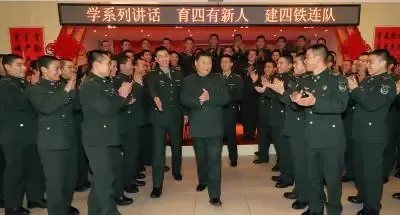
“On January 24, China’s Ministry of National Defence issued a brief statement confirming the investigation of General Zhang Youxia, who has been Xi Jinping’s trusted deputy and childhood friend, for ‘serious violations of discipline and law’. Alongside him, Liu Zhenli, the chief of staff of the PLA, also faced scrutiny,” the report elaborated.
“The Central Military Commission (CMC), once comprising seven members, has now been reduced to just two: Xi Jinping and Zhang Shengmin, who gained notoriety for overseeing investigations into the other five members. Whether Xi sees this as a show of strength or weakness, it unmistakably conveys a sense of fear,” it noted.
Mizzima News reported that Xi’s anti-corruption drive has reached a highly advanced stage, making it the most widespread and institutionally damaging campaign in the history of the CCP.
“Since 2012, over six million party members have been scrutinized and penalized. In the year 2024 alone, the number of investigated party members surged by 40%, rising from 626,000 in 2023 to 877,000. By the first quarter of 2025, the Central Commission for Discipline Inspection (CCDI) had launched 220,000 investigations into officials regarding possible bribery, and from January to November 2025, the total reached 251,516 cases, representing a 30.87% increase over the same period in 2024,” it explained.
During the Fifth Plenary Session of the CCDI in January, Xi urged delegates to “advance the anti-corruption battle with greater clarity and determination.”
While the anti-corruption campaign might have started with genuine reformative goals shortly after 2012, it has now morphed into a primary instrument for maintaining elite control and fostering insecurity.
The report concluded, “In expelling Zhang Youxia, who was not only his childhood companion but also his most trusted advisor—kept beyond the mandatory retirement age—Xi did not showcase his power. Rather, he revealed that, after thirteen years and six million investigations, there remains no one he can fully trust. This is not indicative of a system being cleansed; it signifies a system that is gradually disintegrating.”
Point of View
It is essential to present an unbiased perspective on the implications of Xi Jinping's anti-corruption campaign. This initiative, while ostensibly aimed at rooting out corruption, raises questions about its actual effectiveness and the broader health of the Chinese political system.
NationPress
22 Sept 2026
Frequently Asked Questions
What is the main concern regarding Xi Jinping's anti-corruption campaign?
The main concern is that corruption is deeply embedded in the one-party system, and the campaign may serve more as a tool for consolidating power rather than genuinely addressing corruption.
How many party members have been investigated since 2012?
Since 2012, over six million party members have been investigated and punished as part of the anti-corruption campaign.
What recent developments occurred within the Central Military Commission?
The Central Military Commission has been reduced to just two members, Xi Jinping and Zhang Shengmin, following the investigation of General Zhang Youxia and others.
Has the number of investigations increased recently?
Yes, in 2024, the number of investigated party members increased by 40%, reaching 877,000.
What does the report suggest about the future of the Chinese political system?
The report suggests a troubling outlook, indicating that the system may be slowly eroding rather than being cleaned up.