Sweden election 2026: Centre-left bloc leads with 176 seats, government formation in doubt
Synopsis
Sweden's centre-left bloc narrowly leads with 176 seats, but forming a government may prove harder than winning the vote. The Centre Party's refusal to govern alongside the Left Party has created an internal bloc deadlock that Swedish Television has called an 'impossible equation' — and a snap election is openly on the table.
Key Takeaways
Sweden's centre-left opposition bloc projected to win 176 seats against 173 for the right-wing bloc, based on 93 per cent of districts counted.
The Social Democrats are the largest single party with 28.1 per cent of the vote; Moderates follow at 19.9 per cent .
Magdalena Andersson faces an 'impossible equation': the Centre Party refuses to govern with the Left Party , which demands cabinet seats.
Prime Minister Ulf Kristersson said he would contact other leaders to explore a right-wing governing coalition.
A shooting in Finspang , Ostergotland County , injured two people on election night; police have opened an attempted murder investigation.
Crime was a central campaign issue, featuring in the final televised debate before the vote.
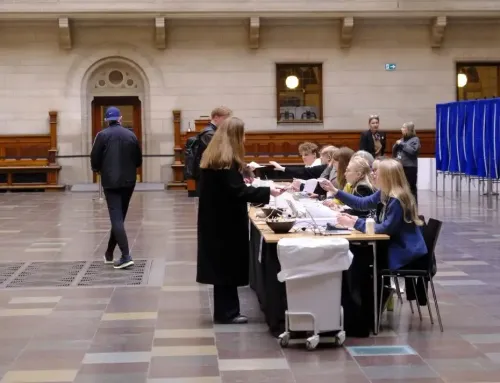
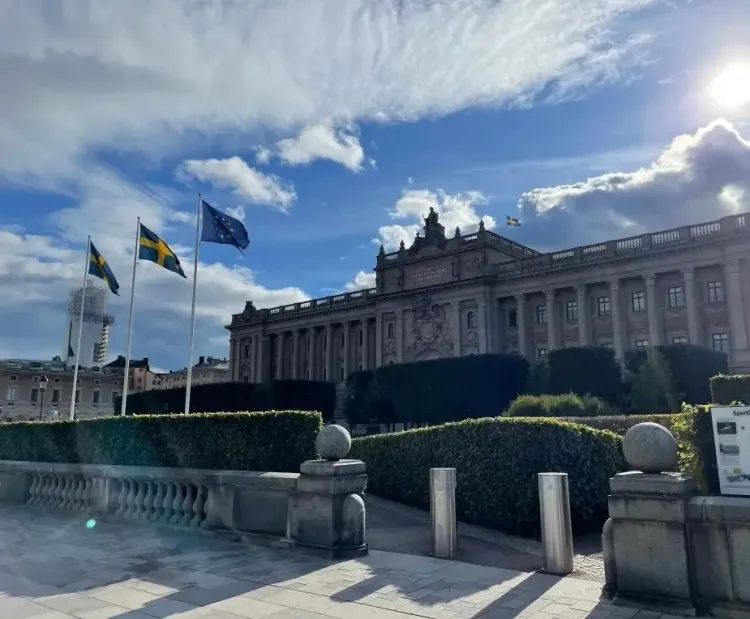
Sweden's centre-left opposition bloc held a narrow lead over the ruling right-wing coalition in the country's parliamentary election, according to preliminary results released early Monday. With tallies in from 93 per cent of voting districts, the opposition was projected to secure 176 seats in the 349-seat Riksdag, edging ahead of Prime Minister Ulf Kristersson's right-wing bloc, which was allocated 173 seats.
How the Votes Split
The opposition bloc — comprising the Social Democratic Party, the Left Party, the Green Party, and the Centre Party — captured 49.5 per cent of the vote. The right-wing alliance of the Moderate Party, the Sweden Democrats, the Christian Democrats, and the Liberals trailed at 49.1 per cent.
The Social Democrats remained the single largest party with 28.1 per cent of the vote, followed by the Moderates at 19.9 per cent. The three-point seat gap between the two blocs — in a chamber of 349 — underlines just how fragile any mandate will be.
The Government Formation Problem
Despite leading in seats, Social Democratic leader Magdalena Andersson faces what Swedish Television has called an 'impossible equation' in stitching together a governing coalition. The Centre Party has categorically ruled out joining any government that includes the Left Party, even threatening to trigger an extraordinary election rather than acquiesce. The Left Party, for its part, has demanded cabinet representation as a condition for support.
The four parties have not agreed on a governing formula, leaving Andersson's path to the premiership blocked by internal bloc divisions rather than any arithmetic shortfall against the opposition.
What Kristersson Said
At the Moderate Party's election-night gathering, Prime Minister Kristersson said he would reach out to other party leaders to explore whether a workable governing coalition could be assembled from the right. 'The election result could lead to a complicated government formation,' he said. 'Where it ends remains to be seen.' His remarks acknowledged the arithmetic reality: neither bloc has a comfortable mandate.
Election-Night Shooting in Finspang
As vote counting was underway across Sweden, reports emerged of a shooting in Finspang, a town in Ostergotland County in southeastern Sweden, on Sunday evening. Two people were found inside a car with gunshot wounds and taken to hospital. A third person was reportedly also in the vehicle at the time.
Swedish police confirmed that several people had been arrested in connection with the incident. A police duty officer was quoted by Swedish newspaper Aftonbladet as saying: 'We are investigating a serious crime. Investigative measures are underway at the scene.' Authorities have opened an investigation into attempted murder. No further information was immediately available about the condition of the injured.
Notably, crime was one of the dominant issues during the Swedish election campaign and featured prominently in the final televised leaders' debate, adding a grim backdrop to the night's political coverage.
What Happens Next
With preliminary results still based on 93 per cent of districts, the final seat count could shift marginally. Even if Andersson's bloc holds its lead, brokering a stable government will require resolving the Centre Party–Left Party impasse — a process that could take weeks. A fresh election remains a live possibility if no workable formula emerges.
Point of View
It is a structural barrier. This means Sweden could end up with a minority right-wing government despite losing the election, or face a protracted political vacuum. The Finspang shooting on election night, however coincidental, sharpens the irony: crime drove the campaign, and the country that was debating it most fiercely may now be too politically gridlocked to act on it.
NationPress
14 Sept 2026
Frequently Asked Questions
Who won the Sweden parliamentary election 2026?
Sweden's centre-left opposition bloc is leading with a projected 176 seats against 173 for the ruling right-wing bloc, based on preliminary results from 93 per cent of voting districts. Final results could shift the tally slightly, but the centre-left currently holds the narrow edge.
Why is forming a government in Sweden complicated despite the result?
The Centre Party has refused to join any government that includes the Left Party, while the Left Party has demanded cabinet representation as a condition for support. Swedish Television has described the situation as an 'impossible equation,' making it unclear how Social Democratic leader Magdalena Andersson can assemble a stable majority coalition.
What did Prime Minister Ulf Kristersson say after the election?
Kristersson said he would contact other party leaders to explore whether a workable right-wing governing coalition could be formed. He acknowledged the complexity, stating: 'The election result could lead to a complicated government formation. Where it ends remains to be seen.'
What happened in Finspang on Sweden's election night?
Two people were shot and injured in Finspang, a town in Ostergotland County in southeastern Sweden, on Sunday evening as votes were being counted. Police found them inside a car with gunshot wounds, arrested several people, and opened an attempted murder investigation. A third person was also believed to have been in the vehicle.
Why was crime a major issue in Sweden's 2026 election?
Crime featured as one of the dominant themes throughout the Swedish election campaign and was a central topic in the final televised debate among leaders of the country's eight parliamentary parties. The shooting in Finspang on election night underscored the issue's salience, even as final results were still being tallied.