How Are Pakistan and China’s Foreign Ministers Shaping New Dynamics in South Asia?
Key Takeaways
China and Pakistan are enhancing their diplomatic relationships with Afghanistan and Bangladesh .
They aim to reduce India 's influence in South Asia .
The CPEC initiative is being expanded to include Afghanistan .
China is focusing on reconstruction and counter-terrorism in Afghanistan .
A Pakistan -aligned Kabul could pose new challenges for India .
New Delhi, Jan 6 (NationPress) Beijing and Islamabad are actively enhancing their diplomatic, economic, and security relations with Afghanistan and Bangladesh, which may diminish India's influence, primarily through dialogues and offers to expand economic and military cooperation with these South Asian nations.
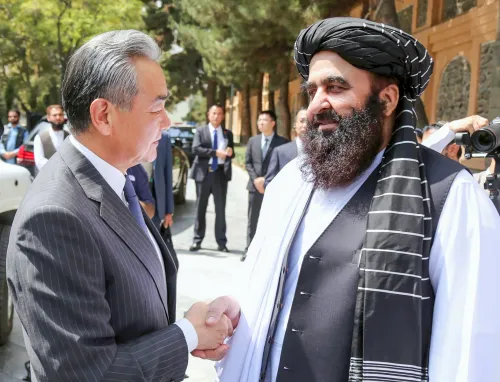
China has established itself as a mediator concerning Afghan affairs, hosting discussions and portraying its involvement as part of reconstruction and counter-terrorism efforts, rather than as a zero-sum game in geopolitics.
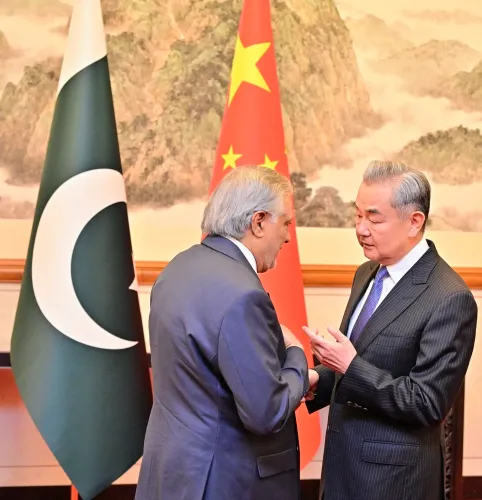
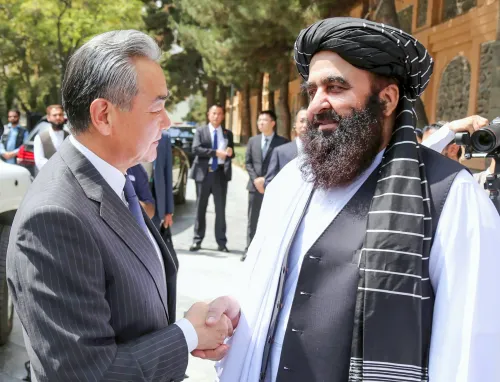
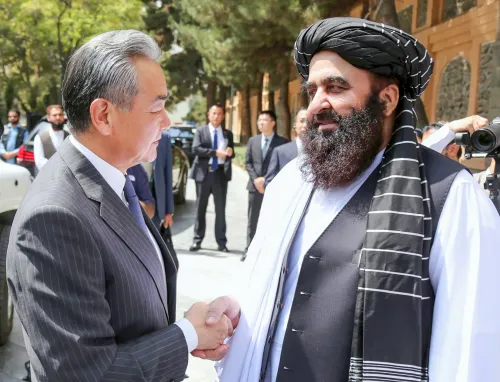
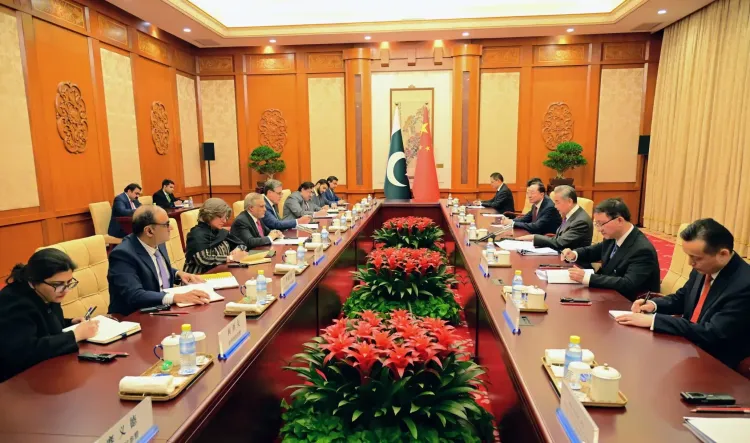
“The two parties indicated their willingness to further utilize the China-Afghanistan-Pakistan Trilateral Foreign Ministers’ Dialogue and the China-Bangladesh-Pakistan cooperation mechanism to achieve new results,” stated a release following the seventh round of the China-Pakistan Foreign Ministers’ Strategic Dialogue.
On January 3-5, China’s Foreign Minister Wang Yi and Pakistan’s Foreign Minister Mohammad Ishaq Dar convened in Beijing, and the joint statement reflects their shared objectives. Following interventions from Turkey, Qatar, and Iran, among others, China has now stepped in—at Islamabad's request—to mediate between Pakistan and Afghanistan to cease hostilities.
“The two countries (China-Pakistan) called for more visible and verifiable measures to dismantle and eradicate all terrorist organizations based in Afghanistan, which pose significant threats to both regional and global security. They urged for action to prevent these groups from utilizing Afghan territory for attacks against other nations,” the joint communiqué stated.
Nevertheless, Kabul vehemently refutes the existence of any terrorist factions within its borders and claims that incidents in Pakistan are internal issues for Islamabad to resolve. Similarly, China and Pakistan reiterated their commitment to leveraging the trilateral dialogue and cooperation mechanisms with Bangladesh.
They also concurred on developing an “upgraded version 2.0 of the China-Pakistan Economic Corridor (CPEC),” which is an integral part of China’s ambitious Belt and Road Initiative (BRI), welcoming third-party involvement in CPEC that aligns with the agreements set by China and Pakistan.
Previous reports have suggested extending CPEC into Afghanistan, providing Kabul with substantial infrastructure and investment options that could rival India’s initiatives.
For Islamabad, extensive BRI projects have raised alarms about increasing external debts and project sustainability, although both nations frame many loans as development financing.
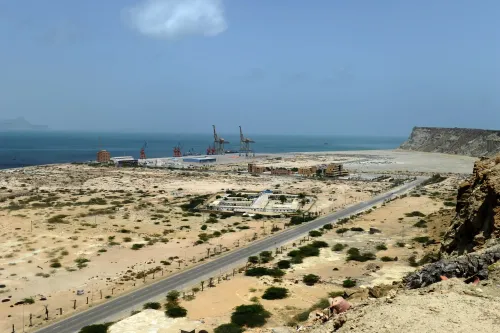
Meanwhile, China has expanded its presence in tumultuous Bangladesh through infrastructure projects, military partnerships, and port developments. Countries within its sphere need to heed the lessons from those caught in a “China debt trap.”
Such nations include Pakistan, Sri Lanka, Djibouti, Laos, Montenegro, Kenya, Zambia, Maldives, and Indonesia. The repercussions vary based on project details, contract terms, and the fiscal management of the respective country.
Countries that secure large, China-backed loans often find themselves struggling to repay, providing Beijing with strategic leverage. Some nations are in obvious distress, while others are attempting to balance their finances.
A recent report from India’s Parliamentary Committee on External Affairs regarding the “Future of India-Bangladesh Relationship” has expressed concern over China's “growing presence” in the neighboring nation.
On the topic of China visits by leaders of Jamaat-e-Islami, it was noted that this “clearly shows its extensive engagement with various factions in Bangladesh, further solidifying its foothold.”
The report indicated, “We are troubled by the fact that China has constructed a submarine base at Pekua, capable of accommodating eight submarines, although Bangladesh only possesses two.”
China aims to entrench itself within South Asia to gain access to regional routes, local resources, and establish surveillance and defense installations.
Pakistan aspires to diminish India’s influence in Afghanistan and Bangladesh, cultivating relationships with Kabul and Dhaka on its terms as a strategic depth initiative.
Extending CPEC or other BRI projects could unveil new markets and transit routes for China, simultaneously granting Pakistan leverage through shared initiatives. Traditionally, India’s role in Afghanistan has focused on humanitarian aid and infrastructure development, without offering official recognition to the Taliban authorities.
A Pakistan-aligned Kabul could complicate New Delhi’s counter-terrorism and strategic calculations in the region.
Point of View
It is crucial to observe that while China and Pakistan strengthen their ties with Afghanistan and Bangladesh, the implications for India could be significant. The evolving landscape demands a nuanced understanding of regional geopolitics and the potential challenges for New Delhi moving forward.
NationPress
26 Sept 2026
Frequently Asked Questions
What are the implications of Pakistan and China's increasing ties with Afghanistan and Bangladesh?
The strengthening ties between Pakistan and China with Afghanistan and Bangladesh may threaten India 's influence in the region, potentially leading to shifts in power dynamics and strategic challenges for New Delhi .
How is China positioning itself in South Asia?
China is positioning itself as a mediator in Afghan issues, focusing on reconstruction and counter-terrorism, while also expanding its economic initiatives through the BRI and CPEC.
What is the significance of the China-Pakistan Economic Corridor?
The CPEC is vital for enhancing Pakistan 's infrastructure and economic development while extending China 's influence in South Asia .
What are the concerns regarding China's growing presence in Bangladesh?
Concerns arise from China 's military cooperation and infrastructure projects in Bangladesh , which could lead to strategic vulnerabilities for regional countries.
How could a Pakistan-aligned Kabul affect India?
A Pakistan -aligned Kabul could complicate India 's counter-terrorism strategies and geopolitical calculations in the region.