China's Peace Efforts: A Challenge to Pakistan's US Relations Amid Iran Conflict
Synopsis
As China intensifies its role as a global peace mediator, questions arise over the implications for Pakistan's ties with the US amidst ongoing conflicts in Iran and Afghanistan. This intricate diplomatic balancing act poses significant challenges for Islamabad in maintaining its relationships with both superpowers.
Key Takeaways
China is enhancing its role as a global peace mediator.
Pakistan's outreach to the US raises concerns in Beijing.
The US-Pakistan relationship may affect China's strategic interests.
Pakistan faces challenges in balancing relations with both superpowers.
The recent political changes in the region impact China's influence .
New Delhi, April 1 (NationPress) China is intensifying its role as a global peace facilitator by proposing measures to potentially halt the ongoing conflict between the United States and Iran, alongside the armed tensions between Afghanistan and Pakistan. This occurs as Islamabad's invitation to host key players in the West Asian conflict gains traction, prompting scrutiny of the dynamics between the so-called 'all-weather friends.'
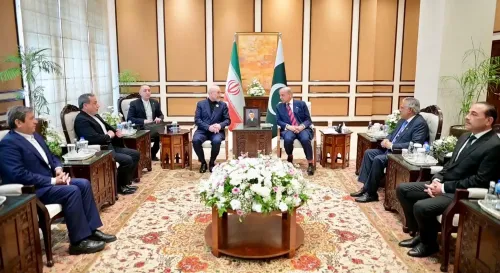
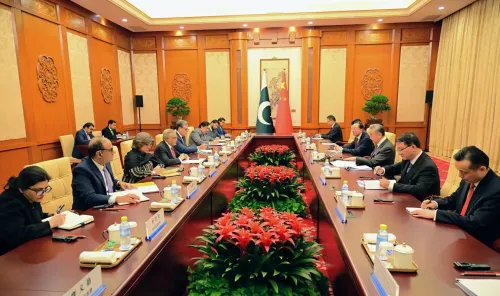
It seems coincidental that Pakistan's Deputy Prime Minister and Foreign Minister, Ishaq Dar, hurried to Beijing shortly after suffering a hairline shoulder fracture from a fall at an official event.
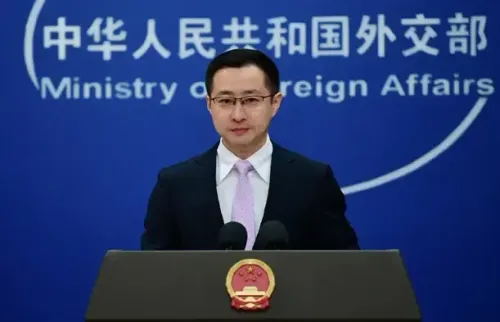
On the day of his discussions with China's Foreign Minister, Wang Yi, Beijing unveiled a collaborative “five-point initiative aimed at restoring peace and stability in the Gulf and Middle East regions,” according to the state-run People’s Daily on Wednesday.
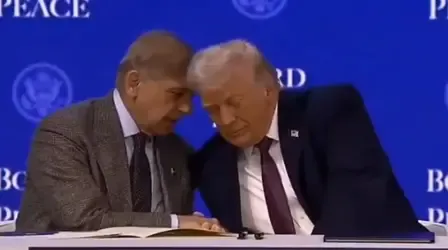
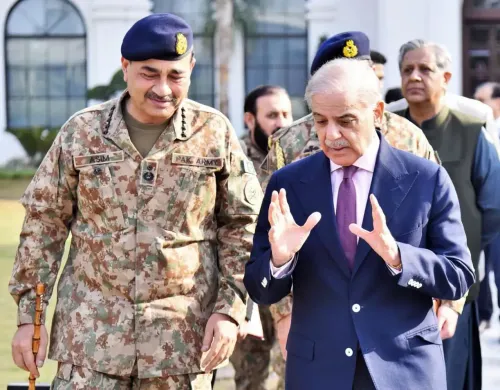
China has observed with growing concern as Pakistan’s Prime Minister, Shehbaz Sharif, and Army Chief, Field Marshal Asim Munir, have expanded Islamabad’s outreach to the United States.
Their notable meeting with President Donald Trump at the White House in June 2025 has further escalated Beijing's apprehension.
While publicly maintaining that the 'all-weather friendship' with Islamabad is secure, Chinese strategists are quietly evaluating how far Pakistan can pivot towards Washington without compromising China’s esteemed position in South Asia, sources indicate.
“China remains Pakistan’s essential ally, characterized by profound economic, strategic, and military connections. However, over three decades, Beijing’s ascent as a global superpower has positioned it as Washington’s main competitor,” cautioned an Al Jazeera report following the Sharif-Munir luncheon meeting with Trump.
The report referenced Muhammad Faisal, a South Asia security scholar at the University of Technology in Sydney, who stated that managing relationships with both nations will challenge Islamabad’s dedication to the principle of 'no-camp politics.'
Experts note that “Iran, coupled with the ongoing crisis involving Israel, will compel Pakistan to engage in a diplomatic balancing act,” adding that “Islamabad's close ties with China could similarly lead Pakistan in conflicting directions.”
The comprehensive assaults on Iran by the United States and Israel, which commenced just over a month ago, were initially perceived as a theoretical scenario.
Additional reports have cautioned that the strengthening of US-Pakistan relations highlights Washington's broader 'wedge strategy' in South Asia, designed to create a rift between Beijing and Islamabad.
Some analysts suggest that the Trump administration's advocacy for increased collaboration, from energy agreements to potential intelligence sharing, could enable Washington to investigate Chinese-supplied military systems in Pakistan, gaining insights that many in Beijing perceive as sensitive.
This has raised alarms within Chinese defense and foreign-policy circles, particularly amid rumors regarding US pressure on Pakistan to restrict or scrutinize Beijing’s military activities within its territory.
Moreover, the Pakistan-Afghanistan conflict has been constraining China's investments in the two nations via its Belt and Road Initiative projects.
Simultaneously, the Taliban government's outreach towards India has heightened Beijing's concerns, threatening its aspirations to expand its influence in South Asia.
The recent establishment of democratically elected independent administrations in Bangladesh and Nepal, along with a gradual move towards impartial diplomacy over China's close ties, has also caused unease in Beijing.
The peace initiatives arise amid perceptions that the United States considers China’s neutrality as selective, given Beijing's robust trade and security relationships with Iran and Pakistan, its strategic rivalry with Washington, and its assertive actions in the South China Sea and Taiwan Strait.
For Beijing, the pressing question is not just if and when Pakistan might distance itself, but whether Islamabad will increasingly strive to balance its relations between the United States and China—a scenario that the Dragon would prefer to avoid in its vicinity.
Point of View
Pakistan, and the United States are increasingly complex, with China's peace initiatives potentially reshaping regional alliances. As Islamabad seeks to balance its relationships, the implications for South Asia's stability remain significant.
NationPress
16 Sept 2026
Frequently Asked Questions
What is China's role in the Iran conflict?
China is positioning itself as a global peace broker, proposing initiatives aimed at halting the conflict between the United States and Iran.
How are Pakistan's relations with the US affecting its ties with China?
Pakistan's growing outreach to the United States raises concerns in China about maintaining its strategic partnership with Islamabad.
What are the implications of the US-Pakistan relationship?
Stronger US-Pakistan ties may create a rift between Beijing and Islamabad, challenging the long-standing partnership between the two nations.
What challenges does Pakistan face in balancing its foreign relations?
Pakistan must navigate its relationships with both the US and China, which could lead to conflicting diplomatic pressures.
What recent events have influenced China's diplomatic strategies?
The establishment of democratically elected governments in regional nations and the Taliban's outreach to India have prompted China to reassess its influence in South Asia.