China distancing itself from Iran amid BRICS+ summit snub, report says
Synopsis
At two back-to-back summits — BRICS+ in New Delhi and the SCO in Bishkek — Chinese President Xi Jinping pointedly avoided public engagement with Iran's Masoud Pezeshkian, even as he held formal, photographed meetings with Putin and Central Asian leaders. The snub signals that Beijing is quietly recalibrating its Middle East posture, keeping Iran at arm's length despite a 2021 25-year cooperation deal and near-total Iranian export dependence on China.
Key Takeaways
Xi Jinping had no recorded public interaction with Iranian President Masoud Pezeshkian at the BRICS+ summit in New Delhi last week.
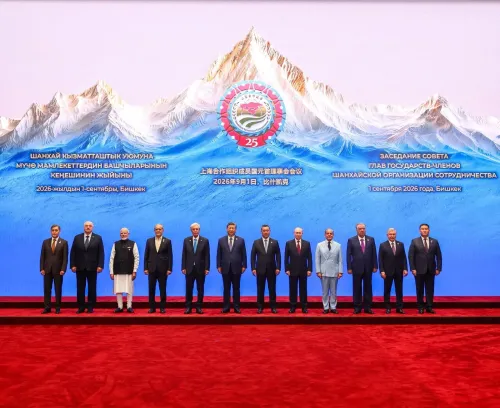
At the SCO summit in Bishkek , Xi held formal meetings with Putin , and Central Asian leaders, while Pezeshkian received only a brief sideline meeting.
Experts cited in the MBN report say Beijing does not want to appear 'particularly cozy with Iran at this time.' Iran accounts for less than 1% of China's total global trade, despite being Iran's largest trading partner.
A 25-year China-Iran cooperation agreement signed in 2021 has seen very little actual investment flow, according to the report.
Despite being Iran's most significant economic partner, China has shown little appetite for tying its broader Middle East strategy to Tehran, according to an analysis published by the MBN news website. The report, authored by Jim Snyder, points to a pattern of deliberate diplomatic distance that played out conspicuously during the BRICS+ summit in New Delhi last week.
The BRICS+ Summit Snub
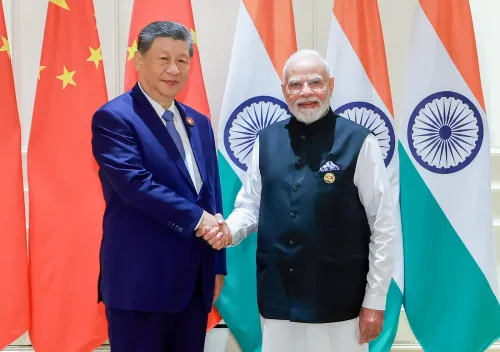
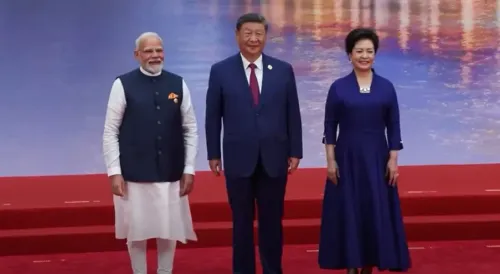
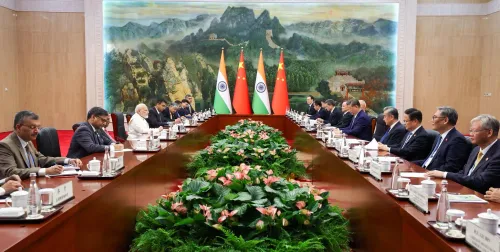
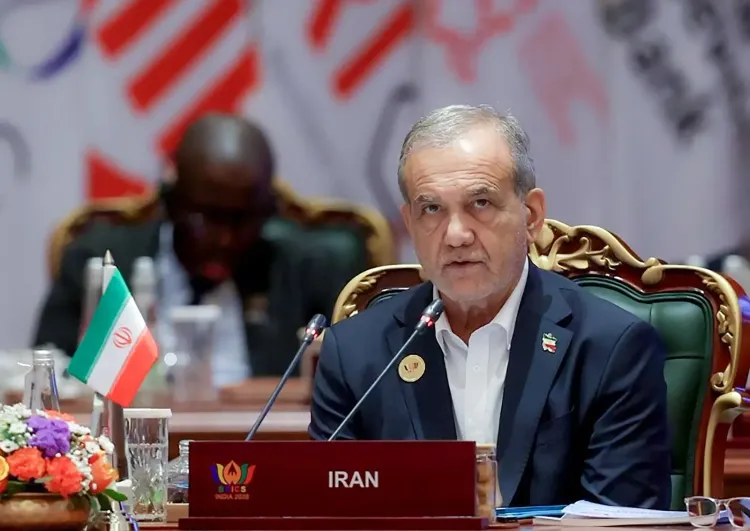
At the New Delhi summit, Chinese President Xi Jinping — who spent less than a day in India — held a substantive meeting with Prime Minister Narendra Modi and used the occasion to court Global South support for his security governance initiative. Notably, no public interaction with Iranian President Masoud Pezeshkian was recorded. 'There are no reports that he spoke to Pezeshkian. It was a notable display of distance between two countries often portrayed as strategic partners,' the MBN article observes.
A Pattern at the SCO Summit Too
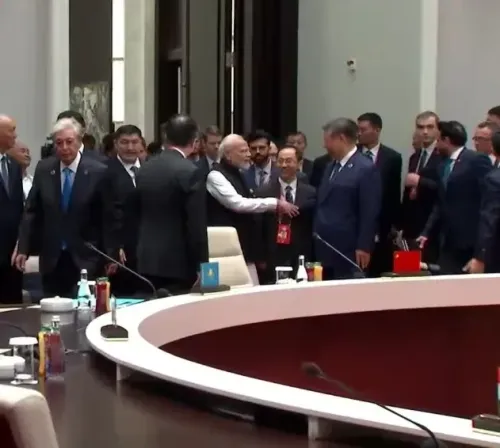
The distancing reportedly extended to the Shanghai Cooperation Organisation (SCO) summit held last month in Bishkek, Kyrgyzstan. According to the MBN report, Xi held 'formal, photographed meetings' with Russian President Vladimir Putin, Uzbek President Shavkat Mirziyoyev, and Kyrgyz President Sadyr Japarov. By contrast, Pezeshkian received only 'a brief sideline meeting and considerably less attention.' The contrast in treatment underlines what experts cited in the article describe as a deliberate Chinese posture.
What Experts Say
Analysts cited in the report argue that Beijing does not want to appear 'particularly cozy with Iran at this time.' This stands in sharp contrast to Xi's overt and well-documented support for Putin. The asymmetry, the article suggests, reflects a strategic calculus: Russia is a partner China is willing to be seen embracing publicly, while Iran remains a relationship it prefers to manage quietly.
Economics Over Strategy
The MBN report notes that China-Iran ties have historically been driven by economics rather than geopolitical alignment. China has benefited from access to discounted Iranian crude, while Tehran has depended on Chinese goods and revenue. Iran sends more exports to China than to any other country. However, the relationship is structurally unequal: Iran accounts for less than 1% of China's total global trade.
Notably, despite the two nations signing a landmark 25-year cooperation agreement in 2021 — encompassing energy, infrastructure, trade, and security — investment flows between the two countries have reportedly remained minimal, the article highlights.
Strategic Implications
MBN's inaugural 'Great Powers Index' places Iran closer to China than any other country in the MENA region. Yet, the report cautions that the data overstates the depth of the partnership. As China calibrates its Middle East positioning — balancing ties with Gulf states, Israel, and the broader Global South — Tehran appears to be a liability it is quietly sidelining rather than a strategic asset it is cultivating. How long Beijing can maintain this studied ambiguity, especially as Iran's regional influence and isolation both deepen, remains a key question for analysts tracking the two countries' relationship.
Point of View
Once heralded as a strategic pivot, now looks more like a framework agreement that never translated into real capital flows. With China deepening Gulf partnerships and managing its global image amid Western scrutiny, Iran has become a relationship it cannot afford to loudly own. The real question is whether Tehran grasps the structural ceiling Beijing has placed on the partnership.
NationPress
18 Sept 2026
Frequently Asked Questions
Why is China distancing itself from Iran diplomatically?
Experts cited in the MBN report say Beijing does not want to appear 'particularly cozy with Iran at this time,' likely reflecting a desire to protect its broader Middle East relationships and global image. This contrasts with China's overt public support for Russia's Vladimir Putin at the same summits.
What happened between Xi Jinping and Iran's president at the BRICS+ summit?
At the BRICS+ summit in New Delhi, President Xi Jinping spent less than a day in India and held meetings with Prime Minister Modi, but no public interaction with Iranian President Masoud Pezeshkian was reported. Analysts described it as a 'notable display of distance' between two countries often portrayed as strategic partners.
How significant is Iran to China's economy?
China is Iran's most important trading partner, and Iran sends more exports to China than to any other country. However, the relationship is highly asymmetric — Iran accounts for less than 1% of China's total global trade, giving Beijing significant leverage and limited incentive to prioritise Tehran strategically.
What is the China-Iran 25-year cooperation agreement?
China and Iran signed a 25-year cooperation agreement in 2021 covering energy, infrastructure, trade, and security. Despite the broad scope of the deal, investment flows between the two countries have reportedly remained very limited since it was signed.
How does China treat Iran compared to Russia in multilateral forums?
The contrast is stark. At the SCO summit in Bishkek, Xi held formal, photographed meetings with Putin and Central Asian heads of state, while Pezeshkian received only a brief sideline interaction. Analysts say Beijing is far more willing to be publicly associated with Moscow than with Tehran.