China Adjusts Strategy in Response to Iran Conflict Ahead of US Talks

Synopsis
As tensions rise in the Gulf, China is recalibrating its stance on the Iran conflict, signaling a push for peace while preparing for pivotal discussions with the United States. This strategic shift comes as President Trump plans a visit to China, raising questions about regional stability and international relations.
Key Takeaways
China is recalibrating its approach to the Iran conflict.
President Trump's visit to China is set against a backdrop of escalating tensions.
Asian nations are closely monitoring the implications for regional stability.
Potential expansions in discussion topics between the US and China may arise.
The Strait of Hormuz remains a vital energy route impacting global markets.
On March 27, Washington (NationPress) reported that China is adjusting its stance regarding the Iran conflict, indicating a desire for de-escalation as it gears up for crucial discussions with the United States, according to insights from a former senior US official.
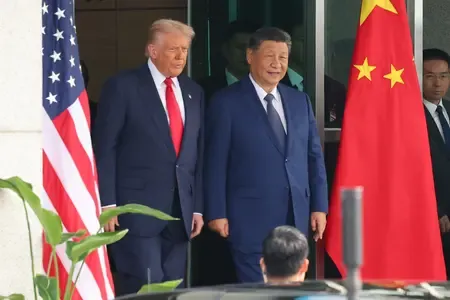
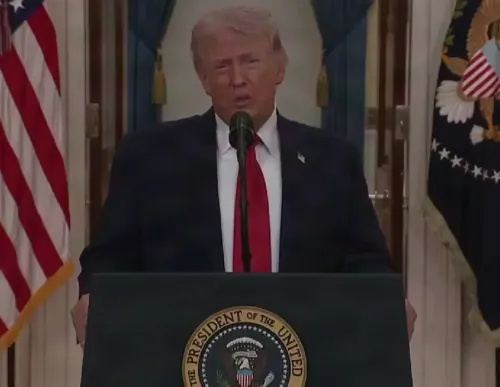
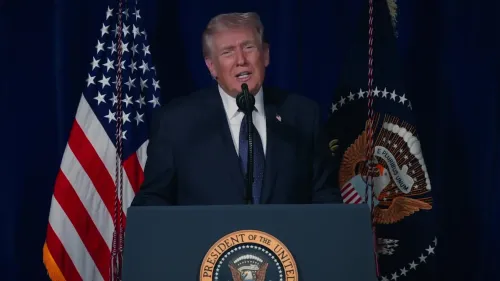
This shift in tone coincides with President Donald Trump’s upcoming visit to China next month, amidst ongoing tensions in the Gulf region.
The former official remarked, “It was quite extraordinary for the President to be willing to travel to China during such a significant conflict,” describing the timing as “quite unusual.”
Asian nations are closely monitoring the impending summit, aware of its potential implications for regional stability and economic conditions.
“Every nation in Asia is keenly observing and anticipating the outcomes of President Trump’s visit to China,” the official stated.
Another former US official pointed out that the ongoing conflict has afforded both nations an opportunity to reassess their positions following recent economic negotiations.
“The operations in the Gulf have provided political cover for both sides to take additional time in negotiations,” the official mentioned, referring to discussions in Paris.
The official noted that China has shown a willingness to host President Trump, even though specific details are still being finalized.
“This morning, the Chinese indicated they would be prepared to host him, although they did not confirm any dates,” the official said.
Simultaneously, China’s communication regarding the conflict has evolved, reflecting a recent diplomatic engagement.
“Their approach has become more centered on promoting peace, subtly encouraging the Iranians towards negotiations,” a third former US official stated, characterizing the change as subtle yet significant.
This shift may be viewed as “an olive branch to the United States,” implying that Beijing is attempting to stabilize the situation ahead of high-level discussions.
The changing dynamics further illustrate the intersection of the Iran conflict with broader US-China negotiation agendas.
“How extensively will US negotiators begin to address topics like… Chinese purchases of Iranian oil?” the second official questioned, alluding to a possible expansion of the discussion topics.
The official also raised concerns regarding possible Chinese support for Iran.
“Prior to the conflict, China had discussed the possibility of selling anti-ship missiles to Iran,” the official added, noting that such developments would be closely monitored.
Despite these intricate issues, both nations seem committed to maintaining dialogue.
“I believe… it serves both their interests, and ours as well,” the official remarked, referring to the ongoing communication surrounding the summit.
The Strait of Hormuz remains one of the globe's most vital energy routes, responsible for a substantial portion of global oil and gas transportation. Any disruptions here have immediate ramifications for global markets, particularly for major Asian economies reliant on energy imports.
US-China relations have been characterized by competition and intermittent engagement across trade, technology, and security. The potential summit during an active conflict highlights how geopolitical crises and major power negotiations are increasingly intertwined.
Point of View
It is crucial to understand the implications of China's shift in stance on the Iran conflict. This recalibration not only reflects their desire for stability but also highlights the intricate web of US-China relations that continues to shape global politics.
NationPress
29 Sept 2026
Frequently Asked Questions
What is China's current stance on the Iran conflict?
China is signaling a desire for de-escalation in the Iran conflict as it prepares for high-stakes talks with the United States.
Why is President Trump's visit to China significant?
The visit is significant as it occurs amidst ongoing tensions in the Gulf, and its outcomes could affect regional stability.
How does the Iran conflict influence US-China negotiations?
The Iran conflict intersects with US-China negotiations, potentially expanding the discussion topics to include issues like Chinese purchases of Iranian oil.
What are the implications of the Strait of Hormuz on global markets?
The Strait of Hormuz is a critical energy corridor; any disruption there can have immediate effects on global markets, especially for energy-dependent Asian economies.
What recent developments have occurred regarding Chinese arms sales to Iran?
Before the conflict, China had discussed selling anti-ship missiles to Iran, which is a point of concern for US officials.