Chinmoy Krishna Das shifted to Dhaka prison amid transparency concerns
Synopsis
Hindu priest Chinmoy Krishna Das has been quietly shifted from Chittagong to a special prison in Dhaka — with no explanation from authorities — nearly a year into a detention that has already sparked global protests, an international diplomatic response from India, and a pointed rebuke from former PM Sheikh Hasina over the denial of parole even to visit his dying mother.
Key Takeaways
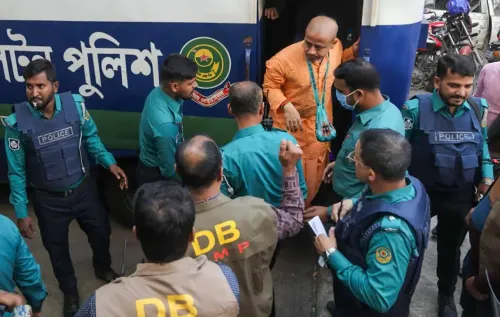
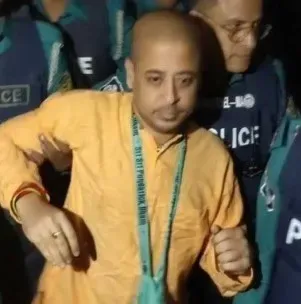
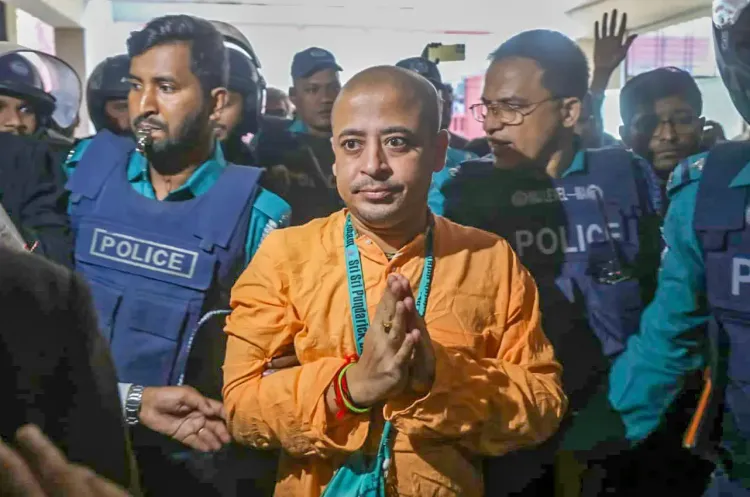
Chinmoy Krishna Das was transferred from Chittagong Central Jail to a special prison in Keraniganj, Dhaka on Monday under tight security.
Senior Jail Superintendent Iqbal Hossain confirmed the transfer but declined to give reasons.
Das has secured bail in two cases but remains in custody due to two additional pending cases .
He was first arrested in Dhaka on 25 November 2024 , triggering global protests by the Hindu community.
Former PM Sheikh Hasina criticised Bangladeshi authorities for denying Das parole to meet his critically ill mother, granting only five hours after her death for her funeral.
India has previously expressed grave concern over Das's detention and called for the protection of minorities in Bangladesh.
Bangladesh authorities have transferred prominent Hindu priest and activist Chinmoy Krishna Das from Chittagong Central Jail to a special prison in Keraniganj, Dhaka, under tight security, local media reported on 17 November 2026. The sudden relocation has deepened concerns over the lack of transparency surrounding his prolonged detention.
Details of the Transfer
Chittagong Central Jail Senior Jail Superintendent Iqbal Hossain confirmed the development to Bangladeshi daily Dhaka Tribune, stating that Das was moved on Monday morning. 'Chinmoy Krishna Das has been taken to the special prison in Keraniganj, Dhaka,' Hossain said, declining to offer any further explanation for the abrupt shift.
Das, who also serves as spokesperson for the Bangladesh Sammilito Sanatani Jagaran Jot, remains incarcerated despite having secured bail in two cases. His release continues to be blocked by two additional pending cases.
Background: Arrest and Protests
Das was arrested in Dhaka on 25 November 2024 and was sent to jail the following day after a Chattogram court rejected his bail application. His detention triggered massive demonstrations by the Hindu community both within Bangladesh and across the world, drawing international attention to the situation of religious minorities in the country.
Notably, Bangladeshi authorities earlier denied Das parole to visit his critically ill mother. He was granted only five hours of parole — after her death — to attend her funeral, a decision that drew sharp condemnation from rights advocates.
Hasina's Concern and India's Position
Former Bangladesh Prime Minister Sheikh Hasina last week raised serious concerns over what she described as relentless attacks targeting religious minorities, including incidents of violence against their homes and places of worship. In an audio interview, Hasina specifically cited the case of Das, saying: 'Chinmoy Krishna Das remained in prison while his mother was seriously ill. His family wanted him to see her before she died, but that did not happen. Only after her death was he granted five hours of parole to attend her funeral. During our government, we worked to maintain religious harmony. I wanted people of every religion to feel that Bangladesh was equally their home.'
India has previously voiced grave concern over Das's arrest, repeatedly calling on Bangladeshi authorities to ensure the safety and security of Hindus and all minority communities in the country.
Wider Context: Minority Attacks in Bangladesh
The transfer comes against the backdrop of escalating reported attacks on minority communities across Bangladesh, particularly Hindus. Rights groups and observers have flagged a deteriorating environment of safety for religious minorities, with families reportedly feeling increasingly insecure. This is not an isolated incident — Das's case has become emblematic of broader concerns about minority rights and judicial transparency in Bangladesh.
How Bangladeshi authorities respond to mounting domestic and international pressure in the weeks ahead will be closely watched by both New Delhi and global human rights organisations.
Point of View
While two more block his release, raises credible questions about whether the law is being wielded selectively. India's repeated statements on minority safety in Bangladesh have so far not translated into visible pressure on Dhaka. And Sheikh Hasina's audio rebuke, however politically coloured, underscores a stark human cost: a man denied the chance to see his dying mother. The international community has condemned; the machinery of detention has not moved.
NationPress
17 Nov 2026
Frequently Asked Questions
Why was Chinmoy Krishna Das transferred to Dhaka?
Bangladesh authorities transferred Chinmoy Krishna Das from Chittagong Central Jail to a special prison in Keraniganj, Dhaka on Monday, though no official reason was provided. The Senior Jail Superintendent confirmed the move but declined to give further details, deepening transparency concerns surrounding his case.
Why is Chinmoy Krishna Das still in jail despite getting bail?
Chinmoy Krishna Das has secured bail in two cases but remains detained because two other pending cases continue to block his release. He was first arrested on 25 November 2024 after a Chattogram court rejected his initial bail plea.
What did former PM Sheikh Hasina say about Chinmoy Krishna Das?
In an audio interview, former Bangladesh Prime Minister Sheikh Hasina said Das was denied parole to visit his seriously ill mother before her death, and was granted only five hours of parole after she died to attend her funeral. She called it a 'painful incident' and linked it to broader deterioration in religious harmony in Bangladesh.
What has India said about Chinmoy Krishna Das's detention?
India has previously voiced grave concern over Das's arrest and has repeatedly urged Bangladeshi authorities to ensure the safety and security of Hindus and all minority communities in the country.
Who is Chinmoy Krishna Das?
Chinmoy Krishna Das is a prominent Hindu priest and the spokesperson for the Bangladesh Sammilito Sanatani Jagaran Jot, a Hindu community organisation in Bangladesh. His arrest in November 2024 sparked widespread protests by Hindu communities in Bangladesh and internationally.