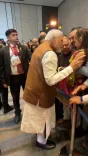
Anurag Thakur shares PM Modi's meet with young Ram devotee in Philippines
Synopsis
BJP MP Anurag Thakur shared a video of PM Narendra Modi meeting a young Ram devotee during his Philippines visit, pairing the clip with an opening verse from the Ramcharitmanas — a soft-power diplomatic moment highlighting Indian cultural ties in Southeast Asia.
Key Takeaways
BJP MP Anurag Thakur posted a video on 17 November 2026 of PM Narendra Modi meeting a young Ram devotee in the Philippines .
The post opened with the devotional verse 'Shri Ramchandra Kripalu Bhajaman' from the Ramcharitmanas, composed by Tulsidas in the 16th century.
PM Modi's foreign visits routinely incorporate cultural and diaspora interactions as part of India's soft-power outreach.
The Philippines engagement aligns with India's Act East Policy , which has prioritised ASEAN ties — including people-to-people links — since 2014 .
Thakur, a former Union Minister of Information and Broadcasting , frequently amplifies cultural-diplomatic moments from PM Modi's overseas trips on social media.
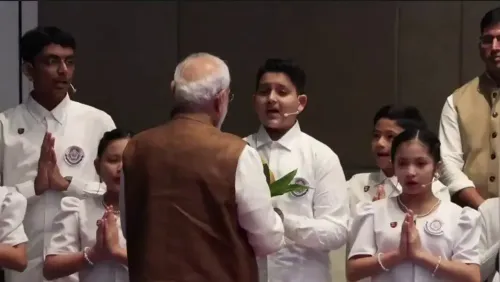
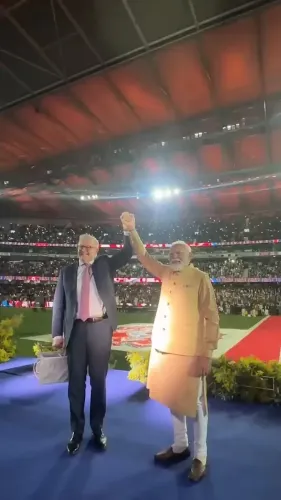
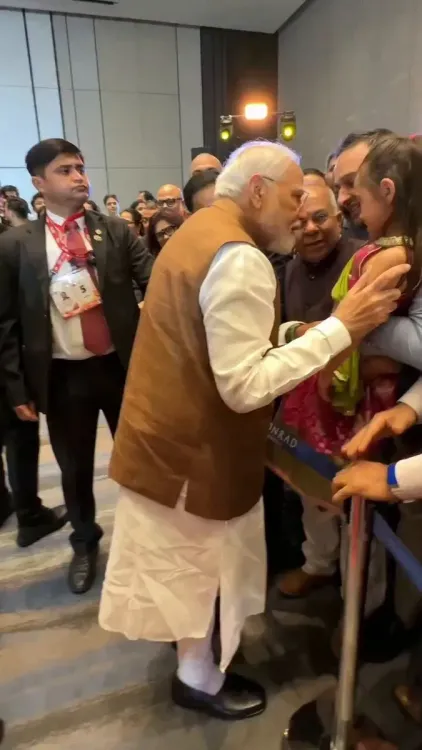
A child reciting the Ramcharitmanas in the Philippines — and Prime Minister Narendra Modi pausing to meet her. BJP MP Anurag Thakur shared a video on Tuesday, 17 November 2026, capturing that quiet, human moment from PM Modi's visit to the Philippines, framing it with the opening verse of the Ramcharitmanas: 'Shri Ramchandra Kripalu Bhajaman, Haran Bhavabhaya Darunam' — a devotional invocation to Lord Ram as the compassionate remover of worldly fears.
Thakur's post, shared in Hindi, translates to: 'Honourable Prime Minister Shri Narendra Modi meeting a little Ram devotee in the Philippines.' The accompanying verse from the Ramcharitmanas — describing the lotus-eyed, lotus-faced Lord whose hands and feet bear the mark of the lotus — sets a deliberately devotional register around the encounter.
A soft-power moment on the margins of diplomacy
PM Modi's overseas visits have consistently woven together formal statecraft and cultural outreach, and the Philippines engagement is no exception. Meeting members of the Indian diaspora — and especially younger devotees who carry Indian religious traditions across borders — has become a recognisable signature of his foreign trips. The image of a child devotee performing a Sanskrit recitation in Southeast Asia distils exactly the kind of people-to-people connect that India's foreign policy now actively counts as an asset.
India's Act East Policy, upgraded from 'Look East' in 2014, has steadily elevated engagement with ASEAN nations, including the Philippines. Beyond trade and security, the policy explicitly values cultural and diaspora linkages as bridges between governments. A moment like this one — a Prime Minister stopping for a child reciting Ram's praises in Manila — becomes a living illustration of that doctrine.
India's Hindu community abroad and the diaspora diplomacy playbook
The Indian diaspora in the Philippines, though modest in size compared to Gulf or Western communities, maintains active cultural and religious traditions. For India's diplomatic establishment, such communities represent both a constituency and a channel — keeping Indian culture visible in partner nations while giving visiting leaders a human story to carry home. Thakur, a former Union Minister of Information and Broadcasting, has long amplified these cultural-diplomatic narratives from PM Modi's foreign engagements on social media.
The devotional verse chosen to open the post is not incidental. The Ramcharitmanas, composed by Tulsidas in the 16th century, is among the most widely memorised texts in the Hindu tradition — recognisable to millions across India and the diaspora. Opening with it places the child's devotion within a living, transnational tradition, one that travels well beyond Indian borders.
When a Prime Minister's foreign visit generates a moment like this — a child, a verse, a hand extended across a cultural chasm — the optics carry their own foreign-policy argument. India does not just export goods and services; it carries a civilisational thread that shows up, unexpectedly, in a living room in the Philippines.
Point of View
Diaspora encounters on foreign soil have consistently served a dual function: signalling cultural continuity to overseas Indians while demonstrating to partner governments that India's influence travels through communities, not just trade corridors. Thakur's framing, anchored in the Ramcharitmanas, reinforces a broader BJP messaging strategy that links Indian identity abroad to a Hindu cultural heritage. As India deepens its Act East pivot, such moments are increasingly offered as evidence that people-to-people ties precede and outlast formal diplomatic agreements.
NationPress
17 Nov 2026
Frequently Asked Questions
Why is PM Modi in the Philippines in November 2026?
PM Modi is on an official visit to the Philippines as part of India's sustained engagement with ASEAN nations under the Act East Policy. Specific outcomes of the visit have not yet been fully detailed.
What is the verse Anurag Thakur quoted in his post?
The verse is the opening stanza of the Ramcharitmanas by Tulsidas — 'Shri Ramchandra Kripalu Bhajaman, Haran Bhavabhaya Darunam' — a devotional invocation describing Lord Ram as the compassionate remover of worldly fears, with lotus-like eyes, face, hands and feet.
What is India's Act East Policy and how does it relate to the Philippines?
India's Act East Policy, upgraded from 'Look East' in 2014, deepens diplomatic, economic and cultural engagement with Southeast Asian nations including the Philippines. It explicitly includes people-to-people and diaspora links as pillars of the relationship.
Who is Anurag Thakur?
Anurag Thakur is a BJP Lok Sabha MP from Hamirpur, Himachal Pradesh. He is a former Union Minister of Information and Broadcasting and Youth Affairs and Sports, and regularly shares updates on PM Modi's domestic and international activities.
Does India have a significant diaspora in the Philippines?
India's diaspora in the Philippines is modest compared to Gulf or Western communities, but maintains active cultural and religious traditions. Such communities serve as people-to-people bridges in India's bilateral engagements with Southeast Asian nations.