Ram Bhajan in Manila: A Child's Song Moves PM Modi
Synopsis
A young girl's rendition of the devotional hymn 'Shri Ramchandra Kripalu Bhaj Man' before PM Narendra Modi in Manila moved attendees, with Culture Minister Gajendra Singh Shekhawat calling it a soul-stirring expression of India's unbroken devotion and cultural heritage.
Key Takeaways
Union Culture and Tourism Minister Gajendra Singh Shekhawat shared a deeply moved reaction to a child's Ram bhajan performance in Manila, Philippines .
The devotional hymn 'Shri Ramchandra Kripalu Bhaj Man' was sung before Prime Minister Narendra Modi during the Philippines visit.
Shekhawat described the performance as emotionally overwhelming and a 'sweet expression of Indian culture.' The moment reflects India's consistent use of devotional and classical music as soft-power tools during official overseas engagements.
The post was shared on Tuesday, November 17, 2026 , and accompanied by a video of the performance.
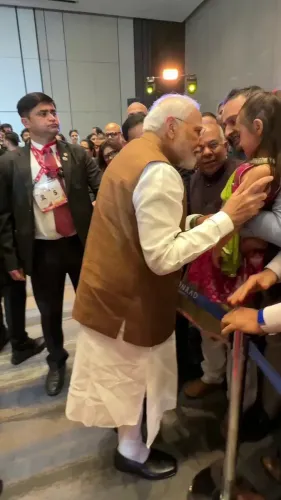
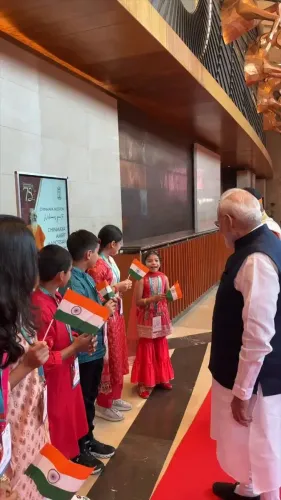
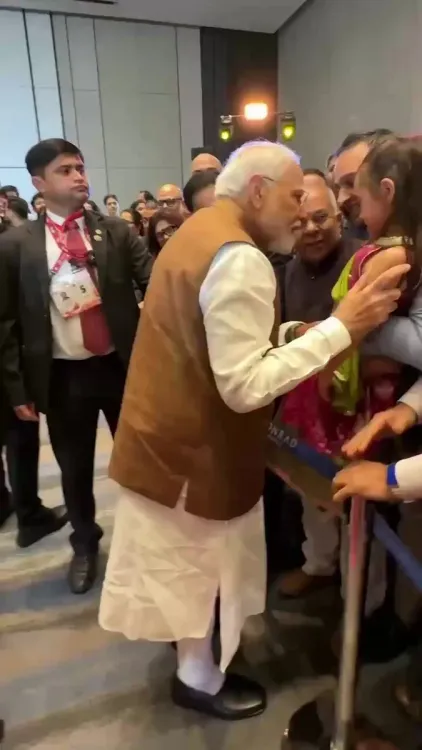
Thousands of miles from Ayodhya, in the Philippine capital of Manila, a young girl's voice filled the air with the timeless devotional hymn 'Shri Ramchandra Kripalu Bhaj Man' — and moved every heart in the room, including that of Prime Minister Narendra Modi. Union Culture and Tourism Minister Gajendra Singh Shekhawat shared the moment on Tuesday, November 17, 2026, calling the performance deeply touching and soul-stirring.
Shekhawat described the young girl's rendition as 'bhavpurna' (emotionally resonant) and 'manmohak' (enchanting), writing that it left everyone in attendance 'overwhelmed with emotion.' The minister closed his post with 'Jai Shri Ram!' — a salutation that underlined the devotional weight of the moment.
A Bhajan That Bridges Continents
'Shri Ramchandra Kripalu Bhaj Man' is among the most celebrated Ram stutis in the Hindu devotional canon, its verses a centuries-old invocation of Lord Ram's grace. Hearing it performed by a child — in Manila, before India's Prime Minister — gave the moment an intimacy that no formal cultural programme could script. It was the kind of soft-power image that travels far beyond any bilateral communiqué.
India's Cultural Diplomacy, One Performance at a Time
Indian leaders have long woven devotional music and classical performance into the fabric of state visits, using them to signal cultural pride and connect with overseas Indian communities. Ram bhajans carry particular resonance in that context — evoking heritage, continuity, and a civilisational thread that the diaspora often holds close. The Philippines visit, with its bilateral dimensions, now has this indelible cultural footnote attached to it.
Minister Shekhawat, who stewards India's culture and tourism portfolio from New Delhi, framed the performance not merely as a pleasant interlude but as an expression of 'atut shraddha' — unbroken devotion — toward Lord Ram, and of Indian culture's capacity to move people wherever it travels. That framing is deliberate: culture, in the government's current playbook, is never incidental to diplomacy.
When a child's voice carries a bhajan across the South China Sea and stills a room full of dignitaries, it says something the finest policy brief cannot — and that, for Indian soft power, is precisely the point.
Point of View
With its explicitly civilisational language about 'unbroken devotion,' signals that culture is being positioned as a pillar of foreign engagement, not just a sideshow. For the diaspora, such performances function as emotional homecomings; for the host country, they project a confident, rooted India. The combination of a child performer, a Prime Ministerial audience, and a centuries-old stuti is almost too symbolically complete — and that is unlikely to be accidental.
NationPress
17 Nov 2026
Frequently Asked Questions
What happened at PM Modi's event in Manila?
A young girl performed the devotional hymn 'Shri Ramchandra Kripalu Bhaj Man' before Prime Minister Narendra Modi in Manila, the capital of the Philippines, during his visit there in November 2026.
What did Culture Minister Gajendra Singh Shekhawat say about the Manila performance?
Minister Shekhawat called the performance emotionally overwhelming and enchanting, describing it as a 'sweet expression of Indian culture' and an example of unbroken devotion to Lord Ram.
What is 'Shri Ramchandra Kripalu Bhaj Man'?
'Shri Ramchandra Kripalu Bhaj Man' is one of the most celebrated devotional hymns in the Hindu tradition, a centuries-old invocation of Lord Ram's grace, widely sung across India and the diaspora.
Why do Indian leaders promote bhajans and devotional music during foreign visits?
Indian leaders use devotional and classical music during state visits as a form of cultural diplomacy — connecting with overseas Indian communities, showcasing India's heritage, and projecting a culturally confident national identity.
What is PM Modi's Philippines visit about?
PM Modi's visit to the Philippines is a bilateral engagement; specific details of agreements or events tied to the visit could not be independently verified beyond the cultural moment highlighted by Minister Shekhawat.