Contentious Congressional Hearing on Immigrant Truck Drivers
Synopsis
The debate over immigrant truck drivers intensified in a congressional hearing, with Republicans citing safety concerns and Democrats warning about economic repercussions. This clash highlights the ongoing struggle to balance safety and the critical need for drivers in the trucking industry.
Key Takeaways
Contentious debate: Lawmakers are divided over immigrant truck drivers' licensing.
Safety concerns: Republicans warn of potential dangers on highways.
Economic implications: Democrats argue against restrictions that could harm the trucking industry.
Immigrant workforce: Nearly 20% of truck drivers in the US are immigrants.
Regulatory gaps: Audits reveal failures in enforcing licensing standards.
Washington, March 5 (NationPress) During a recent congressional hearing, US lawmakers engaged in a heated debate regarding the eligibility of immigrants to obtain commercial driver’s licenses. Republicans expressed concerns about potential safety hazards on the roads, while Democrats contended that such restrictions could adversely affect the economy and disrupt vital supply chains.
The House Homeland Security Subcommittee on Oversight, Investigations, and Accountability held the session on Wednesday, with Chairman Rep. Josh Brecheen highlighting what he termed the “issue of non-domiciled commercial driver's licenses being issued to illegal aliens residing unlawfully in the United States.”
Brecheen emphasized the essential role that commercial truck drivers play in the American economy, facilitating the daily transport of crucial goods nationwide. “Commercial truck drivers are the backbone of the American economy,” he stated. “Every day they transport food, fuel, medicine, and other critical supplies all across the United States.”
However, he pointed out that federal audits have revealed significant shortcomings by various states in enforcing licensing standards.
“Recent Department of Transportation audits have unveiled alarming deficiencies by numerous states in adhering to these requirements,” Brecheen noted.
He referenced federal findings indicating that in Illinois, “one in five non-domiciled CDLs did not meet federal standards.” He also mentioned that California had “illegally issued 17,000 non-domiciled CDLs,” and a 2025 audit showed that “over 50 percent of the non-domiciled CDLs issued by New York State were in violation of federal law.”
Republican lawmakers raised repeated warnings that unqualified operators behind the wheel of heavy commercial vehicles could pose serious threats.
“You don’t need to be an expert to grasp what a reckless individual could do with a 40-ton tractor-trailer,” Brecheen stated. “That vehicle is not merely a truck; it’s a weapon that endangers public safety and national security.”
Law enforcement officials who appeared before the committee shared enforcement actions that uncovered instances of drivers operating commercial vehicles while breaching immigration regulations.
Tim Tipton, commissioner of the Oklahoma Department of Public Safety, reported that collaborative efforts between state troopers and federal immigration authorities had led to hundreds of arrests.
He highlighted inspections that raised broader concerns about licensing oversight.
“A number of these drivers struggle with basic English language skills and likely obtained their licenses from unscrupulous CDL mills,” Tipton informed lawmakers.
Sheriff Richard Del Toro of Saint Lucie County, Florida, recounted a tragic incident in his jurisdiction involving a commercial truck.
“Three innocent lives were lost in a catastrophic crash on the Florida Turnpike involving a commercial motor vehicle,” Del Toro stated. “For the families of those victims, this is not just a policy discussion; it represents a permanent loss.”
Democrats on the panel dismissed assertions that immigrants holding commercial licenses pose a safety risk, warning that restrictions could exacerbate the existing driver shortage in the trucking sector.
Indian American Congressman Shri Thanedar, the ranking member, noted that immigrants comprise a significant portion of the workforce.
“Nearly 20 percent of truck drivers in the US are immigrants,” he said.
Wendy Liu, an attorney with Public Citizen Litigation Group, testified that prohibiting immigrants with legal work authorization from acquiring commercial driver’s licenses would not enhance road safety.
“Preventing individuals with lawful work authorization who have successfully completed the necessary training and passed required tests from obtaining their commercial driver's licenses will not contribute to safer roads,” Liu asserted.
She cautioned that such a policy could expel thousands of skilled drivers from the industry.
“The Trump administration's exclusion of documented immigrants from the truck driver workforce could force 200,000 experienced drivers out of the market,” Liu remarked.
“This would disrupt supply chains, delay the delivery of goods and materials, and increase freight operation costs.”
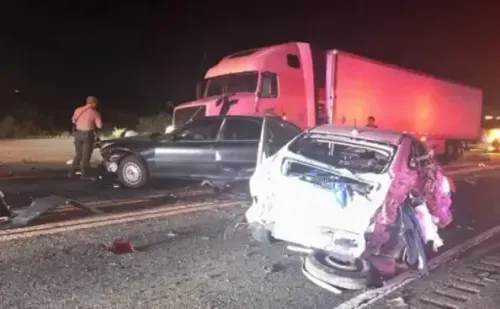
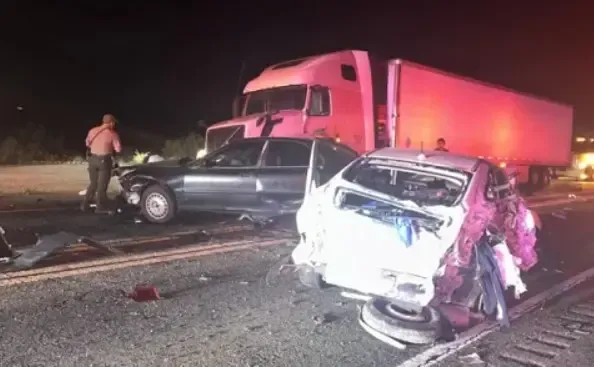
Lawmakers also referred to a tragic highway accident involving a truck driver who had previously entered the United States unlawfully and later acquired a commercial license in another state, a case cited by Republicans to illustrate regulatory gaps.
Point of View
This hearing underscores a significant conflict between safety concerns and economic needs. The stark contrast in perspectives reflects broader societal debates about immigration and its impact on essential industries. A balanced approach is crucial to ensure public safety while maintaining a robust workforce.
NationPress
7 Oct 2026
Frequently Asked Questions
What was the main issue discussed in the congressional hearing?
The hearing addressed whether immigrants should be allowed to obtain commercial driver’s licenses, with Republicans highlighting safety risks and Democrats emphasizing economic impacts.
Why do some lawmakers oppose immigrant truck drivers?
Opponents, primarily Republicans, express concerns over safety risks associated with unqualified drivers operating heavy commercial vehicles.
What percentage of truck drivers in the US are immigrants?
Approximately 20 percent of truck drivers in the United States are immigrants, according to Congressman Shri Thanedar.
What could be the consequences of banning immigrants from holding commercial licenses?
Banning immigrants with legal work authorization from obtaining commercial licenses could lead to a shortage of qualified drivers, disrupt supply chains, and increase delivery costs.
What did law enforcement officials reveal during the hearing?
Law enforcement officials reported that many drivers operating commercial vehicles were found violating immigration rules, emphasizing the need for stricter licensing oversight.