COP31 Global Electrification Pledge targets 35% energy share by 2035
Synopsis
COP31 in Antalya just moved beyond carbon pledges into structural electrification targets — with a binding '35-by-35' goal, a standing Electrification Forum co-hosted with the EU, and a dedicated IEA tracking mechanism. If it holds, this is the first time a UN climate summit has anchored clean-energy ambition to an independent measurement framework that survives beyond the conference itself.
Key Takeaways
The COP31 Global Electrification Pledge targets raising electricity's share of final energy consumption from 23% to 35% by 2035 .
The '35-by-35' goal is grounded in joint IEA and IRENA analysis aligned with the 1.5°C warming limit.
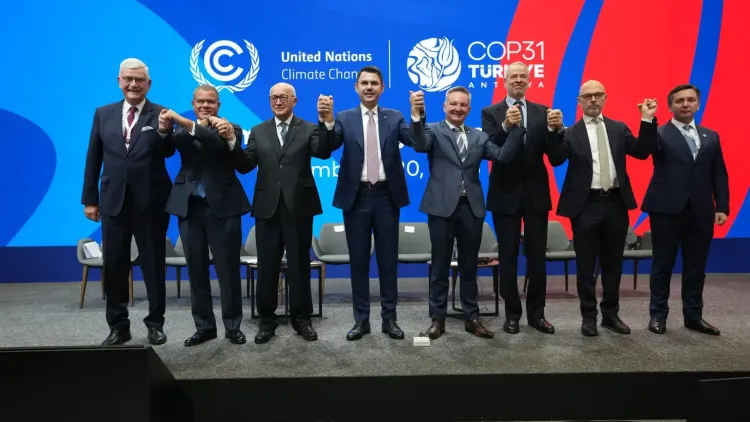
COP31 President Murat Kurum and President of Negotiations Chris Bowen anchored the pledge to energy security and practical delivery.
The IEA will chair the secretariat of the Electrification Board and lead a Global Electrification Tracking Mechanism .
IRENA will lead the D-GRIDs programme to help developing nations access grid investment and finance.
The inaugural Electrification Forum , co-hosted with the European Union , will continue as a standing institution beyond COP.
The COP31 Presidency has launched a landmark Global Electrification Pledge at the annual UN Climate Summit in Antalya, Turkey, rallying countries, businesses and investors behind a binding ambition to raise electricity's share of final global energy consumption from roughly 23 per cent today to 35 per cent by 2035. The so-called '35-by-35' target is rooted in analysis by the International Energy Agency (IEA) and the International Renewable Energy Agency (IRENA) as the minimum threshold needed to keep global warming within 1.5 degrees Celsius above pre-industrial levels.
What the Pledge Commits to
The pledge frames electrification as a three-pronged drive — covering transport, buildings and industry — with the dual purpose of reducing greenhouse-gas emissions and bolstering energy security for nations that currently depend heavily on fuel imports. Critically, the initiative is not just aspirational: an Electrification Board chaired by the COP31 Presidency has been established to provide institutional oversight, with the IEA designated as its secretariat. The IEA will also lead a Global Electrification Tracking Mechanism to monitor progress at both global and regional levels.
What COP31 Leaders Said
COP31 President Murat Kurum framed the pledge as a direct response to the energy crisis that exposed the risks of import dependency. 'We need the 35-by-35 target because until now electrification has not been underpinned by a clear global goal. This year's energy crisis has shocked us out of our complacency and demonstrated the inherent vulnerability of dependence on energy imports,' he said. Kurum added: 'The age of electricity is taking shape — and COP31 will be remembered as the moment we flicked the switch.'
COP31 President of Negotiations Chris Bowen stressed implementation over ambition alone. 'Ambition matters, but it must be backed by investment, infrastructure and implementation,' Bowen said, calling for electrification to be matched by 'clean power, stronger grids and storage.'
Role of IEA and IRENA
IEA Executive Director Dr Fatih Birol described electric technologies as 'often cost-competitive' and said the agency welcomed its custodian role for the Electrification Forum. IRENA Director-General Francesco La Camera highlighted the agency's lead on the new Enabling Distribution Grids for Electrification (D-GRIDs) programme, designed specifically to help developing countries identify grid investment needs, prepare bankable projects and access finance. This infrastructure-first approach addresses a consistent gap in past climate pledges, where headline targets outpaced on-ground delivery.
The Electrification Forum and Its Significance
The COP31 Presidency and the European Union are co-hosting the inaugural Electrification Forum on the sidelines of the summit. Notably, the forum is designed to continue as a standing institution beyond COP, meeting regularly with governments, financial institutions and industry groups — a structural departure from the one-off pledging rounds that have characterised previous climate conferences. This comes amid growing criticism that COP commitments rarely translate into measurable outcomes between annual summits.
What Comes Next
With the Electrification Board now operational and the IEA tracking mechanism in place, the next milestones will be the first progress reports and the operationalisation of the D-GRIDs programme for developing nations. Whether the 35-by-35 pledge translates into grid investment and policy reform — particularly in the Global South — will be the defining test of COP31's legacy on energy transition.
Point of View
A board, and an IEA-led tracking mechanism. That said, the history of UN climate commitments is littered with targets that lacked enforcement. The real question is whether the Electrification Board will have enough authority to hold signatory nations accountable between summits, or whether it will become another consultative body with limited teeth. For developing economies, the D-GRIDs programme is the pledge's most consequential element — grid infrastructure, not ambition language, is what determines whether electrification reaches the last mile.
NationPress
10 Nov 2026
Frequently Asked Questions
What is the COP31 Global Electrification Pledge?
It is a commitment launched at the UN Climate Summit in Antalya to raise electricity's share of global final energy consumption from about 23 per cent today to 35 per cent by 2035. The target — called '35-by-35' — covers electrification of transport, buildings and industry, and is grounded in IEA and IRENA analysis consistent with limiting global warming to 1.5 degrees Celsius.
Why does the 35-by-35 target matter for energy security?
COP31 President Murat Kurum has argued that electrification directly reduces dependence on imported fossil fuels, which were exposed as a vulnerability during the recent global energy crisis. By shifting to domestically generated clean electricity, countries can reduce import bills and stabilise energy costs, particularly for nations that currently spend heavily on oil and gas imports.
What is the Electrification Forum announced at COP31?
The Electrification Forum is a new standing institution co-hosted by the COP31 Presidency and the European Union, designed to continue meeting regularly after the summit ends. It will bring together governments, international institutions, businesses and financiers, with the IEA serving as secretariat through the Electrification Board.
How will progress on the electrification pledge be tracked?
The IEA will lead a Global Electrification Tracking Mechanism to monitor global and regional electrification trends on an ongoing basis. This data-driven oversight is intended to hold signatory countries accountable between annual COP summits.
How will developing countries benefit from the COP31 electrification initiative?
IRENA will lead the D-GRIDs (Enabling Distribution Grids for Electrification) programme, which is specifically designed to help developing nations identify their grid investment needs, prepare bankable projects and access international finance. This infrastructure pillar addresses a critical gap that has historically prevented ambitious global energy pledges from reaching lower-income countries.