Is High-Level Corruption Uncovered? Five Former Ministers and Senior Bureaucrats Charged Over China-Funded Pokhara Airport
Synopsis
Nepal's anti-corruption agency takes a decisive step by charging 55 individuals, including five former ministers and a Chinese construction firm, over alleged misconduct in the Pokhara Regional International Airport project. This raises pressing concerns regarding the integrity of foreign-funded projects in Nepal.
Key Takeaways
55 individuals charged in connection with airport corruption.
Allegations include inflated project costs .
Financial loss estimated at 74.34 million US dollars .
Concerns raised over the airport's revenue generation .
Operational limitations identified affecting airline viability .
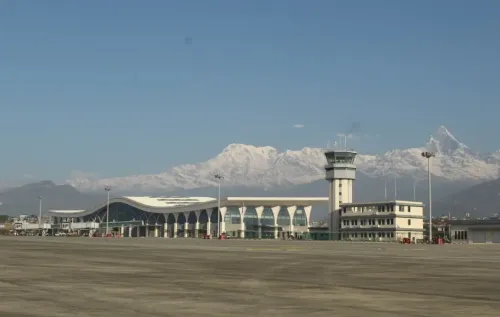
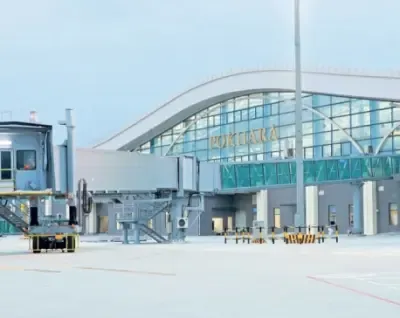
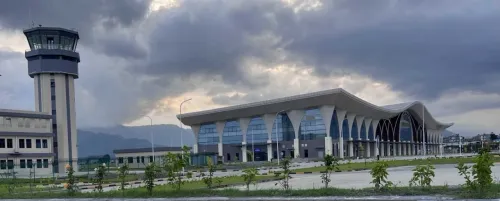
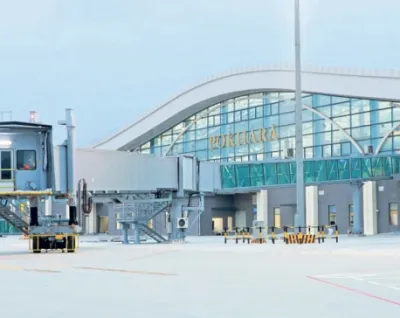
Kathmandu, Dec 7 (NationPress) The anti-corruption agency of Nepal has initiated legal proceedings at the Special Court against 55 individuals, which includes five former ministers and numerous former government secretaries, as well as a Chinese construction firm, regarding irregularities in the development of the Pokhara Regional International Airport.
This China-invested project in western Pokhara has been surrounded by controversies relating to alleged misconduct. The Commission for the Investigation of Abuse of Authority (CIAA), the constitutional body responsible for fighting corruption, has formally registered these cases against the accused. This is one of multiple corruption allegations associated with projects involving Chinese contractors in Nepal.
The filed cases stem from a projected financial loss of approximately 74.34 million US dollars (NPR 8.36 billion). Among those charged are former ministers Post Bahadur Bogati (deceased), Ram Sharan Mahat, Deepak Chandra Amatya, Ram Kumar Shrestha, and Bhim Prasad Acharya. Notably, Mahat served as the finance minister during the time the alleged corruption transpired, while the others held the position of tourism ministers.
Several former government secretaries, including Ramkrishna Timilsena, who previously served as the registrar of the Supreme Court, along with Sushil Ghimire, Suman Sharma, Bheshraj Sharma, Sureshman Shrestha, Madhukumar Marasini, and others, are also implicated.
Furthermore, Pradip Adhikari, who was suspended from his role as Director General of the Civil Aviation Authority of Nepal (CAAN), and former CIAA director Murari Bhandari, both of whom have been charged in a separate corruption case involving heliport construction, are included as defendants. The Chinese construction company, China CAMC Engineering Co Ltd, along with its officials, including Wang Bo (chairman) and Liu Shengcheng (regional general manager), have also been named as defendants.
All individuals face allegations of participating in the procurement process by artificially inflating project costs.
The contract for the project, valued at US$215.96 million, was financed by China’s Export-Import Bank. However, the project's failure to generate revenue poses a significant issue for the Nepali government, which is responsible for repaying the Chinese loan.
In May, a sub-committee within the now-dissolved House of Representatives' Public Accounts Committee identified numerous irregularities in both the construction process and the tax exemptions granted to the construction firm. Despite the airport's inauguration on January 1, 2023, Pokhara continues to face difficulties in attracting international airlines, raising concerns that this multi-million-dollar venture could turn into a significant failure.
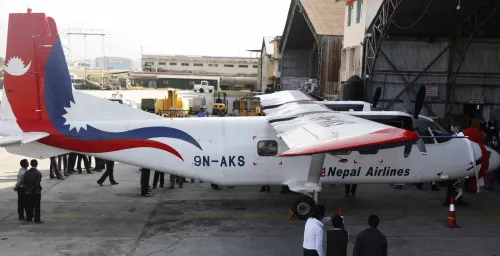
Currently, only Himalaya Airlines, a joint venture carrier between Nepal and China, has been providing a scheduled flight once a week on the Pokhara-Lhasa route since March of this year.
A prior governmental high-level study committee flagged defects in the airport's physical and navigational designs, which impose load limitations on medium-haul flights, raising concerns about operational expenses for airlines interested in maintaining regular flights through the airport.
According to the report produced by the High-Level Study and Recommendation Committee, chaired by the current Minister for Industry, Commerce and Supply, Anil Kumar Sinha — who was a retired Supreme Court judge at the time — it has been noted that the airport needs a five percent climb gradient for the Missed Approach Procedure Design Gradient, which is considered high from a technical perspective for aircraft.
This results in medium-haul jet aircraft facing a load penalty of four to six tonnes upon arrival, with weight restrictions also applying during departure due to the runway's length, ultimately affecting passenger and cargo capacity,” the report elaborates.
The current runway length of 2,500 metres restricts airline operations, particularly under conditions of high temperature, heavy aircraft weight, and/or low-pressure weather.
Point of View
This situation demands urgent attention. The charges against high-ranking officials underscore a troubling trend in governance and transparency. It is vital for the integrity of public projects that accountability is upheld, particularly in partnerships with foreign entities. The implications of this case extend beyond these individuals, affecting national trust in governmental processes and international investments.
NationPress
6 Oct 2026
Frequently Asked Questions
What are the main allegations against the former ministers?
The former ministers are accused of engaging in procurement processes that involved artificially inflating project costs for the Pokhara Regional International Airport, leading to significant financial losses.
How much financial loss is involved in this case?
The estimated financial loss attributed to the alleged irregularities is around 74.34 million US dollars (NPR 8.36 billion).
Which entities are implicated in this corruption case?
The case involves five former ministers, numerous government secretaries, and the Chinese construction company, China CAMC Engineering Co Ltd.
What impact does the airport's inauguration have on the situation?
Despite the airport's inauguration on January 1, 2023, it has struggled to attract international airlines, raising concerns over its ability to repay the Chinese loan and its viability as a project.
What are the operational limitations identified by the study committee?
The high-level study committee identified issues in the airport's design that restrict medium-haul flights, including a need for a high climb gradient and operational restrictions based on runway length.