New Corruption Allegations Spark Concerns Over China's Role in Nepal Projects
Synopsis
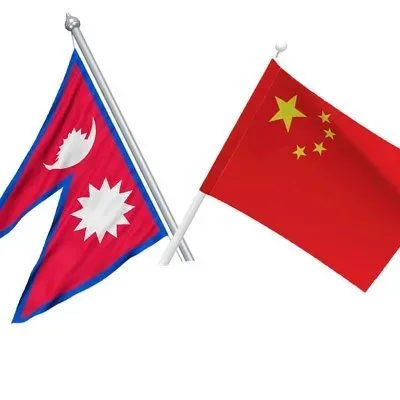
Fresh allegations of corruption linked to Chinese-funded projects in Nepal have surfaced, raising significant concerns about the previous government's ties with Beijing. This development could reshape the political landscape as a new government prepares to take office.
Key Takeaways
Corruption Allegations: Serious allegations have emerged regarding the misappropriation of funds in Chinese-funded projects.
Political Implications: These developments could reshape Nepal's political landscape as new leadership approaches.
Safety Issues: Nepal's aviation sector continues to face scrutiny over safety and operational concerns.
Debt Trap Concerns: The controversy highlights fears regarding potential debt dependency from Chinese investments.
International Relations: The situation raises questions about Nepal's diplomatic relations with both China and India.
Kathmandu/New Delhi, March 23 (NationPress) With the imminent transition to a new government in Nepal, emerging issues are spotlighting the previous administration's economic and ideological ties with China.
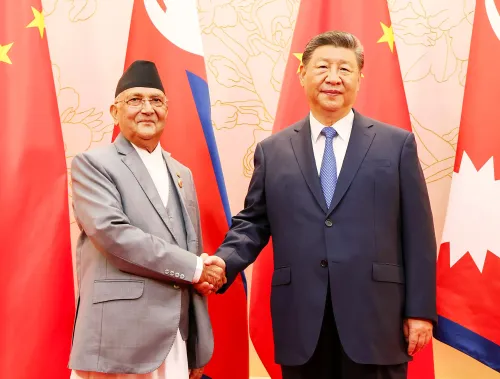
Former Prime Minister K.P. Sharma Oli, despite facing intense political opposition domestically and diplomatic pushback internationally over security matters, proceeded to incorporate various ambitious projects under Beijing's Belt and Road Initiative (BRI), which has previously ensnared multiple nations in debt.
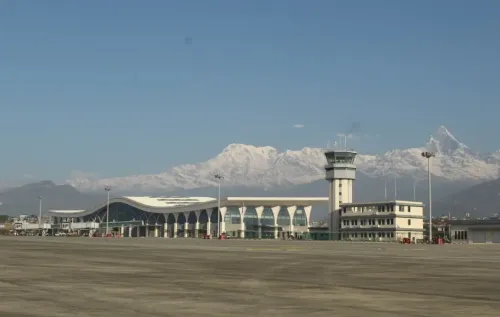
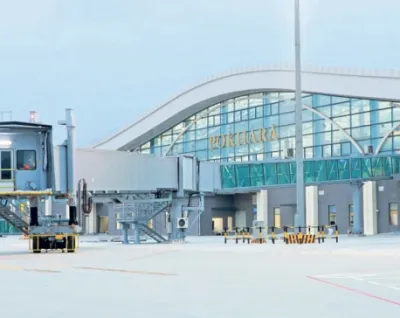
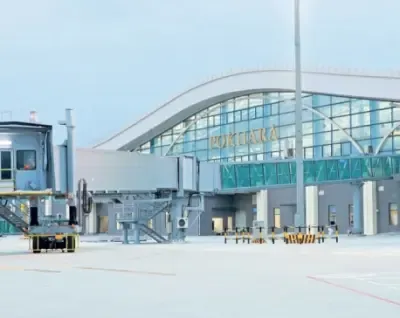
This past Sunday, Nepal's Commission for the Investigation of Abuse of Authority (CIAA) initiated a corruption case against 21 individuals, including two Chinese nationals, alleging the misappropriation of Nepali rupees 461.5 million (approximately Indian rupees 288.4 million) during the construction of Pokhara International Airport, according to a report from the Kathmandu Post.
The anti-corruption agency highlighted allegations of embezzlement linked to contract manipulation and unauthorized consultancy payments, indicating that the project was financed by China.
Furthermore, the CIAA accused China CAMC Engineering Co Limited, the contractor, of acting with malice from the inception to manipulate and secure the project, as reported by the newspaper.
The CIAA, which is a constitutional body tasked with combating corruption, has implicated CAMC Chairman Wang Bo and project manager Yang Zhigang, seeking the recovery of Nepali Rupees 461.58 million from them.
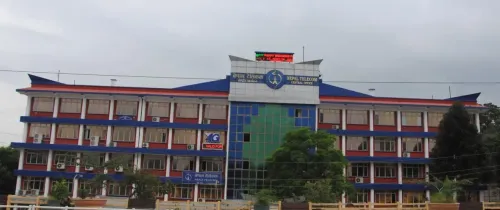
Notably, Nepal's aviation sector is grappling with a plethora of challenges, including safety concerns, and has been blacklisted by the European Union since 2013.
Previously, the Oli government had appointed a retired Supreme Court judge to lead a committee aimed at identifying deficiencies at various airports developed to enhance tourism, including the Pokhara airport, and to propose remedies with expert assistance.
In an interview with IANS earlier this month, retired judge and current interim government Minister Anil Sinha confirmed the prior investigation.
He stated, "Safety issues have led to numerous crashes, resulting in significant loss of life. I was asked to chair a committee comprising several experts from diverse fields associated with civil aviation."
Oli had subsequently instructed the committee to broaden its scope to explore the underperformance of Pokhara and Bhairahawa airports and the reasons behind Nepal Airlines' lack of success, as shared by Sinha.
However, Sinha noted that the investigation faced logistical and funding challenges, to the extent that committee members were unable to visit the airports in question.
In a separate development, a multi-billion-rupee industrial park, also part of the BRI in Jhapa district of eastern Nepal, gained attention prior to the March 5 general election when the Rastriya Swatantra Party (RSP) removed it from their electoral manifesto.
Concerns have emerged among segments of the Nepalese population regarding the financial repercussions of BRI projects, especially in light of Sri Lanka and Pakistan experiencing economic crises due to similar Chinese investments.
New Delhi has expressed objections to the project located near the Nepal-India border, particularly due to its proximity to the sensitive Siliguri Corridor or the "chicken's neck".
The RSP's decision to exclude the Jhapa project was perceived as a significant departure from former PM Oli's pro-China stance.
The RSP subsequently achieved significant victories in the recent Parliamentary elections, and Balen Shah, who won against Oli in the latter's stronghold of Jhapa-5, is anticipated to become Nepal's next Prime Minister.
This Pokhara airport issue marks the third case linked to the project.
In December 2025, the CIAA filed a case against 55 individuals (including Ministers and Secretaries) seeking the recovery of Nepali Rupees 8.36 billion.
Another case accused project chief Binesh Munankarmi of acquiring disproportionate assets.
This scandal has reignited widespread criticism regarding China-funded projects that are allegedly fraught with corruption and mismanagement, heightening concerns about Beijing's debt trap diplomacy in Nepal.
Point of View
Our responsibility is to present unbiased and factual reporting. The unfolding situation regarding China's involvement in Nepal's infrastructure projects raises critical questions about governance and accountability, warranting close attention from both citizens and policymakers.
NationPress
22 Sept 2026
Frequently Asked Questions
What is the current controversy regarding Chinese projects in Nepal?
The controversy revolves around allegations of corruption associated with Chinese-funded projects, particularly the Pokhara International Airport, which involve significant misappropriation of funds.
Who are the key figures implicated in the corruption case?
Key figures include former Prime Minister K.P. Sharma Oli, CAMC Chairman Wang Bo, and project manager Yang Zhigang, among others.
What is the Belt and Road Initiative?
The Belt and Road Initiative (BRI) is a global development strategy adopted by China to enhance connectivity and cooperation among countries, but it has faced criticism for leading to debt dependency.
Why has Nepal's aviation sector faced criticism?
Nepal's aviation sector has been criticized for safety issues and has been blacklisted by the European Union since 2013 due to recurrent safety concerns.
What impact do these allegations have on Nepal's political landscape?
The allegations could significantly shift the political landscape, especially as new parties like the Rastriya Swatantra Party gain traction against pro-China policies.