Is Nepal Facing a Surge in Corruption Allegations Linked to Chinese Contractors?
Synopsis
Nepal is currently embroiled in a significant corruption scandal involving Chinese contractors and suppliers, particularly with Nepal Telecom's recent procurement process. The allegations raise important questions about transparency and accountability in government contracts, as well as the broader implications for foreign investment in Nepal.
Key Takeaways
Nepal Telecom is embroiled in corruption allegations tied to its procurement process.
Huawei has been accused of having specifications tailored to favor its bid.
A study committee has been formed to investigate these claims.
Previous corruption issues have also emerged in other projects involving Chinese contractors .
Transparency and accountability are crucial for restoring public trust.
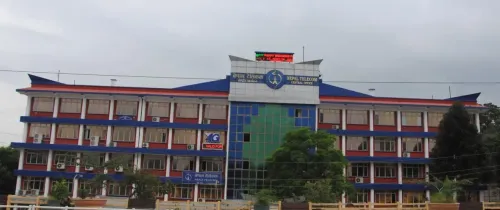
Kathmandu, Dec 5 (NationPress) Nepal is currently facing a wave of corruption allegations in recent years, particularly related to projects involving Chinese contractors and suppliers. The most recent issue revolves around the billing system that Nepal Telecom (NT), a company with majority ownership by the Nepali government, is set to acquire.
On March 18 of this year, Nepal Telecom issued an invitation for bids to obtain a new billing system, with an estimated cost of approximately NPR 5 billion. Among the two participating Chinese companies, only Huawei was found technically competent, prompting accusations that the specifications were tailored specifically for Huawei's capabilities. Notably, Huawei is also managing Nepal Telecom's core network.
Whale Cloud, another Chinese competitor, was eliminated during the technical assessment.
Although Huawei's financial bid was to be opened on September 24, 2025, the procedure was indefinitely suspended after Jagadish Kharel took office as Minister of Communications and Information Technology on September 22, citing unique circumstances.
On October 30, the Ministry established a study committee to explore the allegations, led by former government secretary Maniram Gelal, following concerns regarding the singular technical qualification of Huawei.
On November 20, the committee presented its findings to Minister Kharel. According to Online Khabar, a prominent Nepali news platform, sources indicated that the bidding documents appeared to be designed favorably towards a specific model from Huawei.
“Upon reviewing the tender documents and related files concerning Nepal Telecom's billing system, it is evident that the specifications were tailored to accommodate a specific model from a particular company,” quoted an unnamed official from Nepal Telecom.
However, Minister Kharel, upon receiving the report, indicated that he would not interfere with the procurement process, seemingly allowing for the opening of Huawei's delayed financial bid.
Previously, in June, the Commission for the Investigation of Abuse of Authority (CIAA), the nation's anti-corruption agency, prosecuted 18 individuals, including former Nepal Telecom Managing Director Sangita Pahadi and former Managing Director Sunil Paudel, for alleged misconduct related to the procurement of the billing system and annual maintenance contract.
These officials faced accusations of inflicting significant losses on the public utility by awarding a contract to Asia Info Linkage Technologies (China) Inc., which allegedly presented excessively high quotes for its Veris Billing system. As this system is now outdated, Nepal Telecom is in search of a replacement. The new bidding process is already facing scrutiny as only Huawei qualified in the technical evaluation, and it stands to receive the contract if its financial proposal is found acceptable. Critics have also voiced concerns regarding a potential conflict of interest due to Huawei's roles in both the billing system and the company's core network.
This situation is not isolated, as other allegations of corruption involving Chinese firms have surfaced in Nepal.
In May, a parliamentary subcommittee uncovered alleged corruption amounting to billions of rupees in the construction of an international airport in Pokhara, a popular tourist destination in the west.
A subcommittee under the Public Accounts Committee of the now-dissolved House of Representatives pointed out various irregularities and questionable tax exemptions granted to the construction company.
The airport was constructed by China CAMC Engineering Co. Ltd at a cost of USD 215.96 million, financed by China’s EXIM Bank. However, the project's inability to generate the anticipated revenue has raised significant concerns for the Nepali government, which is now obligated to repay the Chinese loan.
Almost three years after its inauguration on January 1, 2023, the Pokhara International Airport continues to struggle in attracting international airlines, heightening fears that this multi-million-dollar project could become a substantial financial liability.
At present, only Himalaya Airlines, a Nepal–China joint venture, is offering scheduled flights, with one weekly connection on the Pokhara–Lhasa route since March of this year.
Point of View
The ongoing controversies surrounding procurement processes in Nepal highlight a critical need for enhanced transparency and accountability. The involvement of foreign contractors, particularly from China, necessitates a thorough examination of practices to ensure public trust and safeguard national interests. The nation must prioritize integrity in its dealings to foster a conducive environment for genuine investment.
NationPress
30 Sept 2026
Frequently Asked Questions
What are the corruption allegations against Nepal Telecom?
The allegations primarily involve the procurement process for a new billing system, where it is claimed that the specifications were designed to favor only Huawei, the sole technically qualified bidder.
Who is investigating the corruption claims?
The Ministry of Communications and Information Technology formed a study committee led by former government secretary Maniram Gelal to investigate the allegations surrounding the procurement process.
What are the implications of these allegations for foreign investment in Nepal?
These allegations can significantly impact foreign investors' confidence, as they raise concerns about transparency and the integrity of government contracts, which could deter potential investments in the country.
Have similar corruption issues occurred in other projects in Nepal?
Yes, there have been other instances, such as allegations of corruption in the construction of the Pokhara International Airport involving Chinese contractors.
What actions have been taken against those involved in corruption?
The Commission for the Investigation of Abuse of Authority has prosecuted several individuals, including former directors of Nepal Telecom, for their roles in alleged procurement irregularities.