Will Crown Prince Reza Pahlavi Strengthen Ties with India for a Free Iran?
Click to start listening
Synopsis
In a recent revelation, Iran's exiled crown prince, Reza Pahlavi, envisions a democratic Iran fostering strong ties with India. This historic relationship, rooted in shared culture and values, could lead to profound cooperation in addressing global challenges. Discover the potential impact of this alliance on future international relations.
Key Takeaways
- Reza Pahlavi advocates for a democratic Iran.
- Strong ties with India are a priority.
- Shared cultural heritage can strengthen cooperation.
- Global challenges necessitate collaboration.
- Technological advancements in India can benefit Iran.
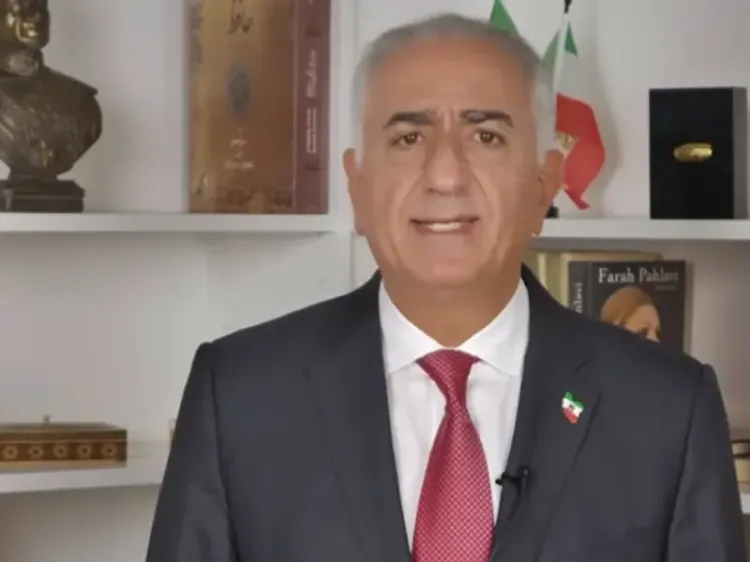
Washington, Jan 16 (NationPress) The exiled crown prince of Iran, Reza Pahlavi, expressed on Friday that a forthcoming democratic Iran would actively pursue robust and collaborative relations with India, highlighting the enduring cultural, civilizational, and historical bonds shared by the two nations.
Pahlavi addressed a packed news conference, reminiscing that the ties between India and Iran have existed for an extensive period, emphasizing that these connections transcend modern diplomatic interactions. "Culturally, it was many, many years," he noted, adding that both countries have enjoyed positive relations throughout modern history.
He asserted that a democratic Iran would prioritize forging partnerships based on shared principles. "It’s only natural that a democratic Iran is dedicated to establishing the best possible relationships, grounded in sovereignty and freedom, with any nation that shares these values and is willing to collaborate across various domains," he stated.
Pahlavi commended India's rich civilizational legacy and expressed that both countries can take pride in their historical narratives. "It’s a profound culture and a rich history that we observe in India as well," he remarked, believing that such heritage could pave the way for a strong bond and cooperation.
He contended that global challenges necessitate enhanced international cooperation and identified India as a crucial ally in tackling these issues. "We face numerous challenges on our planet, including energy crises, population growth, and water shortages," he elaborated.
Pahlavi emphasized that these challenges cannot be tackled in isolation. "The four corners of the world must remain connected. We cannot afford to be introverted or isolationist. Collaborative efforts are essential," he stressed.
Highlighting India's technological prowess, he remarked, "India is among the leading nations in technology and expertise. These capabilities will assist us in every area that requires our focus."
He further indicated that collaboration could extend into new and renewable energy sectors, expressing his eagerness for deeper engagement between experts, entrepreneurs, and business communities in both nations. "I look forward to having our experts, entrepreneurs, and business sectors working closely with their Indian counterparts," he said.
Pahlavi noted that such collaboration would be feasible post-political transformation in Iran. "Once we gain our freedom, we can embark on a completely new chapter," he expressed.
Earlier, during the news conference, Pahlavi proclaimed his intention to guide a transition away from Iran's current regime and called upon the international community to support the Iranian people. He laid out what he described as a strategy for a democratic transition, urging foreign governments to act against the regime's "repressive capacity."
Iran and India share centuries-old cultural ties, including literary, linguistic, and trading connections, maintaining close relations throughout much of the 20th century. The dynamics of their relationship have evolved since the 1979 Islamic Revolution, influenced by regional politics, sanctions, and energy considerations.
Point of View
It is crucial to recognize the importance of this dialogue between Iran's exiled crown prince and India. The emphasis on cooperation and shared values signals a potential shift in geopolitical dynamics, which must be observed closely. Building ties with India could enhance regional stability and foster economic development, aligning with the aspirations of the Iranian people for a more democratic future.
NationPress
18/01/2026
Frequently Asked Questions
What are the historical ties between Iran and India?
Iran and India share centuries-old cultural links that encompass literary, linguistic, and trade connections, maintaining close ties throughout much of the 20th century.
What is Reza Pahlavi's vision for Iran?
Reza Pahlavi envisions a democratic Iran that seeks to establish strong relationships with countries that share similar values, particularly with India.
What challenges does Pahlavi believe require cooperation?
Pahlavi highlighted global challenges such as energy shortages, population issues, and water crises that necessitate international collaboration.
What sectors does Pahlavi want to collaborate with India on?
Pahlavi expressed interest in cooperation with India in areas like new and renewable energy, technology, and entrepreneurship.
What political changes does Pahlavi anticipate in Iran?
Pahlavi hopes for a political transformation in Iran that would allow for renewed engagement and collaboration with other nations.