Democratic House win could tighten scrutiny of Trump's India tariff, H-1B policies
Synopsis
With Democrats given a 90% chance of winning the US House on 3 November, the bigger story for India is what happens next: oversight hearings on Trump's H-1B fee, tariff scrutiny, and a harder path for any India-US trade deal requiring legislation — all without Democrats having the votes to actually overrule a presidential veto.
Key Takeaways
Prediction market Kalshi gives Democrats a 90% chance of winning the US House and 62% chance of winning the Senate ahead of the 3 November midterms.
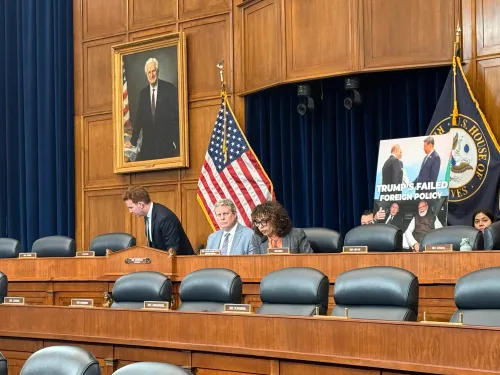
A Democratic House would grant the party subpoena power and committee oversight over Trump's tariff, trade and visa policies.
The $100,000 H-1B petition fee , affecting Indian professionals, is already blocked by a California federal court and under appeal at the Ninth Circuit .
Graham Act tariffs targeting buyers of Russian energy could take effect from 18 October ; the law requires a 10-day written justification to Congress.
Four Indian-American House members — Ro Khanna, Ami Bera, Pramila Jayapal and Suhas Subramanyam — are all Democrats in races rated safe.
Chatham House analyst Max Yoeli cautions that Democratic foreign-policy opposition will be 'more about optics than hard constraints' without veto-override capacity.
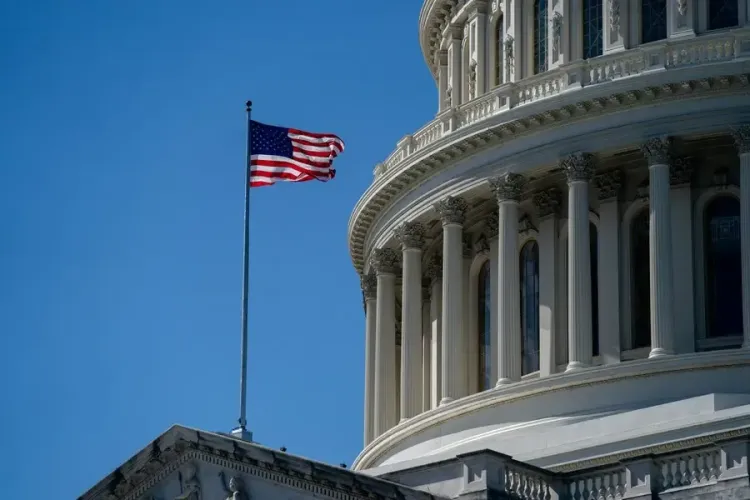
Democrats are heavy favourites to win control of the US House of Representatives in the 3 November midterm elections, according to prediction markets and polling averages — a development that could sharpen congressional oversight of President Donald Trump's tariff, trade and visa policies that weigh directly on India. A Democratic majority would hand the party subpoena power and committee chairmanships, opening the door to sustained scrutiny of measures such as the $100,000 fee on new H-1B petitions and the proposed Graham Act tariffs on buyers of Russian energy.
What the Prediction Markets Are Saying
Traders on the prediction market Kalshi assigned Democrats a 90 per cent chance of capturing the House and a 62 per cent chance of winning the Senate as of Monday. A full Democratic sweep of both chambers was priced at 61 per cent, while the next most likely scenario — a divided Congress with Democrats controlling the House and Republicans retaining the Senate — stood at 30 per cent.
The Silver Bulletin polling average, updated on Monday, showed Democrats ahead by 8.8 points on the generic congressional ballot. 'Democrats' surge in the polls that started in early September still hasn't stopped,' the Silver Bulletin noted. Adding to Republican headwinds, a CBS News/YouGov poll conducted from 30 September to 2 October found only 39 per cent of Americans approved of Trump's job performance, against 61 per cent who disapproved; on inflation, approval sank further to 29 per cent.
Senate Race Remains Uncertain
The Senate outcome is far less certain than the House. The Cook Political Report rates seven Senate races as toss-ups: Alaska, Iowa, Kansas, Maine, Michigan, Ohio and Texas. Six of those seats are currently held by Republicans, giving Democrats a structural opening but no guarantee. All 435 House seats and 35 Senate seats are on the ballot on 3 November; a party needs 218 seats for a House majority.
What a Democratic House Means for India
London-based think tank Chatham House argues that Democrats' real leverage, even with only the House, would be on fiscal matters. The US debt limit is expected to be reached by mid-2027, and a Democratic House alone would block Republicans from using the budget reconciliation process to raise it, according to Max Yoeli, a senior research fellow at Chatham House. However, Yoeli cautioned that opposition on foreign policy 'will be more about optics than hard constraints', since Democrats would lack the votes to override presidential vetoes.
For India specifically, the impact is likely to be felt through oversight rather than new legislation. Trump's tariffs have largely been imposed through executive action; a Democratic House could hold hearings and force symbolic votes, but overturning them over a presidential veto would be out of reach. The same logic applies to the Graham Act tariffs targeting top buyers of Russian energy, which could take effect from 18 October. That law requires the administration to submit a written justification to Congress at least 10 days before imposing such duties — a procedural requirement a Democratic-led House would be well placed to enforce.
Any India-US trade agreement requiring legislation would also face a more sceptical chamber under Democratic leadership, according to analysts.
H-1B Fee Fight and Indian Professionals
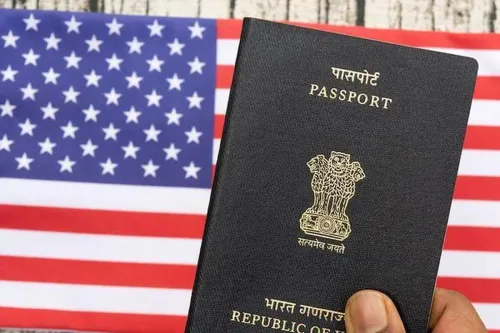
The $100,000 fee on new H-1B petitions — a measure that falls heavily on Indian technology professionals, who historically account for the largest share of H-1B beneficiaries — is already tied up in federal court. A judge in California blocked its enforcement on 30 September; the administration has since appealed to the Ninth Circuit. Democrats could amplify pressure through congressional hearings and spending riders attached to that legal battle.
Indian-American Lawmakers in the Frame
Four Indian-American members of the House are seeking re-election: Ro Khanna, Ami Bera, Pramila Jayapal and Suhas Subramanyam — all Democrats, all in races rated safe for their party. The current House has six Indian-American members. Raja Krishnamoorthi vacated his seat to run for the Senate but lost the Illinois primary, while Shri Thanedar lost his Michigan primary in August. The composition of the next House will shape both the oversight agenda on India-related policies and the representation of the Indian-American community in American legislative corridors.
With polling day set for 3 November, the final weeks of the campaign will be closely watched in New Delhi as much as in Washington.
Point of View
Embarrass and scrutinise, but it cannot unilaterally reverse executive-order tariffs or the H-1B fee without a veto-proof majority that simply does not exist. For India, the more consequential variable is the Senate: if Democrats sweep both chambers, the debt-ceiling fight in mid-2027 hands them genuine leverage over budget priorities, including trade-linked spending. The framing of this as a binary 'Democratic win equals India relief' misses the constitutional arithmetic. What changes is the noise level and the legal discovery risk for the administration — not the policy floor.
NationPress
13 Oct 2026
Frequently Asked Questions
What are the current odds of Democrats winning the US House in November 2026?
Prediction market Kalshi gives Democrats a 90 per cent chance of winning the House and a 62 per cent chance of taking the Senate as of 13 October 2026. A full Democratic sweep of both chambers is priced at 61 per cent.
How would a Democratic House affect India-related US policies?
A Democratic House would gain subpoena power and committee oversight, enabling hearings on Trump's tariffs, the H-1B fee, and any proposed India-US trade deal requiring legislation. However, Democrats would lack the votes to override presidential vetoes, limiting their impact to oversight rather than outright policy reversal.
What is the $100,000 H-1B petition fee and where does it stand legally?
The Trump administration introduced a $100,000 fee on new H-1B petitions, a measure that falls disproportionately on Indian technology professionals who historically hold the largest share of H-1B visas. A federal judge in California blocked its enforcement on 30 September; the administration has appealed to the Ninth Circuit.
What are the Graham Act tariffs and why do they matter for India?
The Graham Act imposes tariffs on top buyers of Russian energy and could take effect from 18 October. The law requires the administration to provide Congress a written justification at least 10 days in advance — a procedural requirement a Democratic-led House would be positioned to scrutinise closely.
Which Indian-American lawmakers are running for re-election to the US House?
Four Indian-American Democrats — Ro Khanna, Ami Bera, Pramila Jayapal and Suhas Subramanyam — are seeking re-election in races rated safe for their party. The current House has six Indian-American members; Raja Krishnamoorthi and Shri Thanedar both lost primaries and will not return.