Denmark parliament votes 109-0 to expand US military access to Greenland
Synopsis
Denmark's parliament voted 109-0 to ratify a US-Denmark-Greenland defence pact that opens new American military sites at Narsarsuaq and Mestersvig and expands Pituffik Space Base — the most significant upgrade to US Arctic positioning since the Cold War, and a pointed signal to China and Russia amid mounting High North competition.
Key Takeaways
Denmark's parliament approved the US-Greenland defence agreement 109-0 on 19 November 2026 .
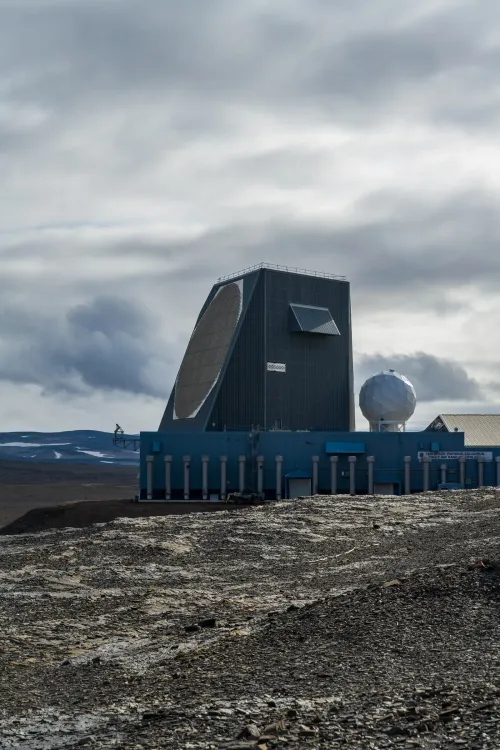
The deal allows the US to build new defence areas at Narsarsuaq and Mestersvig in Greenland, and to expand Pituffik Space Base .
Greenland's parliament had already ratified the trilateral accord on 3 November ; the agreement now takes effect upon US diplomatic notification.
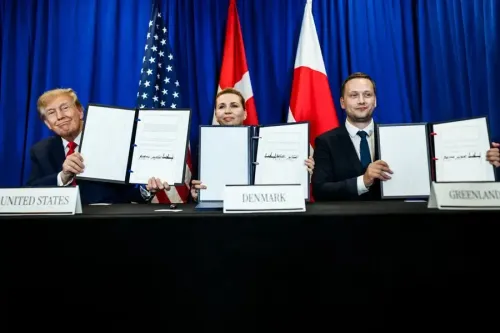
The pact amends a foundational 1951 US-Danish defence treaty and was signed at UN headquarters on 22 September by Trump , Frederiksen , and Nielsen .
Separate provisions bar non- NATO /non- EU entities from gaining control over sensitive sectors of Greenland's economy.
Secretary of State Marco Rubio cited Greenland's Arctic geography as central to US missile defence and broader northern security strategy.
Denmark's parliament on Thursday, 19 November 2026, unanimously approved a landmark security and defence agreement granting the United States expanded military access to Greenland, the self-governing Danish Arctic territory. The vote passed 109-0, clearing the final legislative hurdle for a trilateral deal that reshapes defence arrangements in the strategically vital High North.
What the Agreement Covers
Under the accord, the US is authorised to establish new defence areas at Narsarsuaq in southern Greenland and Mestersvig in the northeast, with specific operational terms still to be negotiated among Denmark, Greenland, and the United States. The deal also permits expansion and modernisation of the existing Pituffik Space Base in northwestern Greenland, a facility already central to US missile early-warning and space surveillance operations.
The agreement amends and supplements a foundational 1951 US-Danish defence pact, updating a Cold War-era framework for a markedly different Arctic security environment. It takes effect once Washington receives diplomatic notification confirming that both the Danish and Greenlandic parliaments have ratified it — a threshold now met after Greenland's parliament approved the deal on 3 November.
Economic Security Provisions
Notably, the agreement includes separate provisions restricting entities from countries outside NATO, its partner nations, and the European Union — or investors from such countries — from acquiring control or significant influence over particularly sensitive sectors of Greenland's economy. Analysts have read this as a targeted measure to limit Chinese and Russian commercial inroads into the island's rare earth minerals, ports, and telecommunications infrastructure.
How It Was Signed and What Leaders Said
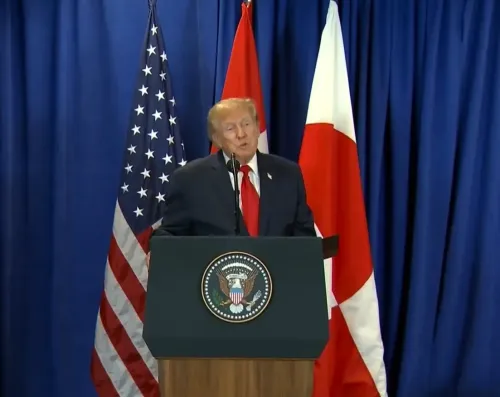
US President Donald Trump, Danish Prime Minister Mette Frederiksen, and Greenlandic Prime Minister Jens-Frederik Nielsen signed the agreement at UN headquarters in New York on 22 September. Speaking at the close of the G20 foreign ministers' meeting in Atlanta last month, US Secretary of State Marco Rubio defended the accord, framing it as directly addressing American national security concerns while protecting the interests of Canada and NATO allies.
Rubio described the arrangement as building on longstanding US engagement in Greenland and stressed that one of its core purposes was to prevent potential adversaries from gaining access through commercial channels. 'It has always played a critical role in national security. It is more pronounced now, not just because of defences against missiles, but because of the Arctic,' Rubio said. He further indicated that the economic protections embedded in the deal were designed to hold regardless of whether Greenland ultimately chose independence from Denmark.
Arctic Context and Strategic Significance
The agreement arrives at a moment of intensifying great-power competition in the Arctic. Russia's militarisation of its northern coastline and China's declared status as a 'near-Arctic state' have sharpened NATO's focus on the region. Greenland's location — straddling the North Atlantic and the Arctic Ocean — makes it indispensable to missile defence corridors, submarine transit routes, and satellite tracking. This is not the first time Washington has pushed to deepen its presence on the island; President Trump had earlier floated the possibility of purchasing Greenland outright, a suggestion that drew sharp rebukes from both Copenhagen and Nuuk but signalled the depth of US strategic interest. The trilateral format of this agreement — explicitly including Greenland as a signatory alongside Denmark — reflects Nuuk's growing assertiveness in charting its own defence and economic future.
With both parliaments now on record, the deal moves into an implementation phase where the precise footprint of new US defence areas will be defined. How quickly Washington moves to operationalise the Narsarsuaq and Mestersvig sites is likely to be an early indicator of the administration's Arctic tempo.
Point of View
Non-EU investors from sensitive Greenlandic sectors, the pact effectively weaponises trade law against Chinese rare-earth ambitions on the island. The inclusion of Greenland as a co-signatory rather than a passive subject is also quietly significant — it sets a precedent for Nuuk's agency that will complicate any future sovereignty negotiation. The deal does not resolve the underlying tension between Greenland's independence aspirations and Denmark's strategic leverage, but it does lock in US equities on the island for years to come.
NationPress
19 Nov 2026
Frequently Asked Questions
What did Denmark's parliament approve regarding Greenland?
Denmark's parliament voted 109-0 on 19 November 2026 to ratify a trilateral security and defence agreement that expands US military access to Greenland. The deal allows the US to establish new defence areas at Narsarsuaq and Mestersvig and to expand and modernise the Pituffik Space Base in northwestern Greenland.
When does the US-Denmark-Greenland defence agreement take effect?
The agreement takes effect once the United States receives diplomatic notification confirming that both Denmark's and Greenland's parliaments have approved it. Greenland's parliament ratified the deal on 3 November 2026, and Denmark's parliament followed on 19 November, so the notification process is now underway.
What are the economic provisions in the Greenland defence deal?
The agreement includes provisions that restrict entities from countries outside NATO, its partner states, and the European Union — or investors from those countries — from gaining control or significant influence over particularly sensitive sectors of Greenland's economy. These clauses are widely seen as targeting Chinese and Russian commercial interests on the island.
Why is Greenland strategically important to the United States?
US Secretary of State Marco Rubio has stated that Greenland's geographical position is critical to American national security, extending beyond missile defence to broader Arctic developments. Its location straddles key North Atlantic and Arctic sea lanes, submarine transit corridors, and satellite tracking arcs, making it central to NATO's northern defence architecture.
How does this agreement relate to earlier US-Denmark defence arrangements?
The new deal amends and supplements a 1951 US-Danish agreement on the defence of Greenland, updating Cold War-era arrangements for the current Arctic security environment. It was signed by President Donald Trump, Danish Prime Minister Mette Frederiksen, and Greenlandic Prime Minister Jens-Frederik Nielsen at UN headquarters in New York on 22 September.