Trump, Denmark, Greenland sign Arctic defence deal, updating 1951 pact
Synopsis
Trump, Denmark's Frederiksen, and Greenland's Nielsen signed a sweeping update to the 75-year-old Arctic defence pact at the UN — but Trump's refusal to rule out US ownership of Greenland when pressed by reporters means the deal, historic as it is, leaves the territory's political future deliberately ambiguous.
Key Takeaways
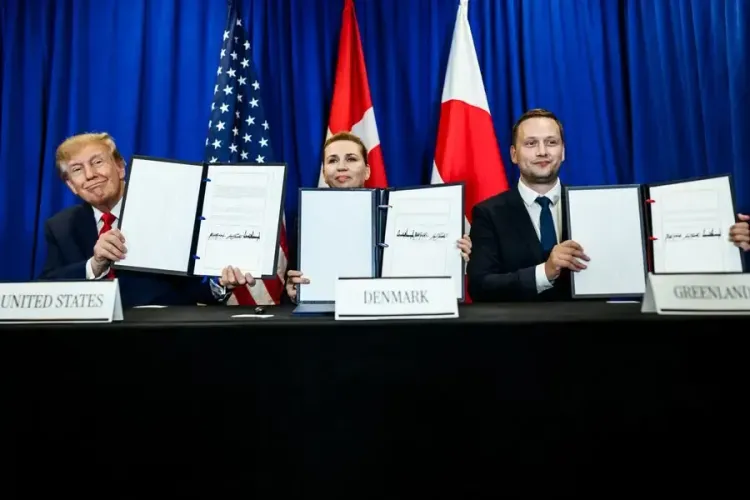
US President Donald Trump , Danish PM Mette Frederiksen , and Greenland PM Jens-Frederik Nielsen signed a new trilateral defence agreement on 23 September 2026 at the United Nations .
The deal modernises the foundational 1951 US-Denmark defence pact, last amended in 2004 , and expands Arctic security cooperation.
Frederiksen called it a deal 'that can last forever' and said it would block adversarial influence in Greenland .
Nielsen stressed that Greenland is a direct party to the agreement — not merely its subject — with rights and livelihoods explicitly recognised.
Trump did not directly answer whether US ownership of Greenland was now off the table, saying only: 'I love the people of Greenland.' The pact reinforces NATO posture in the Arctic as competition from Russia and China in the High North intensifies.
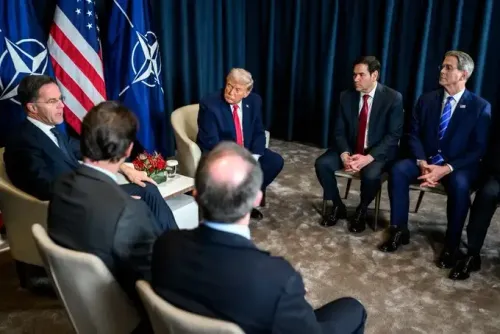
US President Donald Trump, Danish Prime Minister Mette Frederiksen, and Greenland Prime Minister Jens-Frederik Nielsen signed a landmark trilateral defence agreement on 23 September 2026 at the United Nations, modernising a foundational 1951 security pact and significantly expanding cooperation in the strategically vital Arctic region. The signing marks a pivotal moment in the geopolitics of the High North, where great-power competition has intensified sharply in recent years.
What the New Agreement Covers
The updated pact replaces and substantially expands the framework established by the original 1951 defence agreement between Washington and Copenhagen, which was last amended in 2004. The new deal is designed to reinforce security and deterrence in the Arctic and the North Atlantic, while explicitly ensuring that Greenland is a direct participant — rather than merely a subject — in decisions affecting its territory and people.
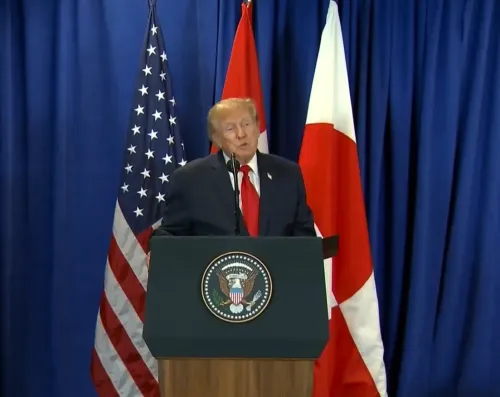
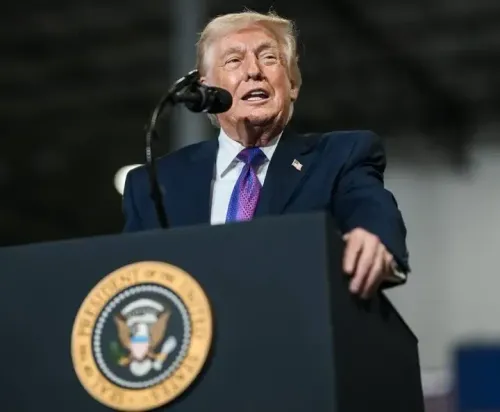
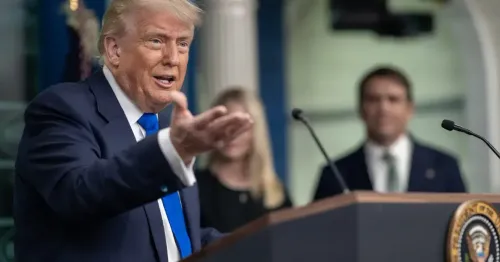
Speaking at the trilateral ceremony, Trump described the agreement as the outcome of a prolonged diplomatic effort. 'We're going to have a tremendous relationship, a secure relationship, and we look forward to it,' he said. 'This was long in the making. Some really wanted to make a deal and never got done, but we're getting it done.' Trump added the pact would be 'tremendous for Europe and for the United States and for everybody,' and 'incredible' for Greenland.
Frederiksen: A Deal 'That Can Last Forever'
Frederiksen called the agreement a milestone in Denmark's decades-long security relationship with the United States. '75 years ago, we entered into an agreement about the defense of Greenland. Today, we are signing an even bigger and better agreement, a deal that can last forever,' she said.
The Danish prime minister said the pact would prevent adversaries from gaining a foothold in Greenland. 'We are making sure that they will not be allowed to get any control or significant influence in Greenland,' she said, adding that 'more allies are present in the Arctic at the same time.' Frederiksen also framed the deal as a pillar of broader NATO cohesion at a time of heightened geopolitical tension. 'If we let ourselves be divided as allies, then we do our foes a favor,' she warned.
Nielsen: 'An Agreement With Us, Not Just About Us'
Greenland Prime Minister Jens-Frederik Nielsen said the agreement brought the 1951 pact 'into 2026' and, crucially, ensured Greenland's direct agency. 'For Greenland, this is not only an agreement about us, it is an agreement with us,' he said. 'It takes into account the people of Greenland, our rights, our livelihoods, and the development of our country.'
Nielsen recalled Greenland's security contributions during the Second World War and the Cold War, and affirmed its commitment to the Western alliance. 'This agreement should put to rest any doubt today and in the future about where Greenland's loyalty lies. We are, have been and will remain a steadfast friend of the United States and a part of the Western Alliance,' he said, describing the deal as a 'win-win-win agreement' grounded in shared responsibility and mutual respect.
Trump Sidesteps Ownership Question
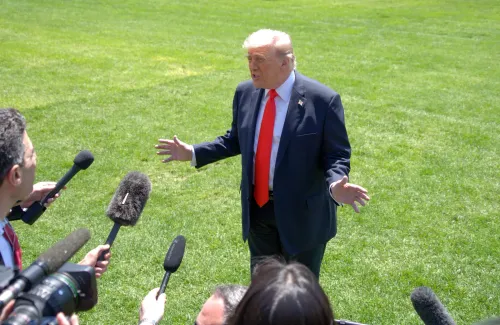
Notably, Trump declined to directly answer a reporter's question on whether US ownership of Greenland was now off the table — a proposition he has publicly floated on multiple occasions. When asked what message he had for the people of Greenland, Trump replied: 'I love the people of Greenland,' adding that they were 'very well represented by their prime minister.' The non-answer is likely to sustain questions about Washington's longer-term ambitions in the region.
Arctic Stakes and What Comes Next
This comes amid a broader intensification of Arctic competition, with Russia and China each expanding military and commercial activity in the High North. Greenland's geographic position — straddling key transatlantic shipping lanes and sitting atop significant rare-earth mineral deposits — makes it one of the most strategically coveted territories on earth. The updated defence pact reinforces the US military presence at facilities including Pituffik Space Base (formerly Thule Air Base), which anchors American missile-warning and space-surveillance capabilities. How the agreement translates into concrete force posture changes and joint investment commitments will be closely watched in the months ahead.
Point of View
But Trump's evasion on the ownership question is the headline within the headline — it signals that Washington views this pact as a floor, not a ceiling, on its Greenland ambitions. Frederiksen's careful language about territorial integrity and Greenland's right to self-determination was clearly directed at that very ambiguity. For Nielsen, the deal is a survival strategy: formalising Greenland's voice within a US-anchored security architecture is the best available hedge against being absorbed rather than partnered. The Arctic is becoming a second front in great-power competition, and this agreement — however historic — does not resolve the fundamental question of who, ultimately, calls the shots there.
NationPress
23 Sept 2026
Frequently Asked Questions
What is the new US-Denmark-Greenland defence agreement signed at the UN?
It is a trilateral security pact signed on 23 September 2026 that updates and substantially expands the original 1951 defence agreement between the United States and Denmark. The deal reinforces US military presence in Greenland, strengthens Arctic deterrence, and formally recognises Greenland as a direct party with rights and a say in decisions affecting its territory.
How does the 2026 agreement differ from the 1951 pact?
The original 1951 agreement established the framework for US military presence in Greenland and was amended in 2004. The 2026 version is described by the signatories as 'bigger and better,' explicitly incorporating Greenland as a co-signatory, addressing its people's rights and livelihoods, and expanding the scope of security and deterrence cooperation in the Arctic.
Did Trump abandon the idea of the US owning Greenland?
Trump did not directly answer a reporter's question on whether US ownership of Greenland was now off the table. He said 'I love the people of Greenland' and noted they were 'very well represented by their prime minister,' stopping short of ruling out the idea.
Why is Greenland strategically important to the United States?
Greenland's Arctic location gives it commanding geographic importance over transatlantic shipping lanes and US missile-warning infrastructure, including Pituffik Space Base. It also sits atop significant rare-earth mineral deposits. As Russia and China expand military and commercial activity in the High North, Greenland's strategic value has grown sharply.
What did Greenland Prime Minister Nielsen say about the deal?
Nielsen said the agreement brought the 1951 pact 'into 2026' and described it as 'a win-win-win agreement.' He stressed that for Greenland it is 'not only an agreement about us, it is an agreement with us,' and declared that the pact should 'put to rest any doubt' about where Greenland's loyalty lies — affirming its place within the Western Alliance.