Bangladesh garment workers block Dhaka highways over Tk 30,000 wage demand
Synopsis
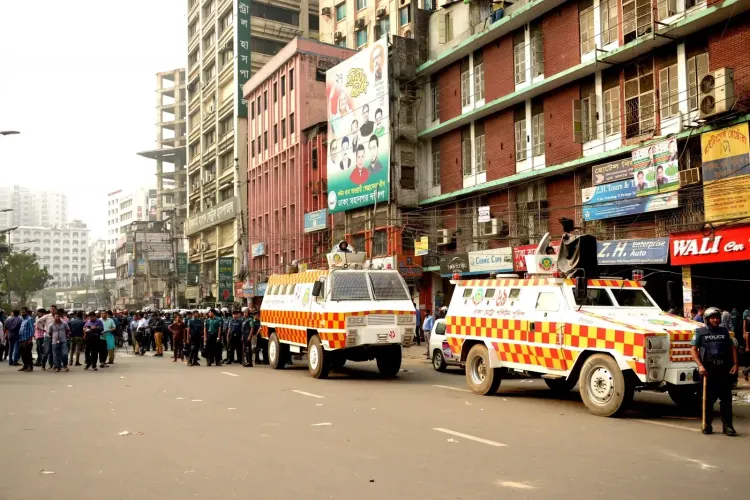
Over 1,000 Bangladeshi garment workers blockaded two major Dhaka highways on 2 November, demanding a Tk 30,000 minimum monthly wage. Police responded with tear gas and water cannons; at least 49 people were arrested. An international rights body has condemned the crackdown, calling it torture and arbitrary arrest — raising the stakes well beyond a wage dispute.
Key Takeaways
Over 1,000 garment workers blocked the Dhaka-Tangail and Nabinagar-Chandra highways on 2 November 2026 , demanding a minimum monthly wage of Tk 30,000 .
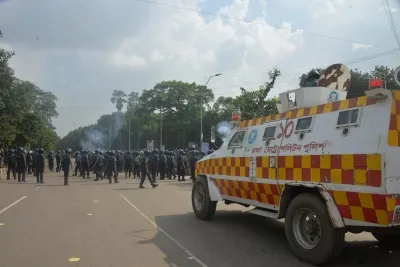
Police deployed tear gas and water cannons to disperse protesters in Ashulia and Gazipur .
At least 49 people have been arrested — 29 in Mirpur and 20 in the Gazipur industrial zone.
Workers also set a police box on fire in Konabari during clashes on Sunday.
Justice Makers Bangladesh in France (JMBF) condemned the police response as 'torture and arbitrary arrests' and demanded independent investigations.
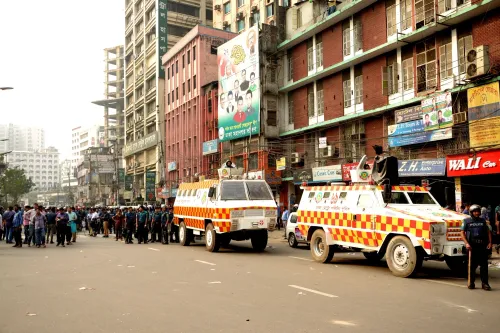
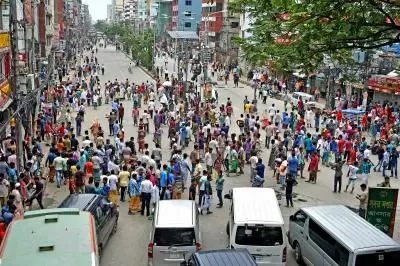
Bangladeshi police deployed tear gas and water cannons on Monday, 2 November to disperse striking garment workers in Dhaka's Ashulia, as wage unrest escalated with over 1,000 workers blocking the Dhaka-Tangail and Nabinagar-Chandra highways, bringing traffic to a complete standstill. The workers are demanding a minimum monthly wage of Tk 30,000, according to local media reports.
How the Unrest Unfolded
The latest wave of protests began on Monday morning when workers from several factories gathered at the Palli Bidyut area and moved onto the highway. Mohammad Amjad Hossain, Superintendent of Gazipur Industrial Police, confirmed that nearly 1,000 workers had taken over the highway, disrupting vehicular movement in both directions, according to Bangladeshi daily Dhaka Tribune.
In a separate Monday incident in Ashulia, workers walked out of multiple factories and attempted to block the Nabinagar-Chandra highway in the Kabirpur area. Mohibullah Akon, Assistant Commissioner (AC Land) of Ashulia Circle, confirmed the development, telling The Daily Star: 'We are trying to bring the situation under control.' He noted the workers made two attempts to block the highway.
Sunday's Clashes Set the Stage
The Monday protests followed a volatile Sunday in which garment workers blocked the Dhaka-Tangail highway in Gazipur and set a police box in Konabari on fire. Iftekhar Hossain, Officer-in-Charge of Konabari police station, confirmed the arson at the Dhaka-Tangail highway in the Konabari area. Shahidul Islam, Officer-in-Charge of Kaliakair police station, said traffic movement remained disrupted as workers continued the blockade, according to the Dhaka Tribune. Clashes between workers and police reportedly erupted on Sunday morning and continued into the afternoon.
Arrests and Detentions
Police have arrested several individuals in Mirpur and Gazipur in connection with alleged vandalism, arson, and sabotage during the demonstrations. The Dhaka Metropolitan Police's Mirpur division confirmed 29 arrests linked to protests in the area, while Industrial Police reported an additional 20 arrests in the Gazipur industrial zone — bringing the known total to at least 49.
Human Rights Body Condemns Police Response
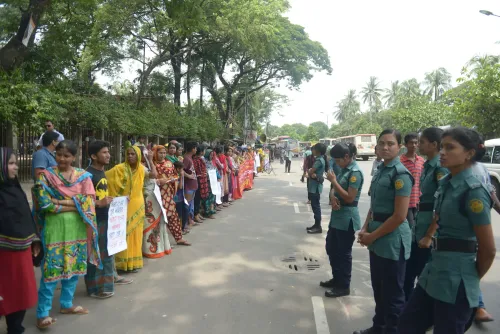
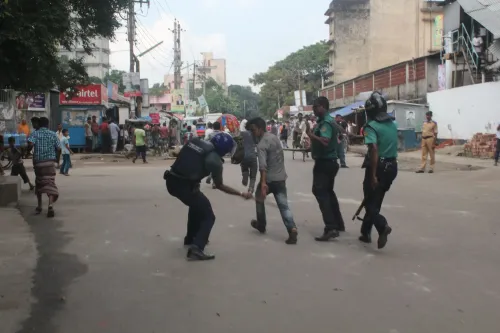
International human rights organisation Justice Makers Bangladesh in France (JMBF) strongly condemned what it described as 'police torture and arbitrary arrests' targeting garment workers — including women — and students passing through affected areas in Ashulia, Gazipur, and Mirpur. JMBF called on Bangladeshi authorities to conduct independent investigations into police conduct, ensure accountability, and protect detained workers and labour leaders.
Shahanur Islam, Founder President of JMBF, said: 'Workers have been demanding higher wages because they cannot meet their living costs. The authorities should have sat down with their representatives. Instead, workers were beaten and arrested. A worker being thrown onto the road and a student being beaten by law enforcement personnel are serious acts of abuse. Those responsible must answer for their actions.'
Background and Broader Context
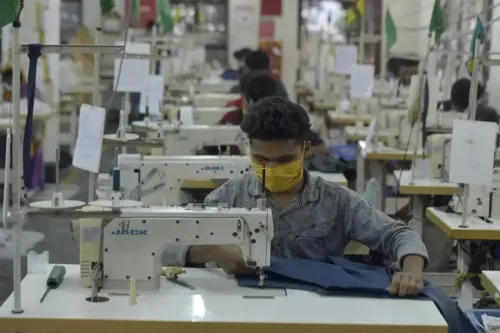
Bangladesh's garment sector — one of the world's largest, supplying global fashion brands — has seen recurring wage disputes, with workers arguing that existing pay scales fail to keep pace with rising living costs. The demand for Tk 30,000 per month represents a significant increase over current minimum wage levels. Notably, this is not the first time Dhaka's industrial corridors have been paralysed by labour unrest; similar blockades and clashes have punctuated the sector's growth story for years. The unrest comes at a sensitive moment for Bangladesh's economy, which depends heavily on garment export revenues. With authorities taking a hardline stance and rights groups demanding accountability, the standoff between workers and the state appears far from resolved.
Point of View
Rather than dialogue, risks deepening mistrust in an industry that earns Bangladesh the bulk of its export revenue. International scrutiny from bodies like JMBF adds reputational pressure on global brands sourcing from these factories. If Dhaka does not move toward a credible, negotiated wage settlement, the cycle of unrest, crackdown, and arrests will continue — and the cost, economic and human, will compound.
NationPress
2 Nov 2026
Frequently Asked Questions
Why are Bangladesh garment workers protesting in November 2026?
Workers are demanding a minimum monthly wage of Tk 30,000, arguing that existing pay scales do not cover their living costs. They also want an end to blacklisting practices and other labour grievances. The protests escalated into highway blockades in Ashulia and Gazipur on 2 November.
Which highways were blocked during the Bangladesh garment worker protests?
Workers blocked two major arteries — the Dhaka-Tangail highway in Gazipur and the Nabinagar-Chandra highway in Ashulia's Kabirpur area — bringing traffic to a complete standstill in both directions.
How did police respond to the protests?
Police used tear gas and water cannons to disperse workers, and have arrested at least 49 people in Mirpur and Gazipur in connection with alleged vandalism, arson, and sabotage during the demonstrations.
Who is Justice Makers Bangladesh in France and what have they said?
Justice Makers Bangladesh in France (JMBF) is an international human rights organisation. It strongly condemned what it called 'police torture and arbitrary arrests' of garment workers, including women, and students in Ashulia, Gazipur, and Mirpur, calling for independent investigations and accountability.
What is the significance of the Tk 30,000 wage demand for Bangladesh's garment industry?
Bangladesh's garment sector is one of the world's largest and the country's primary source of export revenue. Workers say the Tk 30,000 monthly minimum is needed to meet rising living costs, representing a substantial hike over current levels. Recurring wage disputes reflect a long-standing gap between industry growth and worker compensation.