US senators back dollar as reserve currency amid China's yuan push
Synopsis
A bipartisan US Senate resolution is sounding the alarm: the dollar's share of global reserves has slid from 71% in 1999 to under 57% by late 2025, while China has quietly wired up 1,700 banks to a SWIFT alternative and deployed over $1 trillion through Belt and Road. The resolution is as much a warning about America's own economic credibility as it is about Beijing.
Key Takeaways
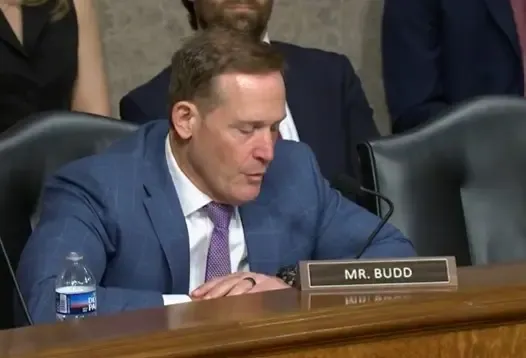
Senators Ted Budd and Jeanne Shaheen reintroduced a bipartisan resolution on 8 May backing the US dollar as the global reserve currency.
The dollar's share of global reserves fell from 71% in 1999 to 56.82% by Q3 2025 , according to IMF data cited in the resolution.
The Chinese yuan accounted for just 1.93% of global reserves in the same period, but China's financial infrastructure push is accelerating.
More than 1,700 banks have subscribed to China's Cross-Border Interbank Payment System (CIPS) , described as an alternative to SWIFT .
China has invested more than $1 trillion globally under the Belt and Road Initiative since 2013 .
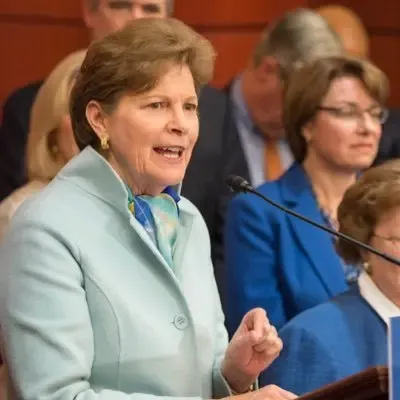
Senator Shaheen also implicitly criticised recent US economic turbulence, citing "haphazard tariff rollouts" as having shaken America's credibility as a reliable partner.
A bipartisan group of US senators on 8 May reintroduced a resolution affirming the US dollar's status as the world's reserve currency, warning that China is accelerating efforts to build a parallel global financial system centred on the yuan. The measure, introduced by Republican Senator Ted Budd and Democratic Senator Jeanne Shaheen, frames Beijing's currency internationalisation drive as both an economic and national security threat to the United States and its allies.
What the Resolution Says
The resolution argues that the dollar's reserve status underpins global trade stability and American geopolitical leverage. Senator Budd stated in an accompanying release:
Point of View
But the sharpest line belongs to Shaheen — a Democrat warning that America's own policy volatility, not just Beijing's ambitions, is eroding dollar credibility. That internal contradiction is what mainstream coverage underplays: the dollar's reserve status is not only threatened by China's CIPS network or Belt and Road loans, but by the self-inflicted wounds of unpredictable tariff policy and fiscal uncertainty. The IMF data cited — a drop from 71% to 56.82% over 25 years — reflects a slow structural drift, not a sudden crisis. China's yuan at 1.93% of reserves is still marginal. But the infrastructure Beijing is laying — payment rails, digital currency systems, capital dependencies in the Global South — is the long game, and a US Congress that passes resolutions without binding policy is unlikely to counter it.
NationPress
8 May 2026
Frequently Asked Questions
What is the US Senate resolution on the dollar about?
The resolution, introduced by Senators Ted Budd and Jeanne Shaheen on 8 May, affirms the US dollar's status as the global reserve currency and warns that China's efforts to internationalise the yuan pose economic and national security risks. It calls on the United States to strengthen economic ties with allies and counter Beijing's growing financial influence.
How much has the dollar's share of global reserves declined?
According to IMF data cited in the resolution, the dollar's share of global currency reserves fell from approximately 71% in 1999 to 56.82% by the third quarter of 2025. The Chinese yuan accounted for 1.93% of global reserves during the same period.
What is CIPS and why does it matter?
CIPS, or the Cross-Border Interbank Payment System, is China's alternative to the SWIFT financial messaging network. The resolution notes that more than 1,700 banks have subscribed to CIPS, raising concerns that Beijing is building parallel financial infrastructure that could reduce Western leverage in a geopolitical crisis.
What role does the Belt and Road Initiative play in this debate?
The resolution accuses China's Belt and Road Initiative of increasing developing countries' dependence on Chinese capital. Beijing has reportedly invested more than $1 trillion globally under the initiative since 2013, which lawmakers argue expands China's financial influence at the expense of dollar-based systems.
Why did Senator Shaheen criticise recent US economic policy in the same resolution?
Senator Shaheen said that "haphazard tariff rollouts and self-imposed volatility" had shaken America's standing as a reliable economic partner, arguing that Congress must demonstrate US commitment to the global financial system. Her remarks implicitly pointed to domestic policy instability as a compounding risk to dollar dominance.