Democratic Senators Warn: Trump's Policies Empower China
Synopsis
A recent report from Democratic senators reveals that President Trump's policies have undermined the U.S. in its strategic competition with China. This analysis highlights trade wars, foreign aid cuts, and strained alliances that have allowed Beijing to expand its influence.
Key Takeaways
Trump’s trade policies have weakened U.S. competitive stance against China.
Trade wars have resulted in significant job losses.
Increased tariffs have raised household costs.
Strained alliances limit U.S. diplomatic effectiveness.
China is investing heavily in its Belt and Road Initiative.
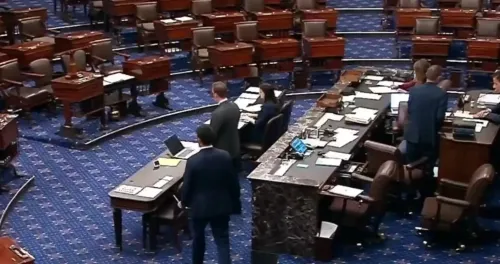
Washington, March 11 (NationPress) A fresh analysis produced by Democratic senators on the Foreign Relations Committee has highlighted how President Donald Trump’s policies have undermined the United States in its ongoing strategic competition with China. The document contends that trade conflicts, reductions in foreign assistance, and frayed alliances have opened avenues for Beijing to bolster its international clout.
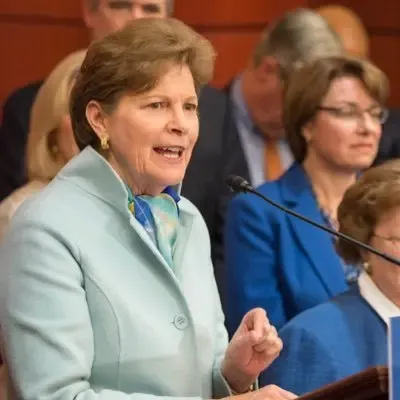
The comprehensive 56-page report, entitled “The Price of Retreat 2.0: Eroding America’s Economic Dominance and Alliance Strength,” was unveiled by Senator Jeanne Shaheen, the leading Democratic member of the committee, along with her fellow party lawmakers.
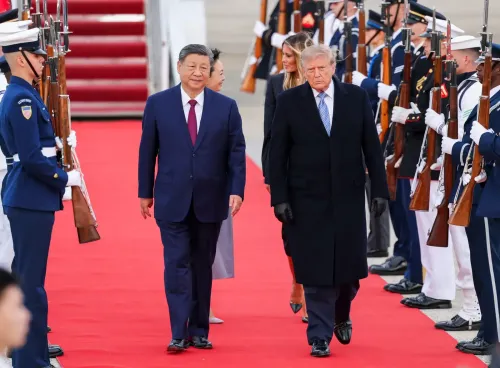
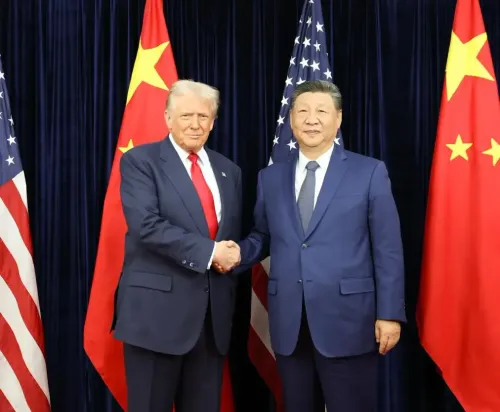
This report arrives as Trump is anticipated to visit Beijing later this month for discussions with Chinese President Xi Jinping.
“This report clarifies that the repercussions of the Trump Administration’s global withdrawal, which we cautioned about last year, are no longer hypothetical—they are impacting American families and businesses daily,” Shaheen stated.
“The Administration’s trade disputes, reductions in innovation funding, and the deterioration of our alliances are not fortifying America’s stance against China; they are, in fact, weakening it,” she remarked.
Shaheen emphasized that these policies are enabling Beijing to enhance its global influence at a time when Washington should be reinforcing its economic leadership and partnerships.
“As President Trump approaches his meetings with President Xi later this month, his own strategies have significantly eroded America’s competitive edge against China,” she noted. “The President will find himself in a vulnerable position in Beijing, and it is the American populace who will bear the consequences.”
The report indicates that the administration's inconsistent tariffs have led to considerable economic repercussions. It highlights that layoffs in small enterprises hit 120,000 in November 2025, marking the highest monthly figure in five years, while the U.S. economy has seen a net loss of 19,000 jobs since the implementation of the administration’s so-called “Liberation Day” tariffs.
Additionally, the report states that tariffs have escalated expenses for American households and disrupted global markets without sufficiently changing China’s behavior.
Lawmakers expressed concerns regarding technology policy as well. The report cautions that permitting the sale of advanced semiconductors to China could jeopardize the U.S.’s long-term economic and technological dominance.
It also asserts that immigration and visa restrictions have exacerbated workforce shortages in essential sectors. Policies affecting international students and skilled labor have deterred talent from the United States, while China has expanded its visa programs and career opportunities in science, technology, engineering, and mathematics.
The report further underscores what it describes as a decline in U.S. diplomatic capacity. Over half of American embassies worldwide currently lack a Senate-confirmed ambassador, while the administration revoked more than $14 billion in foreign aid in 2025.
In contrast, China has augmented its diplomatic footprint and increased investments through the Belt and Road Initiative, according to the report.
It also warns that strained relations with allies have diminished Washington’s ability to efficiently coordinate responses to Beijing. The report mentions conflicts with partners such as Denmark and Japan, as well as worries over U.S. commitments related to Taiwan.
It calls for lawmakers to reclaim congressional authority over trade policy and restrict the administration’s capacity to impose tariffs unilaterally.
Point of View
Emphasizing the need for strategic policy adjustments to maintain America's competitive edge against China. It underscores the importance of unity and collaboration to counteract external pressures.
NationPress
22 Oct 2026
Frequently Asked Questions
What does the report say about Trump's trade policies?
The report argues that Trump's trade wars and tariffs have weakened the U.S. position against China and led to significant economic costs for American households.
How have Trump's policies affected U.S. alliances?
According to the report, Trump's policies have strained alliances, making it harder for the U.S. to coordinate effectively against China.
What are the implications for U.S.-China relations?
The report suggests that Trump's strategies have diminished America's competitive advantage, potentially leading to a weaker negotiating position in upcoming discussions with China.
What is the significance of the Belt and Road Initiative?
The report highlights that China's Belt and Road Initiative has expanded its diplomatic presence and investments, contrasting with the U.S. decline in foreign assistance.
What actions does the report recommend?
It calls on lawmakers to reassert congressional authority over trade policy and restrict the administration's ability to unilaterally impose tariffs.