NSA Doval meets Chinese VP Han Zheng in Beijing, 25th border talks underway
Synopsis
NSA Ajit Doval's pre-talks meeting with Chinese VP Han Zheng in Beijing signals that the 25th round of India-China Special Representatives' talks carries weight beyond the usual diplomatic ritual — both sides are under pressure to translate leadership-level consensus into concrete LAC arrangements, five years after Galwan reshaped the bilateral relationship.
Key Takeaways
NSA Ajit Doval met Chinese Vice President Han Zheng in Beijing on 25 August ahead of the 25th Special Representatives' border talks.
Doval arrived in Beijing on 24 August at the invitation of Chinese Foreign Minister Wang Yi , his counterpart Special Representative.
Both sides discussed strengthening peace and tranquillity along the Line of Actual Control (LAC) and improving ties across economic, political, and multilateral forums.
China's Foreign Ministry confirmed the talks would follow the 'spirit of consensus reached by the leaders of the two countries.' The meeting follows the 36th WMCC session on 6 August , where both sides agreed to use existing mechanisms to resolve outstanding LAC issues.
India has consistently maintained that the state of border affairs directly determines the overall health of bilateral relations with China.
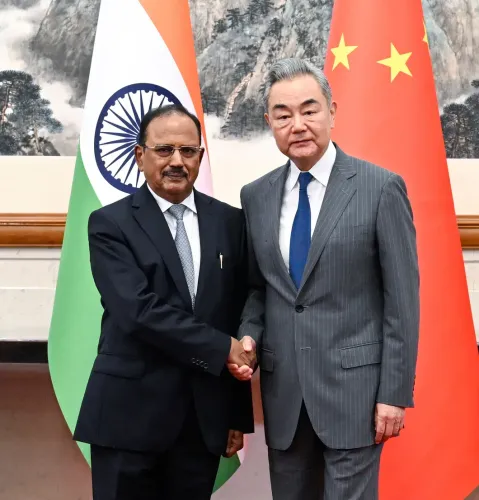
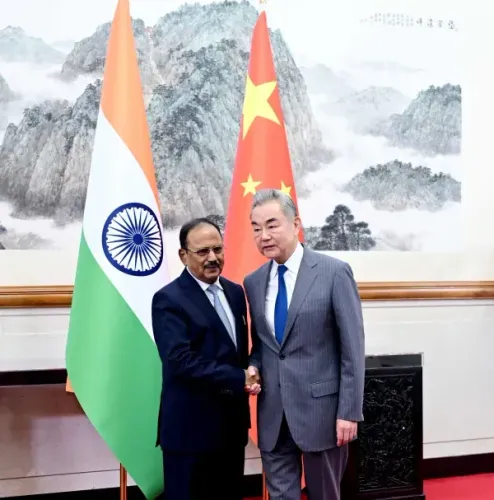
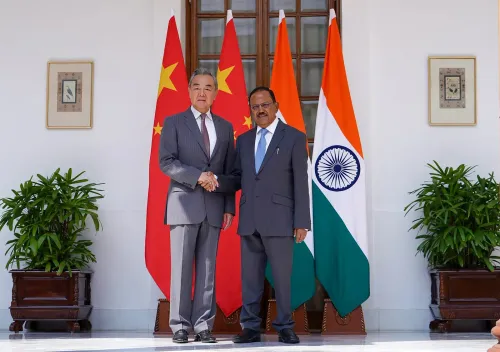
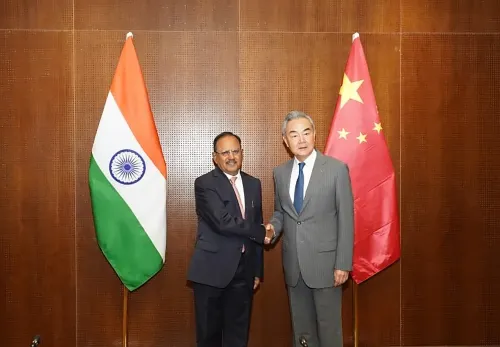
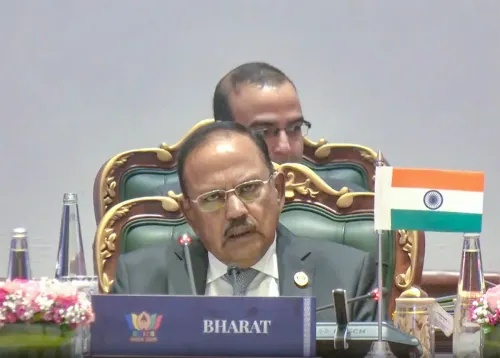
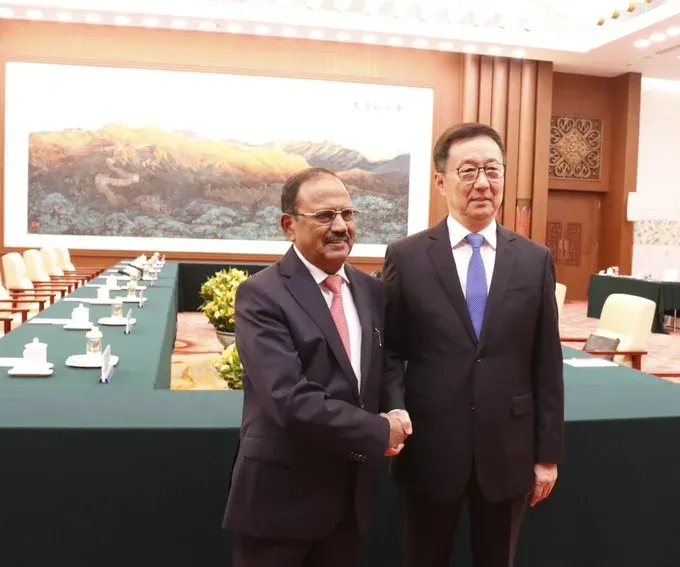
National Security Advisor Ajit Doval met Chinese Vice President Han Zheng in Beijing on Tuesday, 25 August, ahead of the landmark 25th Round of Special Representatives' Talks on the India-China Boundary Question. The meeting focused on strengthening peace and tranquillity in the border areas and expanding bilateral cooperation across economic, political, and multilateral forums.
Doval's Beijing Visit
Doval, who serves as India's Special Representative on the India-China Boundary Question, arrived in Beijing on Monday, 24 August, on a two-day visit at the invitation of Wang Yi, China's Foreign Minister and Member of the Politburo of the Central Committee of the Communist Party of China. Wang Yi is China's designated Special Representative for the same boundary talks.
The Indian Embassy in Beijing confirmed the meeting in a post on X, stating: 'On 25 August, NSA and Special Representative on the India-China Boundary Question, Shri Ajit Doval called on H.E. Han Zheng, Vice President of the People's Republic of China.' The embassy added that the two sides 'discussed ways to strengthen peace and tranquillity in the border areas and further improve bilateral relations across economic, political and multilateral fora, in accordance with the consensus reached between the leaders of the two countries.'
What China Said
Chinese Foreign Ministry spokesperson Lin Jian, speaking at a regular media briefing in Beijing on Monday, described the Special Representatives' Meeting as 'the main channel for border negotiations between the two countries and an important platform for communication on issues of mutual concern.' He noted that the 24th round, held last August, had resulted in 'several consensuses' following 'frank and in-depth' exchanges.
Lin Jian indicated that both sides would 'continue in-depth communication on the border issue in accordance with the spirit of the consensus reached by the leaders of the two countries, and jointly safeguard peace and tranquillity in the border areas,' while also exchanging views on broader bilateral and regional matters.
India's Consistent Position
New Delhi has long maintained that the state of the border directly determines the health of the wider bilateral relationship. Ministry of External Affairs spokesperson Randhir Jaiswal reiterated this stance earlier in August, saying: 'In matters relating to the border areas between India and China, we have always emphasised in discussions with the Chinese side that we consider these issues as most serious and that the maintenance of peace and tranquillity in these areas is of the utmost importance.'
Recent Diplomatic Groundwork
The Beijing talks build on a series of recent engagements. On 6 August, the 36th Working Mechanism for Consultation and Coordination (WMCC) meeting on India-China border affairs saw both sides hold 'frank discussions' and review the situation along the Line of Actual Control (LAC). Jaiswal had stated that India again underlined that 'maintaining peace and tranquillity in the border areas is essential for the overall development of bilateral relations,' and that both sides agreed to continue using existing mechanisms — including the WMCC, local commander-level meetings, and other agreed channels — to resolve outstanding issues and prevent miscalculation along the LAC.
What Comes Next
The outcome of the 25th Special Representatives' round is being closely watched as a barometer for whether the diplomatic reset between the two countries, initiated at the leadership level, can translate into durable ground-level arrangements. Any agreed framework on patrolling rights or buffer zone management along the LAC would mark a significant step forward in normalising ties that deteriorated sharply after the 2020 Galwan Valley clash.
Point of View
But the real test lies in whether the 'consensus of leaders' translates into verifiable patrolling agreements on the ground. Five years after Galwan, the diplomatic calendar has resumed its rhythm, but the trust deficit has not been formally bridged. Mainstream coverage tends to report these rounds as progress in themselves; the harder question is what specific LAC arrangements, if any, are actually being locked in.
NationPress
9 Oct 2026
Frequently Asked Questions
Why did NSA Ajit Doval visit Beijing in August 2025?
Doval visited Beijing on 24-25 August 2025 to participate in the 25th round of the Special Representatives' Talks on the India-China Boundary Question, at the invitation of Chinese Foreign Minister Wang Yi. Ahead of the formal talks, he also met Chinese Vice President Han Zheng to discuss border peace and broader bilateral cooperation.
What is the Special Representatives' Talks mechanism between India and China?
The Special Representatives' Talks is the primary diplomatic channel for border negotiations between India and China, with the NSA serving as India's representative and China's Foreign Minister as Beijing's. The 24th round was held in August 2024, and the 25th round on 25 August 2025 is the latest iteration of this framework.
What did the Indian Embassy in Beijing say about the Doval-Han Zheng meeting?
The Indian Embassy in Beijing posted on X that Doval and VP Han Zheng discussed 'ways to strengthen peace and tranquillity in the border areas and further improve bilateral relations across economic, political and multilateral fora, in accordance with the consensus reached between the leaders of the two countries.'
What is India's official position on the border dispute with China?
India has consistently maintained that the state of border affairs directly reflects the overall state of bilateral ties with China. MEA spokesperson Randhir Jaiswal stated earlier in August that India considers border issues 'most serious' and that maintaining peace and tranquillity along the LAC is 'of the utmost importance.'
What was the outcome of the 36th WMCC meeting on 6 August?
The 36th Working Mechanism for Consultation and Coordination (WMCC) meeting on 6 August saw both sides hold frank discussions and review the LAC situation. Both sides agreed to continue using existing mechanisms — including the WMCC, local commander-level meetings, and other channels — to resolve outstanding issues and prevent miscalculation along the Line of Actual Control.