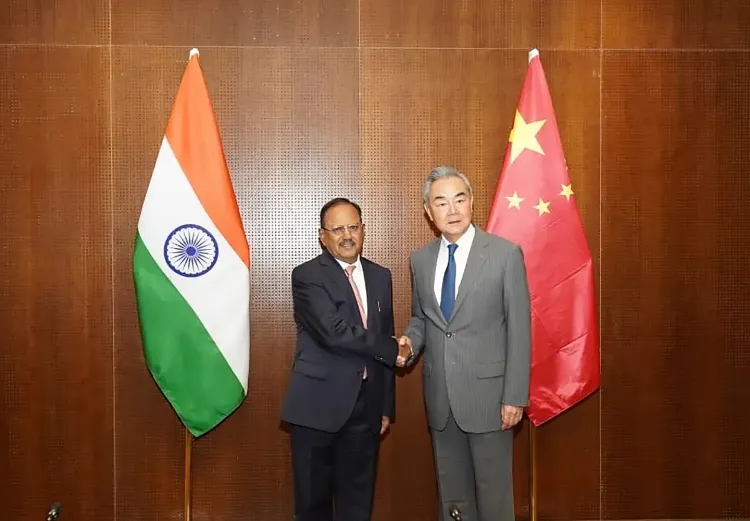
Doval in Beijing for 25th India-China Boundary Talks with Wang Yi
Synopsis
NSA Ajit Doval's arrival in Beijing for the 25th Special Representatives' Talks is the most substantive India-China boundary engagement since the post-Galwan freeze. With a sideline call on Vice President Han Zheng and unresolved pressure points on trans-border rivers, Tuesday's talks carry weight well beyond the diplomatic calendar.
Key Takeaways
NSA Ajit Doval arrived in Beijing on 24 August for a two-day visit for the 25th Round of Special Representatives' Talks on the India-China Boundary Question.
Talks with Chinese Foreign Minister and Special Representative Wang Yi are scheduled for Tuesday, 25 August .
Doval will also call on Chinese Vice President Han Zheng during the visit.
A preparatory 36th WMCC meeting was held in New Delhi on 6 August , led by Sujit Ghosh (India) and Hou Yanqi (China).
India reiterated the need for the Expert Level Mechanism on trans-border rivers to convene and for China to share technical details on upstream projects.
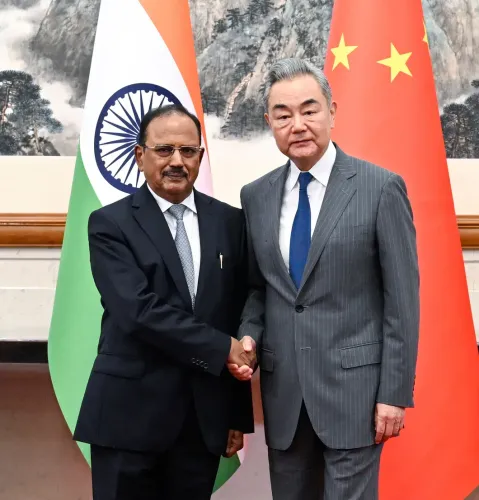
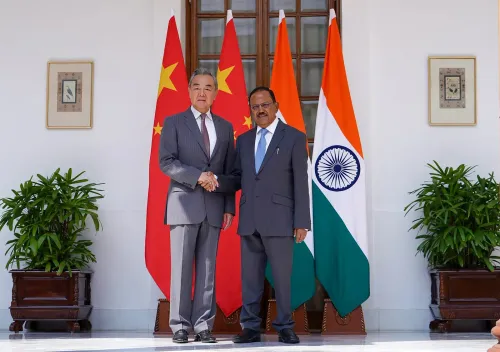
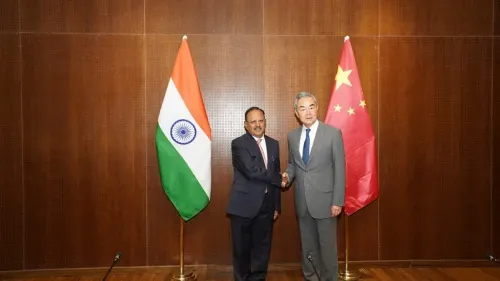
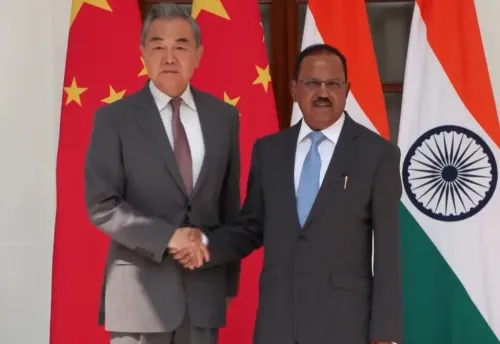
National Security Advisor Ajit Doval arrived in Beijing on Monday, 24 August for a two-day visit to participate in the 25th Round of Special Representatives' Talks on the India-China Boundary Question. The visit, undertaken at the invitation of Chinese Foreign Minister Wang Yi, marks a significant diplomatic engagement as both nations continue efforts to stabilise relations along the Line of Actual Control (LAC).
What the Talks Cover
Doval, who serves as India's Special Representative on the boundary question, is scheduled to hold formal talks with Wang Yi — China's counterpart Special Representative — on Tuesday, 25 August, according to a statement released by the Ministry of External Affairs (MEA). The discussions are expected to cover the full spectrum of unresolved boundary issues, including delimitation, border management, and confidence-building mechanisms.
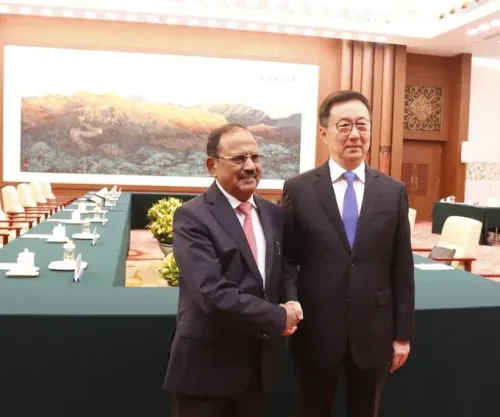
During his stay, Doval will also call on Chinese Vice President Han Zheng, a meeting that signals the engagement extends beyond the technical boundary dialogue to the broader bilateral relationship.
Recent Diplomatic Build-Up
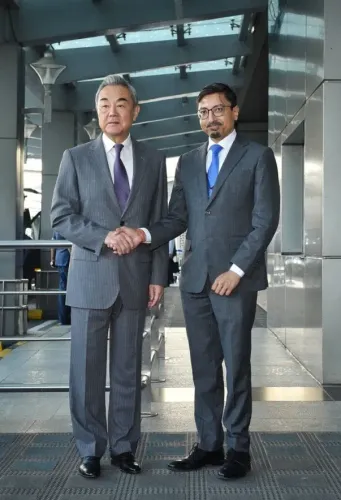
The Beijing talks follow a preparatory round held earlier this month. On 6 August, the 36th meeting of the Working Mechanism for Consultation and Coordination on India-China Border Affairs (WMCC) convened in New Delhi, where officials from both sides reviewed the ground situation along the LAC. The Indian delegation was led by Sujit Ghosh, Joint Secretary (East Asia) at the MEA, while the Chinese side was represented by Hou Yanqi, Director General of the Boundary and Oceanic Affairs Department of China's Ministry of Foreign Affairs.
The MEA noted that the two sides 'engaged in frank discussions and reviewed the situation along the Line of Actual Control,' adding that 'maintaining peace and tranquillity in the border areas is essential for the overall development of bilateral relations.'
Key Agreements from WMCC
At the 36 August WMCC meeting, both delegations agreed to continue using existing diplomatic and military channels — including the WMCC itself, local commander-level meetings, and other agreed mechanisms — to resolve outstanding issues and prevent misunderstanding and miscalculation along the LAC. The meeting was framed explicitly as a follow-up to the outcomes of the 24th Special Representatives' Talks.
India also reiterated the need for the early convening of the next meeting of the Expert Level Mechanism on trans-border rivers, stressing the importance of China sharing technical details on upstream projects — a long-standing concern given the hydrological implications for downstream Indian communities.
Significance and What to Watch
This is the 25th iteration of the Special Representatives' framework, a dialogue architecture that has existed for over two decades but was effectively frozen during the prolonged standoff following the Galwan Valley clash of 2020. Its resumption and progression through successive rounds reflects a cautious but deliberate normalisation effort. Notably, the trans-border rivers issue and upstream infrastructure transparency remain unresolved pressure points that could test the durability of the current diplomatic thaw. The outcomes of Tuesday's talks will be closely watched for any fresh agreements on buffer zones, patrolling rights, or data-sharing on river flows.
Point of View
But the number itself is a reminder of how long this boundary question has resisted resolution. The real test of Doval's Beijing visit is not the diplomatic optics of meeting Wang Yi and Vice President Han Zheng — it is whether the two sides move beyond reviewing the LAC situation to producing verifiable, time-bound commitments on patrolling norms and trans-border river data. India's repeated stress on upstream project transparency is pointed: China's dam-building on Brahmaputra tributaries has downstream consequences that no amount of diplomatic goodwill can offset without hard data-sharing agreements. The current thaw is real, but it remains institutionally thin.
NationPress
8 Oct 2026
Frequently Asked Questions
What are the India-China Special Representatives' Talks?
The Special Representatives' Talks are a high-level diplomatic framework established to address the unresolved India-China boundary question. NSA Ajit Doval represents India and Chinese Foreign Minister Wang Yi represents China; the 25th round is scheduled for 25 August in Beijing.
Why is NSA Doval visiting Beijing in August 2025?
Doval is in Beijing at the invitation of Chinese Foreign Minister Wang Yi to hold the 25th Round of Special Representatives' Talks on the India-China Boundary Question. The visit also includes a call on Chinese Vice President Han Zheng.
What was discussed at the 36th WMCC meeting on 6 August?
The 36th WMCC meeting in New Delhi reviewed the situation along the Line of Actual Control and agreed to use existing diplomatic and military channels to resolve outstanding issues. India also stressed the need for early convening of the Expert Level Mechanism on trans-border rivers and urged China to share technical details on upstream projects.
What is the significance of the trans-border rivers issue?
India has repeatedly called for China to share technical data on upstream infrastructure projects, particularly on rivers that flow from Tibet into India. The concern relates to the downstream hydrological and flood-risk implications for Indian communities, and remains one of the more contentious unresolved points in the bilateral relationship.
How does this visit relate to the post-Galwan normalisation?
The Special Representatives' framework was effectively stalled after the Galwan Valley clash in 2020. The resumption and progression through successive rounds — now reaching the 25th — reflects a gradual, cautious normalisation effort, though core boundary and river-data issues remain unresolved.