DRC govt and M23 agree peace roadmap after Switzerland talks
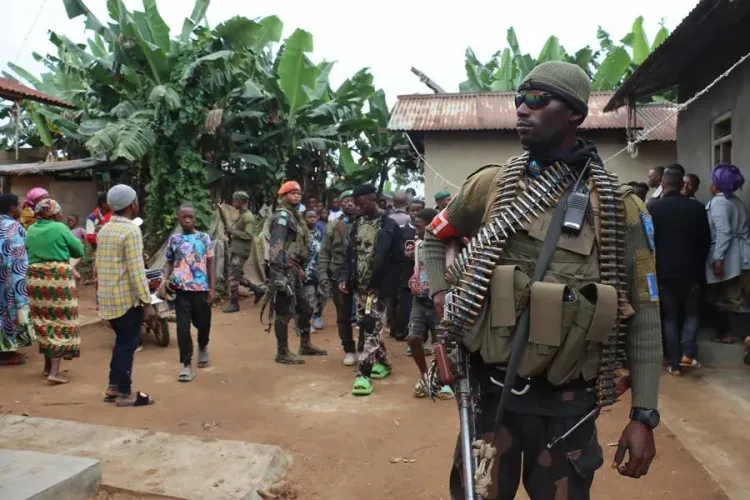
Synopsis
The DRC government and M23 rebels have agreed on a sequenced peace roadmap after five days of Switzerland talks — and the first real test comes as early as 24 August, when a ceasefire verification mission heads to Minembwe. With M23 holding key eastern cities since January 2025, the gap between the negotiating table and the battlefield remains the defining challenge.
Key Takeaways
The DRC government and M23 agreed on a peace negotiation roadmap after talks held from 17 to 21 August 2025 in Switzerland .
Both sides will establish a dedicated mechanism to review compliance with obligations under the Doha Framework Agreement .
The first ceasefire verification mission is scheduled for 24 August in Minembwe, South Kivu Province .
In April 2025 , the two sides reported 'substantial progress' on humanitarian access protocols and agreed to release prisoners within 10 days .
Since January 2025 , M23 has intensified offensives in North Kivu and South Kivu , seizing several key cities.
The government of the Democratic Republic of the Congo (DRC) and the March 23 Movement (M23) rebel group have agreed on a structured roadmap for peace negotiations, setting out sequenced steps and timelines for future talks, according to a joint statement issued on 23 August 2025. The agreement follows meetings held from 17 to 21 August in Switzerland under the Doha Framework Agreement.
Key Developments from the Switzerland Talks
During the five-day sessions, both sides assessed progress and challenges in the ongoing Doha peace process, reviewing the implementation of existing commitments. The resulting roadmap outlines the sequence and timetable for subsequent rounds of negotiations.
Crucially, the two parties also agreed to establish a dedicated mechanism to review progress and address challenges in fulfilling obligations under the framework agreement — a step that signals a move toward structured accountability rather than open-ended dialogue.
Ceasefire Verification in Focus
Both delegations welcomed advances in operationalising the ceasefire verification mechanism. According to the joint statement, its first ceasefire verification mission is scheduled for 24 August in Minembwe, located in eastern DRC's South Kivu Province. The two sides also stressed the importance of adopting a standardised method for reporting alleged ceasefire violations — an acknowledgment that enforcement gaps have persisted.
They reaffirmed their commitment to pursuing negotiations toward comprehensive peace and full conflict resolution in the region.
Building on April's Progress
This latest agreement builds on momentum from earlier rounds. In April 2025, following meetings held from 13 to 17 April in Montreux, Switzerland, the two sides reported 'substantial progress' toward concluding a protocol on humanitarian access and judicial protection.
At that stage, both parties pledged to refrain from destroying or seizing property essential to civilian survival, and committed to facilitating rapid, safe, and unhindered humanitarian access — including the free movement of aid workers, relief goods, and humanitarian convoys in conflict-affected areas. They also agreed to release prisoners within 10 days under previously established arrangements, in a confidence-building measure aimed at strengthening mutual trust.
The Conflict Background
The peace efforts come against a backdrop of sustained violence. Since January 2025, M23 has intensified its offensives across the eastern provinces of North Kivu and South Kivu, seizing several key cities and displacing large civilian populations. The group, which had been dormant for years before re-emerging, is widely reported to have received external backing — a charge that has complicated regional diplomacy.
The Doha Framework represents one of the more structured international efforts to bring the DRC government and M23 to a negotiated settlement, with Qatar playing a facilitating role alongside Switzerland as a host nation.
What Comes Next
The immediate focus shifts to the 24 August ceasefire verification mission in Minembwe, which will serve as an early test of whether the agreed mechanisms hold on the ground. A successful verification mission could lay the groundwork for the next formal round of talks under the roadmap. Analysts caution, however, that the gap between negotiating table commitments and field-level compliance has historically been wide in eastern DRC's protracted conflict.
Point of View
But eastern DRC has seen negotiated commitments collapse before. The real signal will come from the 24 August Minembwe mission: if ceasefire monitors reach the ground without incident, it marks a genuine shift in M23's posture. If not, the roadmap risks becoming another document in a long archive of unfulfilled agreements. The continued M23 hold on key eastern cities since January 2025 means the power asymmetry at the table has not changed — and that asymmetry has historically dictated outcomes more than any framework agreement.
NationPress
8 Oct 2026
Frequently Asked Questions
What did the DRC government and M23 agree to in August 2025?
The two sides agreed on a structured roadmap outlining the sequence and timetable for future peace negotiations under the Doha Framework Agreement, following talks held from 17 to 21 August in Switzerland. They also agreed to establish a mechanism to review progress and address compliance challenges.
What is the Doha Framework Agreement?
The Doha Framework Agreement is the diplomatic structure under which the DRC government and M23 are conducting peace negotiations, facilitated with Qatar's involvement and Switzerland as a host nation. It sets out the terms and process for talks aimed at achieving comprehensive peace in eastern DRC.
When is the first ceasefire verification mission scheduled?
The first ceasefire verification mission is scheduled for 24 August 2025 in Minembwe, in eastern DRC's South Kivu Province. It is the initial field test of the ceasefire monitoring mechanism both sides agreed to operationalise.
What progress was made in the April 2025 Switzerland talks?
In April 2025, following meetings in Montreux, Switzerland, both sides reported 'substantial progress' toward a humanitarian access protocol. They pledged to protect civilian property, facilitate unhindered aid access, and release prisoners within 10 days as a confidence-building measure.
Why has eastern DRC remained volatile despite peace talks?
Since January 2025, M23 has intensified offensives in North Kivu and South Kivu, seizing several key cities. The group's continued territorial gains have created a power imbalance that complicates negotiations, as commitments made at the table have repeatedly faced non-compliance on the ground.